White River Forest Thinning Project Begins in Eagle County
U.S. Forest Service launches a $2.3 million thinning project across 10,000 acres of White River National Forest to reduce tree density and mitigate wildfire risks between Eagle and Summit counties.
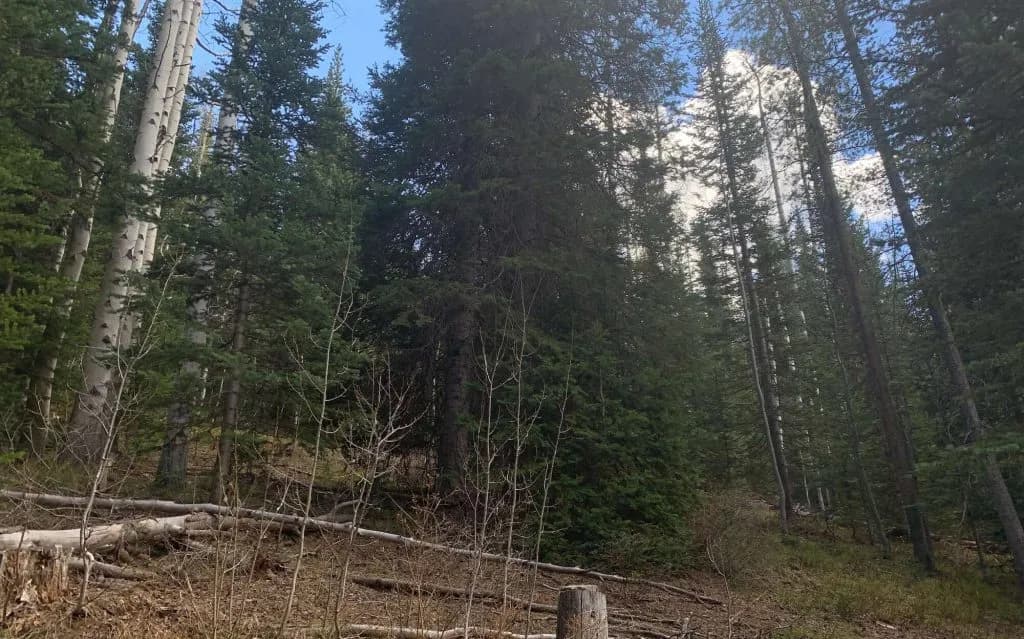
Aspen —“Their just overstocked and they’re competing for resources,” Shelby Limberis told a packed room last week, her voice cutting through the low hum of anticipation in the Eagle County council chamber. “If you give them more light, more access to water and nutrients, they’re just going to be healthier, more rigorous trees.”
Limberis, a forester with the U.S. Forest Service, wasn’t just reciting a textbook definition of silviculture. She was defending a $2.3 million, 10,000-acre gamble on the White River National Forest’s future. The target? Thinning out the dense thickets of lodgepole pine that choke the landscape between Eagle and Summit counties. It’s a project approved in 2021, now finally moving from paper to chainsaw, with crews potentially hitting the ground this summer.
But here’s the thing though: while the Forest Service sees a strategic reduction in fuel loads, neighbors in Tigiwon and near Camp Hale are asking if we’re treating the symptom while ignoring the disease.
The plan is straightforward on paper. The White River Health and Fuels Project aims to reduce tree density from a staggering 2,500 trees per acre down to a manageable 150 to 1,500. That’s a massive cull. The goal is to protect private property, infrastructure, and provide a safer playing field for firefighters battling the next inevitable wildfire. One thousand of those 10,000 acres sit right here in our backyard, specifically targeting areas like No Name, Red Tail Ranch, and Swan Mountain Road.
Leanne Veldhuis, the district ranger for the Eagle-Holy Cross Ranger Station, stood beside Limberis, reinforcing the narrative of diversity and density. “We try to achieve diversity within this tree type so that they’re not all the same size or the same spacing,” Veldhuis said, gesturing to the dense stands of sun-loving, fast-growing pines that dominate the higher elevations. She argued that thinning creates fuel breaks — spaces between trees that prevent a fire from turning into that big, bursting ball of flame that races up the canopy. The removed wood? It stays on the ground, rearranged around roads and trails, burning fast and low, easier for ground crews to manage.
It’s a logical argument. It’s also an argument that some locals are hearing with skepticism.
Critics at the informational sessions didn’t deny the need for thinning. They questioned the priority. With both Eagle and Summit counties sitting at high risk for wildfires, why focus so heavily on the forest floor when the homes themselves are often the first things to go? The push for home hardening and defensive spaces around individual properties feels less like a distraction and more like a necessary evolution. If you thin the forest but leave a flammable roof and dry brush right next to a cabin, the fire still wins.
The Forest Service acknowledges the chaos lodgepole pines thrive in. They come in dense after a disturbance, competing fiercely for every drop of water. But the question hanging over the 2,500 trees-per-acre density isn’t just about tree health. It’s about whether reducing the fuel load in the woods is enough to save the houses on the edge of them.
Limberis noted that the fuel will be rearranged, not removed entirely. Some stays. Some goes. It’s a compromise between ecological balance and fire mitigation. But for the folks living along Swan Mountain Road, watching the thinning crews roll in this summer, the debate isn’t just academic. It’s about whether the trees being cut down today will actually stop the fire from jumping the road tomorrow, or if we’re just rearranging the deck chairs on the Titanic while we wait for the next big burn.
Keep up with Aspen
The day's Western Slope news, one email each morning. Free.