White River National Forest Enters Stage 1 Fire Restrictions
White River National Forest implements Stage 1 fire restrictions affecting 18 million visitors due to record-low snowpack, banning charcoal grills and limiting smoking to prevent wildfires.
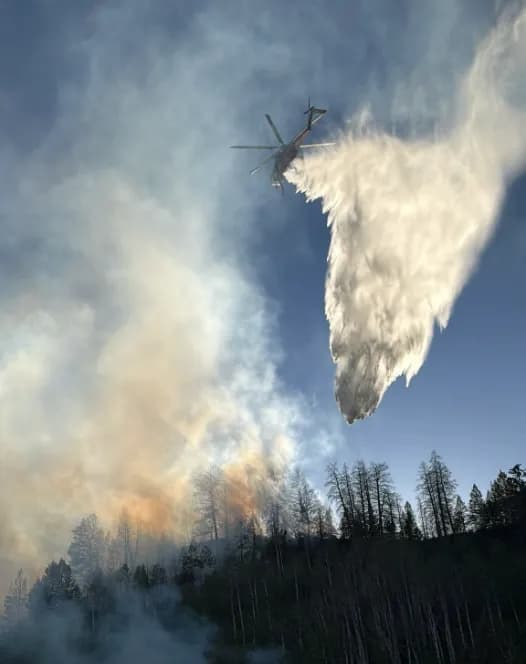
Aspen —Picture a charcoal grill sputtering out in a backcountry meadow, the smoke thinning into the dry air of the White River National Forest. That simple act just got a lot harder to do.
The entire White River National Forest enters Stage 1 fire restrictions on Friday, a move that affects nearly 18 million annual visitors. This isn't just a bureaucratic stamp on a map. It’s a direct response to the fact that Colorado is currently burning through its worst snowpack on record, leaving the ground thirsty and the fuel ready to catch.
Here’s the thing though: most folks think of fire restrictions as a nuisance. They see a sign and think, "I can still cook dinner." The new rules say otherwise. Charcoal grills are out. Gas stoves are in. But you better believe your fire is out and cold before you leave it unattended, or you’re risking a fine and a forced evacuation.
Alicia Bell Sheeter, the White River National Forest Acting Supervisor, didn’t mince words in her news release. She cited the long-range forecast and the on-the-ground fuel moisture conditions as the drivers for this decision. "Fire restrictions are provident," she said, noting that the holiday weekend brings a surge in visitation that the dry landscape can barely handle.
And handle it must. The White River is the most visited national forest in the United States. It covers 2.3 million acres across nine counties, swallowing up the tourist magnets of Breckenridge, Vail, and Aspen. When you pack that many people into that much dry timber, the margin for error shrinks to zero.
The context here is critical. We aren't talking about a typical June. The state just experienced its worst snowpack on record, leading to widespread drought conditions that have already sparked activity. The Spring Creek Fire, which burned about 20 acres near the border of Pitkin and Eagle counties, was contained and its evacuations lifted on June 13, but it was a warning shot. Earlier this month, small fires in Glenwood Canyon forced the closure of Interstate 70 for several hours. That’s not just a delay for commuters; that’s a gridlock nightmare for anyone trying to get out of the valley.
Under the Stage 1 restrictions, smoking is also prohibited unless you’re in an enclosed building, a vehicle, or stopped in an area at least 3 feet in diameter that is cleared of all flammable materials. Explosives, including fireworks, are banned outright. It’s a specific set of rules that local, county, state, and federal officials coordinate weekly, weighing current danger against resource availability.
This isn't an isolated incident either. Routt National Forest near Steamout Springs and parts of the Arapahoe-Roosevelt National Forest near Winter Park are already under Stage 1 restrictions. Numerous counties — Summit, Eagle, Grand, Pitkin, Garfield, Routt, Rio Blanco, Lake, and Chaffee — have their own fire restrictions in place. The map is red.
With summer traffic picking up, the Colorado Department of Transportation is reminding drivers to watch their own equipment. Anyone pulling a trailer needs to ensure chains aren’t dragging and sparking. Truck drivers should use low gear to keep their brakes from overheating. It’s the small things that start big fires.
Not exactly a new concept, but the scale is different now. The combination of record-low snowpack and record-high visitation creates a pressure cooker. You’re not just visiting a forest; you’re navigating a managed resource that is currently on a diet.
As the holiday weekend approaches, the message from the Forest Service is clear. Be provident. Keep your fire cold. And remember that the sign at the trailhead isn't just suggesting you use a gas stove, it’s telling you the forest is holding its breath, waiting to see if you’ll let it exhale.
Keep up with Aspen
The day's Western Slope news, one email each morning. Free.