Will my tax refund be gone if I vote yes
Will my tax refund be gone if I vote yes? That is the question echoing through living rooms from Denver to Grand Junction as Proposition NN heads to the ballot in November. The measure, passed by the legislature as Senate…

Steamboat Springs —Will my tax refund be gone if I vote yes?
That is the question echoing through living rooms from Denver to Grand Junction as Proposition NN heads to the ballot in November. The measure, passed by the legislature as Senate Bill 26-135, asks Coloradans to allow the state to retain up to $4.6 billion more in tax revenue than the current Taxpayer’s Bill of Rights (TABOR) cap permits. In exchange for keeping that money, the state promises to direct it toward K-12 education, specifically to raise teacher pay and shrink class sizes.
The math is straightforward, if the politics are messy. According to a fiscal impact statement from the Colorado Legislative Council Staff, Proposition NN would cut TABOR refunds by $329.9 million in fiscal year 2026-27. By the following year, that cut grows to $521 million. For a single filer earning $100,000, that translates to a smaller check in the mail: $28 less in 2027, and $68 less in 2028. Joint filers see even deeper cuts, with reductions of $56 and $96, respectively.
To hear the supporters tell it, that trade-off is worth it. Kevin Vick, president of the Colorado Education Association, argues that the current funding model is failing teachers. “The level of inadequacy in our funding here in Colorado mainly means that we simply cannot keep educators,” Vick said. He pointed to eroding benefits and overbearing workloads as key drivers of teacher turnover. The campaign group Yes for Colorado Kids claims the measure could boost state K-12 funding by up to 50% over the next decade, a massive shift from the status quo.
But opponents see a different picture. Kristi Burton Brown, executive vice president of the Advance Colorado Institute, warns that the measure strikes at the heart of TABOR. “Our concern with Proposition NN is that this directly attacks the Taxpayer Bill of Rights,” she said. Brown emphasized that the proposal would permanently transfer taxpayer refunds to the state government. “You’re permanently losing your paper tax refund,” she noted, framing the issue as a loss of individual control over state spending.
There is also a structural concern about what happens after the first ten years. While the initial decade has strict rules directing funds to education, those specific restrictions phase out afterward. Critics argue this leaves lawmakers with a “blank check,” allowing them to spend the retained revenue on anything they choose, without the same voter oversight that originally created TABOR.
The debate ultimately comes down to priorities. Do neighbors value the immediate cash return of a tax refund, or the long-term stability of their children’s schools? The state is betting that the latter wins. Whether that bet pays off depends on how many voters are willing to accept a smaller refund today for a better classroom tomorrow.
Keep up with Steamboat Springs
The day's Western Slope news, one email each morning. Free.


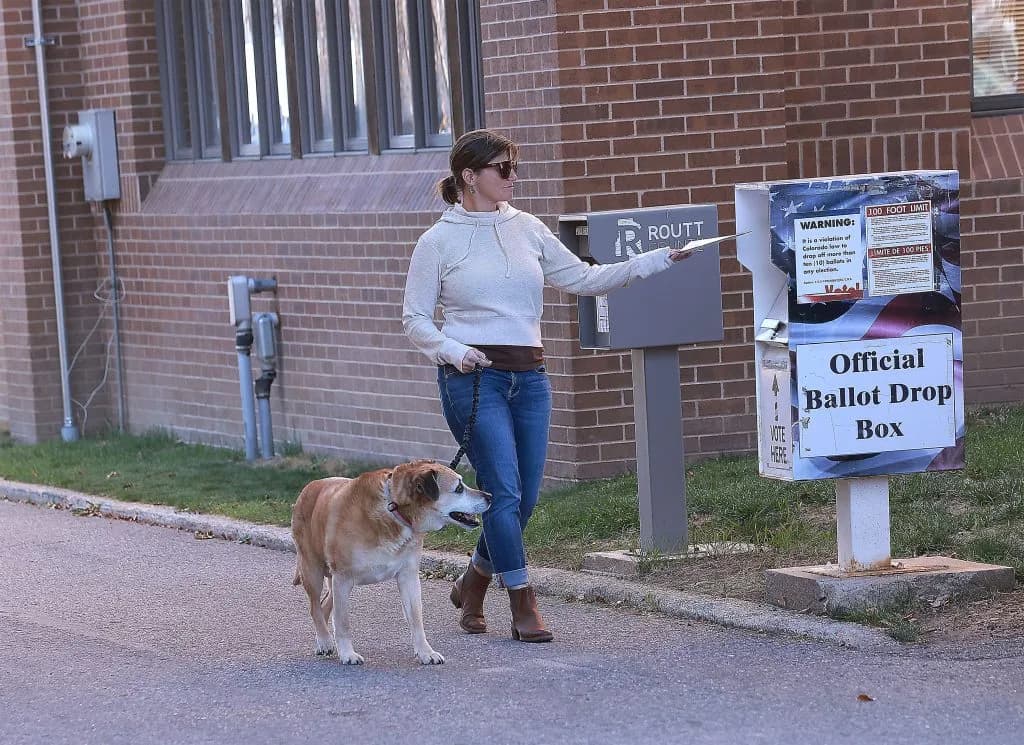
"Coloradans could start seeing ballots for this November’s midterm election hit their mailboxes as early as this weekend

Moffat County High School Bets on Critical Thinking Over Energy Jobs