5.5 Million Birds Fly Over Colorado as Lights Out Campaign Launches
Radar detected 5.5 million birds migrating over Colorado on August 24. Local groups urge residents to shield lights during the peak season to prevent fatal building collisions.
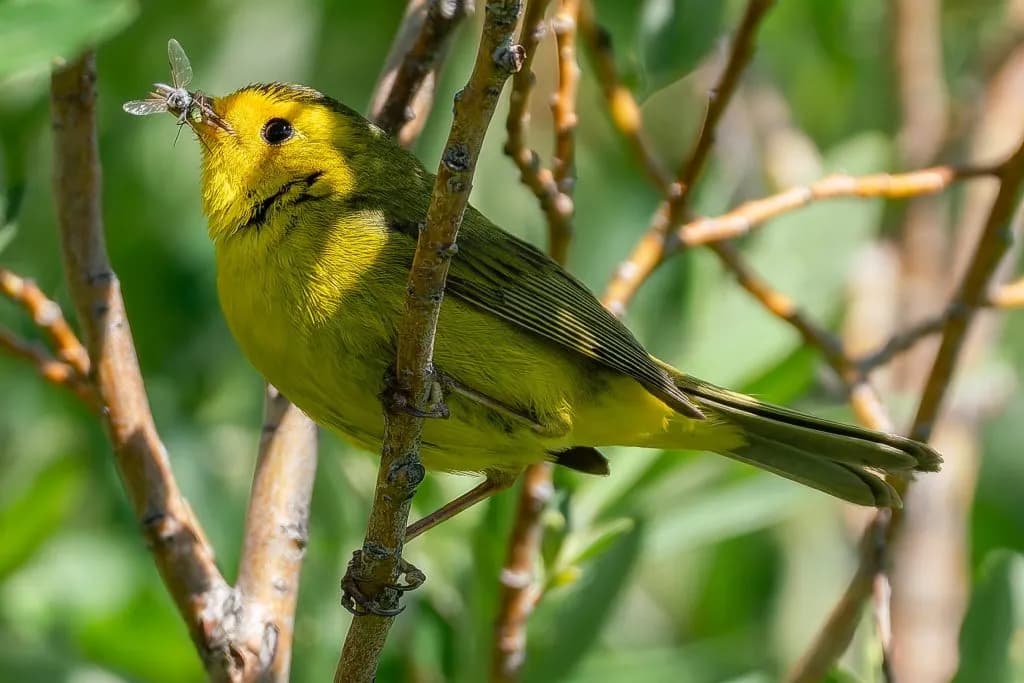
Glenwood Springs —On the night of August 24, the weather radar screens of the BirdCast project flickered with a phenomenon that defies casual observation: more than 5.5 million birds were suspended in the air above Colorado. It was a silent, massive exodus, a river of feathers flowing southward under the cover of darkness. For the folks in the valley, this isn't just a distant ecological statistic; it is a tangible presence overhead, a reminder that the night sky is far busier than it appears to the naked eye.
Why do they move in the dark? Jacob Job, the senior director of engagement and development at the Bird Conservancy of the Rockies, explains that these nocturnal travelers navigate using the stars, the moon, Earth’s magnetic pole, and visible landscape features like mountain ranges. But there is a complication. Birds are inexplicably drawn to the artificial lights produced by humans. This attraction pulls them off course, leading to fatal collisions with structures. One study estimates that building collisions kill as many as 1 billion birds in the U.S. each year. Shockingly, nearly half of these deaths occur when birds strike homes and smaller buildings, not just the skyscrapers we typically imagine.
In response, Lights Out Colorado — a program supported by Dark Sky Colorado and the Denver Audubon — urges residents to take simple, immediate actions. Shield your outdoor lights to prevent upward emission. Turn off non-essential exterior lighting as early as possible during the migration season, which stretches from mid-August through early October. It is a low-effort request with a high-stakes payoff.
Helen Barker, a resident of Silverthorne, has made this ritual her own. She turns off her outdoor lights and sends reminders to friends across the country to do the same. Her motivation is personal and profound. “It’s just part of honoring nature and wanting to protect the birds,” she said. “It’s speaking up for living animals that can’t speak for themselves and that would otherwise not be given attention unless people make a point of it.”
There is a warmth to that sentiment, a genuine enthusiasm that cuts through the dry data of population declines. We know that North America has lost nearly 3 billion birds in the last 50 years, a nearly 30% drop in the overall population. Building collisions are listed as a top cause of mortality by the Audubon Society. So when you flip the switch and let the porch go dark, you are participating in a collective effort to dim the glare that confuses these ancient navigators.
You can feel it, the shift in the atmosphere when the lights go out. The neighborhood settles into a deeper quiet, the shadows lengthening and merging until the boundary between the yard and the night becomes indistinct. Somewhere above, a flock adjusts its heading, guided once again by the steady pull of the magnetic field and the fixed points of the celestial sphere. The path is darker now, clearer, free of the distracting glow that lured them toward the glass and steel of our built environment.
As the migration continues, the number of birds passing over the state will fluctuate, peaking in the heart of autumn. The radar will continue to track these swarms, providing a real-time map of the movement. For those who look up, even if they cannot see the individual birds, the knowledge that millions are passing overhead adds a layer of depth to the night sky. It transforms the view from a static backdrop of stars into a dynamic stage for one of nature’s great journeys.
The effort is small, but the impact is cumulative. Every light shielded, every bulb switched off, contributes to a larger pattern of reduced light pollution along the migratory pathways. It is a way of acknowledging our place within the ecosystem, recognizing that our choices affect creatures we rarely see. The birds are here, moving through our space, relying on the conditions we create to survive the journey.
So, when the evening falls and the urge to illuminate the outdoors takes hold, pause for a moment. The BirdCast project uses weather radar to detect these migrating birds, offering a glimpse into the scale of the movement. Make the choice to let the darkness do its work. Let the stars guide them, as they have for millennia.
The silence of the unlit street is not empty; it is filled with the passage of life. It is a reminder that protection often requires restraint, that sometimes the best thing we can do is step back and let the natural order proceed. The birds will continue their flight, guided by forces older than our cities, sustained by the instinct that drives them south. And we, in our turn, will watch them go, knowing that our small acts of darkness helped clear the way.
The final image is not of a bird, but of a switch in a hand, clicking down. The click is sharp, definitive. Then, the hum of the transformer outside fades, replaced by the rustle of leaves in the wind. The dark is complete.
Keep up with Glenwood Springs
The day's Western Slope news, one email each morning. Free.



Roaring Fork Schools Ask Voters For Tax Hike To Pay Teachers

ZGEO Pairs Geothermal Power With Housing And Industry In Montrose County