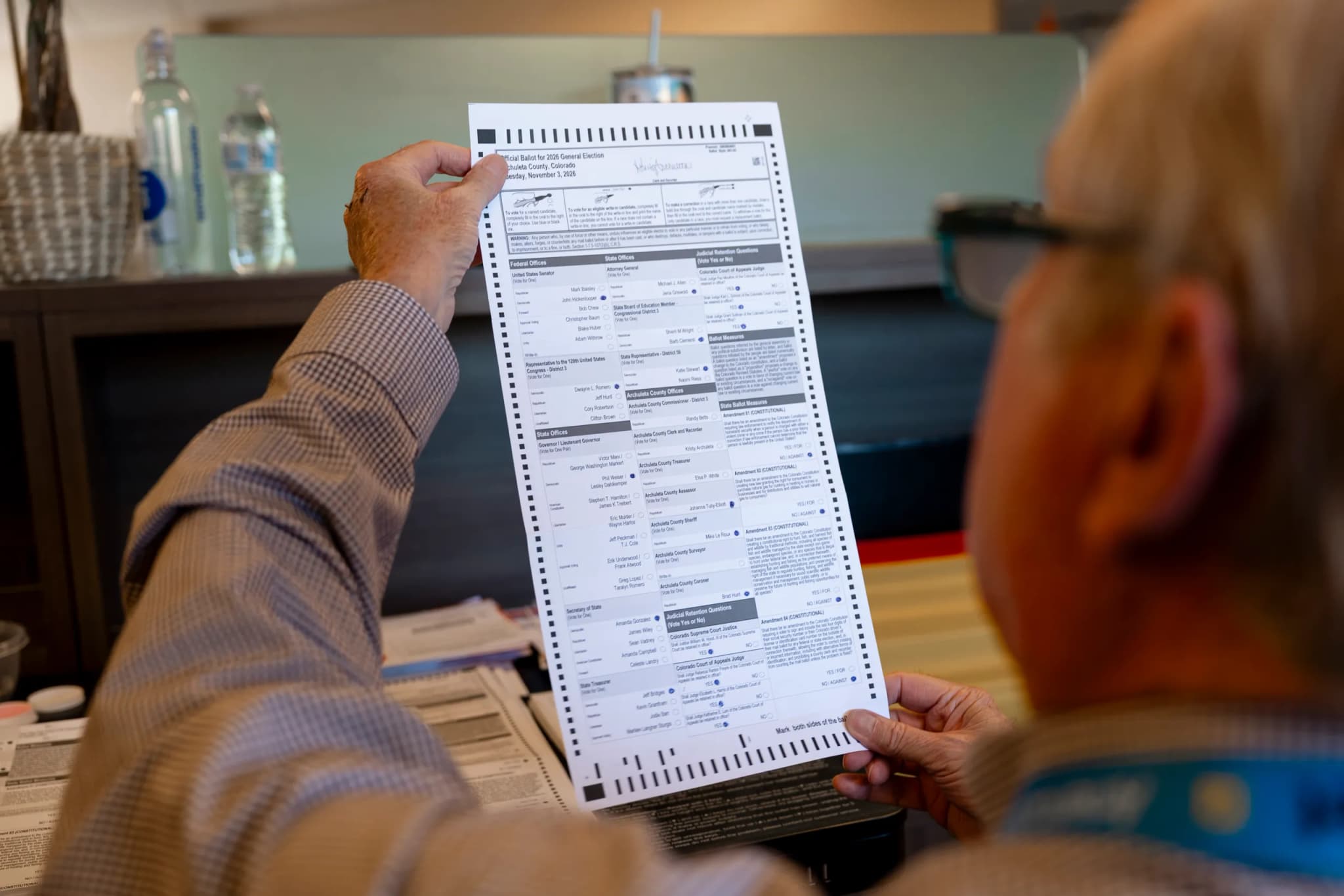
Amendment 86 Locks Down Colorado Redistricting After $4.7M Loss
Colorado voters will decide Amendment 86 in November, a measure requiring commission and court approval for mid-decade map changes after a failed $4.7 million Democratic challenge.

The ink is still drying on a $4.7 million check that evaporated in a puff of legal smoke, leaving Colorado’s political landscape in a state of suspended animation. That was the price of admission for a Democratic bid to redraw the map, a gamble that lost when the state’s highest court ruled the effort violated the “single subject” rule. Now, the pendulum swings back. In November, voters will decide whether to pass Amendment 86, a measure designed to erect higher hurdles for any future attempts to tinker with congressional boundaries outside the standard, census-driven cycle.
It is a reaction born of frustration. The Colorado Sun explains that this initiative was brought by Republicans specifically as a counter-move to that failed Democratic push. The goal is simple: make it harder to bypass the established process. Under the current system, an independent commission handles the redistricting once every ten years, a process last executed in 2021 to create the maps used in 2022. The next scheduled round is 2031. Amendment 86 seeks to protect that timeline from mid-decade interruptions.
If it passes — which requires 55% of the vote — the changes are structural. Any congressional map redrawn between those decadal marks would trigger a mandatory reconvening of the Independent Redistricting Commission. They would be required to hold public hearings, review the proposed lines, and ultimately approve the changes. It is not enough for a map to simply exist; it must survive the scrutiny of the body originally charged with drawing it.
There is a second layer of oversight. The Colorado Supreme Court would also have to review and approve any mid-decade map before it takes effect. This judicial check adds a degree of formality to what has often been a partisan scramble. Both the commission and the court would be forced to reject any map that fails to keep “communities of interest” whole. Equally important, they must strike down any map drawn to favor one political party. It is a direct jab at the concept of gerrymandering, aiming to ensure that the shape of a district reflects geography rather than electoral advantage.
The stakes are tangible. The previous Democratic proposal would have shifted the balance significantly, giving their side a strong shot at flipping three seats and leaving the opposition with only one of the state’s eight. That kind of volatility is exactly what Amendment 86 hopes to dampen. By adding procedural steps, public input, commission approval, judicial review - it slows the train. It makes the cost of a mid-cycle change higher, both in terms of logistics and political capital.
For folks in the valley, this is less about the abstract idea of democracy and more about who represents them in Washington. A stable map means predictable elections. A shifting map means constant recalibration. The amendment tries to buy stability. Whether it succeeds depends on whether voters value predictability over the potential for immediate correction. The silence after the gavel falls is heavy, filled with the weight of decisions yet to be made.
Keep up with the Western Slope
The day's Western Slope news, one email each morning. Free.