Artemis II Crew Links Up with ISS During Historic Moon Mission
The Artemis II crew establishes the first-ever moonship-to-spaceship radio link with the ISS, highlighting the reunion of astronauts Christina Koch and Jessica Meir amid successful lunar flyby imagery and ongoing Orion capsule plumbing repairs.
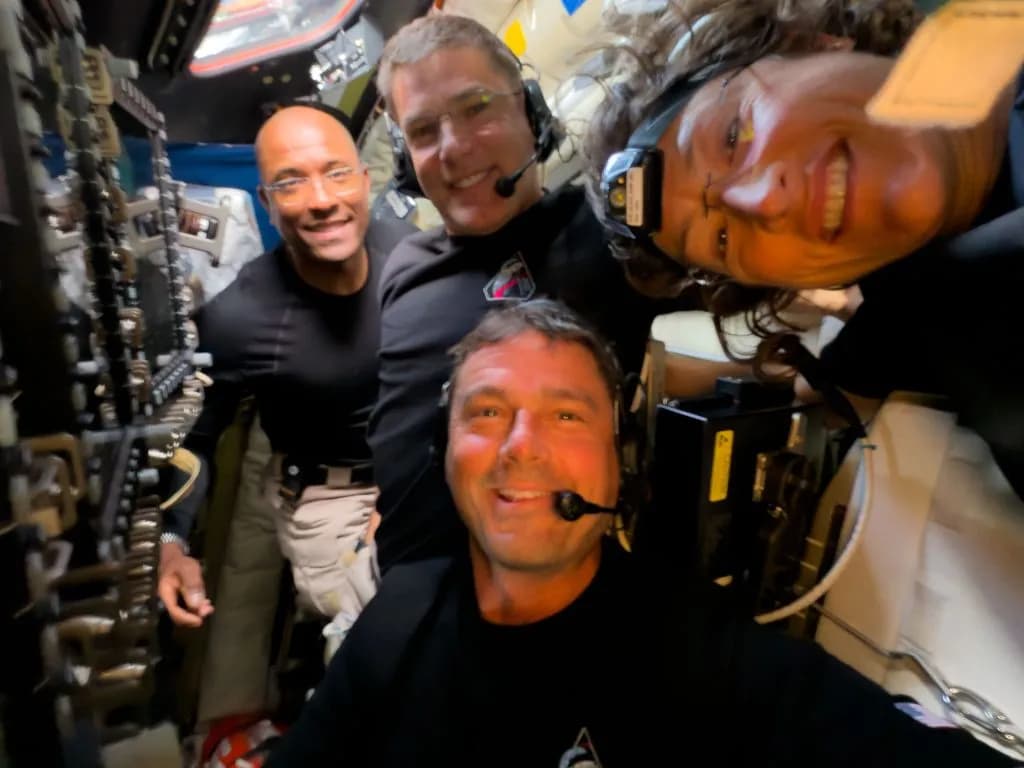
Aspen —The silence of space is absolute, but the radio waves carrying a voice from 230,000 miles away are surprisingly clear. On Tuesday, the Artemis II crew didn’t just float in the void; they called home. Specifically, they called the International Space Station, creating the first-ever moonship-to-spaceship radio linkup in history.
It’s a nice bit of cosmic trivia for the folks back on Earth, but let’s look at the logistics. This wasn’t just a wave to the ISS; it was a reunion between Christina Koch, currently orbiting on Artemis II, and Jessica Meir, still aboard the station. They’d shared the world’s first all-female spacewalk in 2019. Now, they were separated by nearly 370,000 kilometers, yet Koch told her “astro-sister” she never thought a reunion would look quite like this. It’s amazing.
Reid Wiseman, the mission commander, put it plainly: “We have been waiting for this like you can’t imagine.”
The visual data coming back is what actually matters for the broader narrative of deep space exploration. Wiseman beamed down images of the lunar flyby, including an Earthset photo that rivals the iconic Apollo 8 Earthrise shot from 1972. Koch described the view not just as beautiful, but defined by the “blackness” surrounding the planet. It emphasized, she said, “how alike we are” and the preciousness of the home planet. That’s the poetic spin. The hard data is that humanity has returned to the moon for the first time since Apollo 17 in 1972, and the technology is holding up.
But technology has quirks. The Orion capsule’s toilet has been on-and-off limits since launch. The crew is currently relying on a backup bag-and-funnel system for urinating. It’s not glamorous, but it’s functional. NASA Administrator Jared Isaacman confirmed that repairs are needed for the plumbing before the next Artemis mission. “We definitely have to fix some of the plumbing,” he told the crew. No surprises there. Engineering projects always have a few loose ends.
The mission profile is tight. The crew is aiming for a Friday splashdown off the San Diego coast, wrapping up a nearly 10-day test flight. This sets the stage for Artemis III next year, which will feature a lunar lander docking demo in orbit around Earth. Artemis IV follows in 2028, attempting a landing near the lunar south pole. That’s the timeline. That’s the plan.
There’s also the matter of the cosmic debris. During a debriefing with lead lunar scientist Kelsey Young, the astronauts reported seeing a cascade of pinpricks of light on the lunar surface. These were impacts from cosmic debris, lasting mere milliseconds. Coincidentally, these flashes aligned with Monday evening’s total solar eclipse. It’s a minor detail, but it adds texture to the environment they’re navigating.
The splashdown is the practical endpoint for this specific leg of the journey. The astronauts return to Earth, the capsule is inspected, and the focus shifts to the next launch. It’s a cycle of testing, failure, repair, and retry. That’s how you get to the moon. And eventually, you get back.
Keep up with Aspen
The day's Western Slope news, one email each morning. Free.