Garfield County Sheriff Proposes Paid Community Day for Deputies
A column by Waller argues that Garfield County’s sheriff should adopt a philosophy of shared public safety, proposing a community oversight board, a trained volunteer force, and one paid day a month for every deputy to volunteer in the community.
Glenwood Springs —A single paid day off. That’s the entire cost of the proposed community engagement strategy.
One day. For every deputy. In a county where the sheriff’s office is already stretched thin covering a geographic area larger than some states, this is the pitch for a new era of public safety.
It’s not a budget crisis. It’s a philosophy shift.
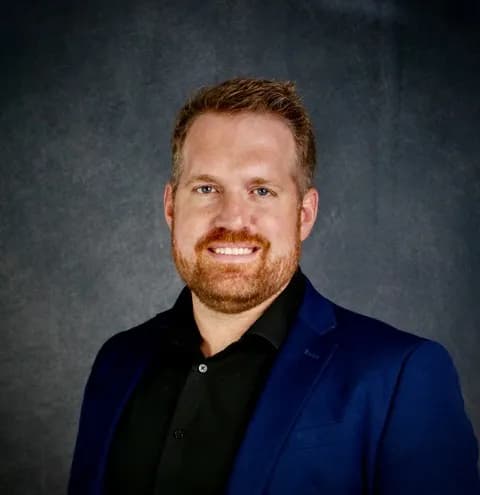
The column from Waller, running in the Post Independent, argues that Garfield County’s sheriff needs to stop treating the community as a passive audience and start treating it as a partner. The headline is simple: “If I were sheriff.” The premise is that public safety works best when it’s shared. Not outsourced. Not imposed. Shared.
On paper, this sounds like the kind of civic idealism that gets printed in newsletters and forgotten by Tuesday. In practice, it’s a direct challenge to the traditional, badge-centric model of law enforcement that has dominated the valley for decades.
Waller isn’t asking for a revolution. She’s asking for a routine change.
The proposal centers on three concrete actions. First, establish a community oversight board. This isn’t a new body of experts hired from Denver. It’s municipal reps, county commissioners, and school board members. The goal is transparency. The current system relies on press releases. The proposed system relies on relationships. The difference is access.
Second, bring back a trained volunteer emergency response force. We’ve seen what happens when wildfires hit. Manpower matters. Deputies can’t be everywhere at once. A volunteer force for evacuations and traffic control doesn’t replace the pros; it supports them. It puts more capable hands on the ground when minutes count.
Third, and here’s the kicker: one paid day a month. Every deputy. In uniform. Volunteering at a nonprofit. Supporting a school event. Serving alongside existing organizations.
Let’s look at the math. Garfield County has roughly 100-120 deputies in the main office, depending on how you count auxiliary and specialized units. If we assume 110 deputies, and they each take one day off to volunteer, that’s 110 days of paid leave distributed across the year. It’s not a massive financial hit. It’s a logistical one. It’s about scheduling. It’s about ensuring that when a deputy is out in the community, they aren’t just posing for a photo op. They’re working.
Waller argues that trust isn’t built through buzzwords. It’s built through visibility. When people see law enforcement in everyday settings, they don’t just see a response unit. They see a neighbor.
The counter-argument, of course, is that deputies are already busy. Adding administrative burdens or even just the time cost of volunteering might seem like a distraction from the job. But Waller’s point is that the job is the community. If the community doesn’t trust the sheriff, the sheriff can’t do the job.
This isn’t about lowering standards. It’s about raising engagement.
The oversight board is the most politically charged part of the proposal. Creating a board made up of elected officials means accountability is no longer internal. It’s external. It’s visible. It means that if the sheriff’s office makes a decision, the public has a clear line of sight into it. No more black box operations.
The volunteer force is the most practical. We know the terrain. We know the risks. A trained local force that knows the roads and the people is infinitely more useful than a deputy who only shows up when the 911 call comes in.
And the one-day-a-month rule? It’s a habit. Not a program. Not a campaign promise. A habit.
It’s a small change. But in a county where the gap between the badge and the public can feel wider than the Grand River, it might be the only change that matters.
The cost? One day. Per deputy. Per month.
The benefit? A community that actually knows its sheriff.
Keep up with Glenwood Springs
The day's Western Slope news, one email each morning. Free.


Battle Mountain Huskies Defeat Glenwood Springs to Secure Playoff Host

Pueblo Teacher Challenges Silent Incumbent in Colorado Education Race