Aspen Chamber Backs $5.2M Healthy Community Fund Measure
The Aspen Chamber Resort Association voted to support the Healthy Community Fund, which returns to the ballot as Issue 1A with a new mill levy structure projected to raise $5.2 million.
Aspen —The hum of the ACRA boardroom on Tuesday was less about the air conditioning and more about the weight of a decision. It wasn’t just a vote; it was a public pledge. The Aspen Chamber Resort Association, a body that usually moves with the quiet confidence of established business interests, chose to stand behind something messier, more human, and arguably more vital to the valley’s social fabric: the Healthy Community Fund.
Why does this matter to you? If you’ve ever waited for a senior service appointment, relied on a local non-profit for crisis intervention, or simply noticed that the safety net in Pitkin County is thinner than it used to be, you know exactly what’s at stake. This isn’t abstract policy. It’s the difference between a problem being managed quietly and it erupting into a crisis you can’t ignore.
The fund, which has supported health and human services for over two decades, is set to expire at the end of 2027. But it’s not disappearing. It’s returning to the ballot this November as Issue 1A. And it’s coming back changed.
The biggest shift? The county is proposing to replace the existing fixed revenue structure with a mill levy. What does that mean in plain English? It means the amount collected will rise or fall based on assessed property values. It’s dynamic. It’s responsive. And for some, that’s a feature. For others, it’s a flaw.
Then there’s the sunset clause. Currently, the fund has a shorter lifespan. The proposal extends it to 25 years. Why? To reduce the frequency of voter fatigue. As County Commissioner Greg Poschman put it, the longer sunset period will ease the burden on voters, who have historically had to vote on the measure every five or so years. It’s a pragmatic move. Less friction. More stability.
But not everyone is convinced.
Aspen City Council Member Bill Guth, speaking at a September meeting with the Board of County Commissioners and Aspen City Council, wasn’t shy about his skepticism. “I feel overtaxed,” he said. “I’m feeling a tremendous burden from that lately, and I’m really skeptical about these things and whether they deliver essential services or not.”
His concern is understandable. Property taxes are already a heavy lift for many locals. Adding another layer, even one that’s designed to be flexible, can feel like the final straw. And if the mill levy leads to higher collections during a boom in property values, does that justify the initial jump? Or does it just mask the underlying instability?
On the other side of the ledger, County Commissioner Patti Clapper offered a different perspective. “Everybody’s frightened about another property tax,” she said Tuesday. “This one, in the long run, saves communities money by helping to fund these diverse, diverse, nonprofit organizations.”
Her argument hinges on prevention. By funding non-profits early, the fund addresses issues before they balloon into costly crises. It’s an investment in resilience. And if the fund generates approximately $5.2 million in 2028 — nearly $500,000 more than it would under the current structure — that’s real money flowing back into the community.
For those in affordable housing, the impact is tangible but manageable. Poschman noted that for someone living in such a unit, the tax will be about $85, up from around $60 for every $100,000 of property value. It’s a modest increase. Not a windfall. But not a catastrophe either.
The campaign for the fund is led by a coalition of local leaders, including Poschman, Commissioner Ted Mahon, Aspen School Board Member Christa Gieszl, and Aspen City Council Member Christine Benedetti. Their unified front signals that this isn’t a partisan issue. It’s a community one.
And the community is listening. At the ACRA meeting, Aspen Mayor Rachel Richards made a point that stuck with me. She stated that the Healthy Community Fund helps keep problems at an “invisible level.” “You really can’t measure harm that’s not done,” she said.
Think about that. The best outcome isn’t the one where you see the results. It’s the one where you don’t. Where the services work so well that you never have to think about them. Where the seniors get their meals. Where the youth find their mentors. Where the families get their support. All quietly. All effectively. All invisibly.
That’s the power of the fund. And that’s why the ACRA board unanimously voted to support it. Because they understand that the health of the valley isn’t just about its economy. It’s about its people. And keeping those people healthy, supported, and stable is worth the drive.
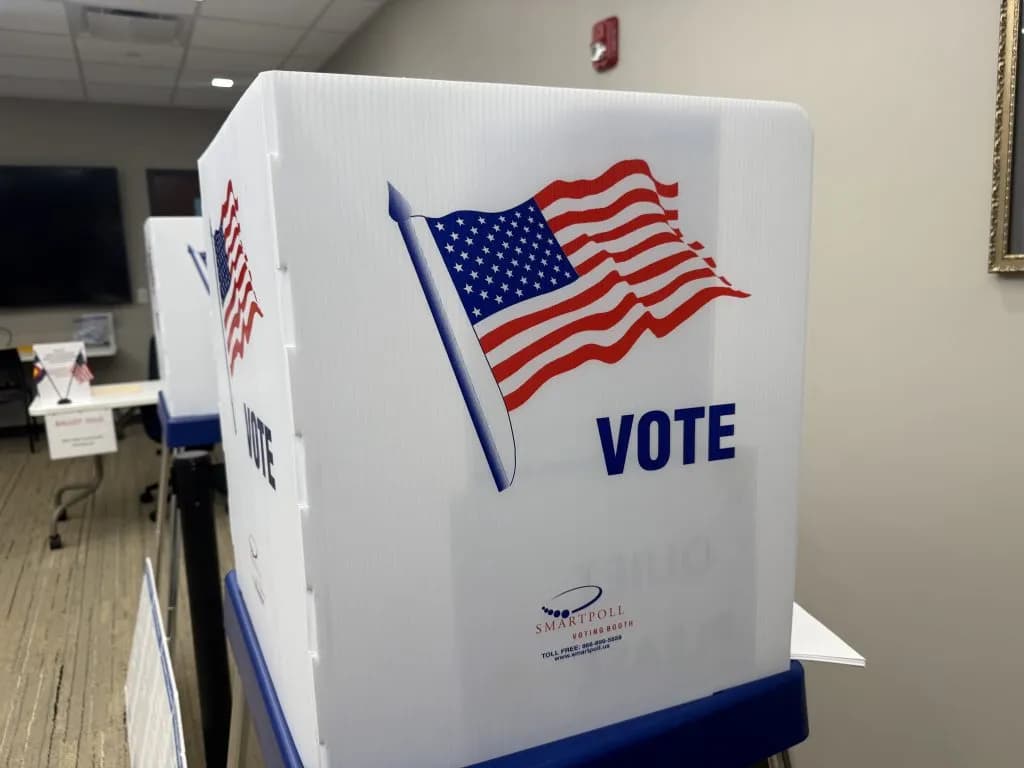
So, when you head to the polls in November, remember this. It’s not just about a number on a ballot. It’s the warmth of a community that cares. It’s the sound of a safety net holding firm. It’s the sight of a valley that’s not just beautiful, but resilient.
And if you look closely, you can feel it. The pulse of a place that knows how to take care of its own.
Keep up with Aspen
The day's Western Slope news, one email each morning. Free.