Aspen Council Debates November Election and Ranked Choice Hurdles
Aspen City Council debated moving elections to November, but officials questioned including ranked choice voting since the county lacks instant-runoff equipment. Members also argued for keeping the current March system.
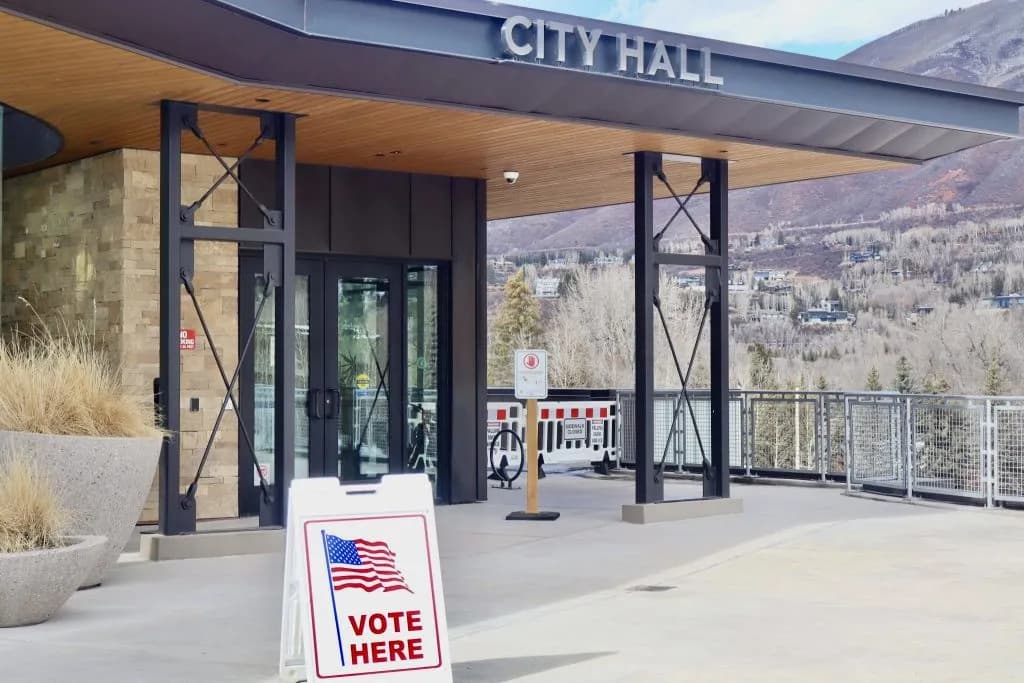
Aspen —The air in Aspen is thin enough to make you feel every word spoken, and on Tuesday, the City Council chamber felt particularly charged with a specific kind of civic anxiety. It isn’t about the snow, or the price of a latte on Hyman Avenue; it’s about when you get to cast your ballot. The obvious narrative, the one that has been drummed into the public consciousness since the summer survey, is that everyone wants to move the election from March to November. But if you look closely at the work session, that consensus starts to fracture into something far more complicated.
The idea that 91% of residents support a November vote is a headline-grabbing statistic, but it masks the logistical and political mess that comes with actually executing one. Aspen Administrative Services Director Alissa Farrell presented staff recommendations to the council, noting that while 78% of survey respondents selected a coordinated November election as their top choice, the implementation details are where the rubber meets the road. The survey ran from June 8 to August 3, and while it gave a high-level starting point, Farrell emphasized that the engagement efforts now need to dig deeper into the pros and cons with targeted community representatives.
The council is being asked to choose how they will gather this feedback, with options including a registered voter survey via direct mail, facilitated focus groups, presentations to civic organizations, and community open houses. But the real friction point isn’t how they ask; it’s what they ask. Staff proposed presenting four specific options to the public: a November election with a potential December runoff, a November ballot with no runoff, a June primary followed by a general election in the fall, and a November vote using ranked choice voting with no runoff.
Assistant City Manager Teika Carlson reiterated that all of these options have pros and cons, but the ranked choice voting option is stumbling over a practical hurdle. According to Aspen Special Counsel Jim True, county staff do not currently have the equipment to conduct an instant runoff. This technical limitation has Mayor Rachael Richards raising a red flag that goes beyond mere preference.
“It would be a confusing option to have on the survey if the county can’t do that,” Richards said. “I don’t know why we’d ask the public about something we are not prepared to do, or know if we can do.”
It’s a sharp critique of the planning process. Why put a question on a ballot, or in a survey, for a system that the administering body hasn’t confirmed it can physically run? It suggests a disconnect between what residents want on paper and what the infrastructure can handle in practice.
Council Member Christine Benedetti offered a different counterpoint, suggesting that the public should also be given the option to keep the current system as is. She argued that after getting all of the information, people might realize the status quo is actually the best system. Council Member Sam Rose agreed with Benedetti, adding a question that cuts to the heart of the debate: “‘Is our system really broken?’ is a really important question to me.”
Rose also strongly opposed the idea of a June primary paired with a November election, pointing to the fact that changing the general election date requires voter approval. The current system is a general municipal election held every two years by the Clerk’s Office in March, with a potential runoff in April. It is familiar, it is established, and for some on the council, it is good enough.
The tension in the room was palpable. On one side, you have the survey data suggesting a strong desire for change and coordination with Pitkin County. On the other, you have officials questioning whether the county is ready for ranked choice voting and whether the current system is truly broken. The engagement process now begins, likely through direct mail or open houses, but the underlying question remains whether the public will be asked to solve a technical problem they didn’t know existed.
The council chamber is quiet now, the papers stacked on the tables, the microphones off. Outside, the aspens are just beginning to turn gold, their leaves catching the last of the afternoon light. The city is preparing for a winter that will be defined not just by ski lifts and snowfall, but by the quiet, persistent hum of a community trying to figure out how it wants to govern itself.
Keep up with Aspen
The day's Western Slope news, one email each morning. Free.



Vail Climber Launches Ash to Altitude for Antarctic Summit
Underwood Targets Mountain Housing With $150K Loan Program and Rental Caps