Aspen Festival Conductors Deliver Best-Ever Programming Year
The Aspen Times highlights a weekend of exceptional classical performances, noting that two of three conductors were women and praising the festival's historic programming quality.
Aspen —“A barrier in classic music is crumbling.”
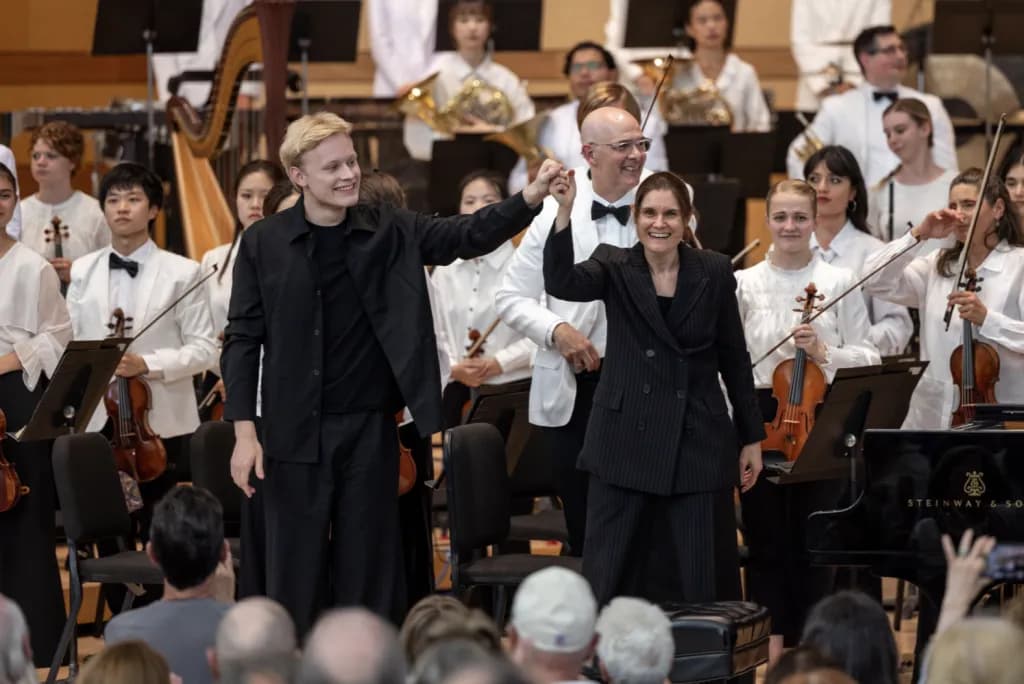
That observation from the Aspen Times’ review of a weekend where the festival didn’t just host concerts; it showcased a shift in power dynamics on the podium. The publication highlighted three conductors who delivered what it called “gems to be savored,” noting that two of the three were women. It’s a small detail in the grand scheme of classical music history, but in a town where tradition often dictates the guest list, it’s a significant data point.
The review, published by the Aspen Times, centered on a weekend that the outlet described as shaping up to be the festival’s “best-ever programming year.” The article didn’t just praise the music; it broke down the mechanics of why the performances worked, focusing on leadership and technical execution.
David Robertson led the charge on Friday with Brahms’ “Symphony No. 2.” The review noted that the performance “shone from the beginning,” radiating sonorities and rising to a “finely formed” conclusion. It wasn’t just background noise; it was a structured, pulsing event that set the tone for the weekend.
Then came Delyana Lazarova. The Aspen Times described her as having “no-nonsense podium leadership.” She opened with Barber’s “Medea’s Meditation & Dance of Vengeance” before tackling Shostakovich’s “Symphony No. 5.” The review was specific about the impact: “Every phrase, every crescendo, every climax had meaning.” It highlighted the orchestra’s key players, specifically naming principal horn Alexander Kienle, bassoonist Joshua Elmore, and timpanist Edward Stephan. The percussion section, the review noted, delivered an “appropriately overcharged mood” in the final pages.
Lazarova also conducted Russian pianist Alexander Malofeev in Rachmaninoff’s “Piano Concerto No. 4.” The article described Malofeev as having “necessary technical brilliance” but also finding “subtleties to bring out unexpected layers in the music.” The review suggested that their collaboration felt like a “personal tour of Rachmaninoff’s piano-centric mind.”
On Saturday, the dynamic shifted. Simone Dinnerstein conducted an 11-piece string orchestra from the piano bench in Davies Concert Hall. The newspaper reported that this pairing “worked big-time.” Dinnerstein drew connections between the two composers, noting their reliance on repetition and small phrases to create forward motion. The review described her Bach as “not fussy” but driving, with the ensemble appearing to “have fun,” particularly when the Glass finale devolved toward boogie-woogie.
The article also mentioned Michael Riesman’s suite from Glass’ score for the 2002 film “The Hours,” which opened the concert with “post-minimalist colors.”
For locals watching the arts scene, this suggests that the festival is leveraging diverse leadership to elevate its programming. It’s not just about who is playing; it’s about who is leading. The emphasis on Lazarova’s “no-nonsense” style and Dinnerstein’s unique perspective from the piano keys indicates a deliberate strategy to differentiate the festival’s offerings.
The financial implications are implicit in the “best-ever programming” claim. High-profile conductors and featured soloists like Malofeev, Kienle, Elmore, and Stephan command fees. The review’s focus on specific instrumentalists suggests that the budget is being allocated to ensure top-tier execution, not just star power on the podium. For the community, this translates to a higher caliber of performance, which supports the local tourism economy and reinforces Aspen’s status as a cultural hub. The “crumbling barrier” isn’t just a metaphor; it’s a business strategy. The festival is betting on quality and diversity to drive attendance and prestige.
Keep up with Aspen
The day's Western Slope news, one email each morning. Free.