Colombian Accordionist Yeison Landero Brings Cumbia to Beaver Creek
Colombian accordionist Yeison Landero brings a six-piece band to the Vilar Performing Arts Center in Beaver Creek to perform traditional cumbia rhythms.
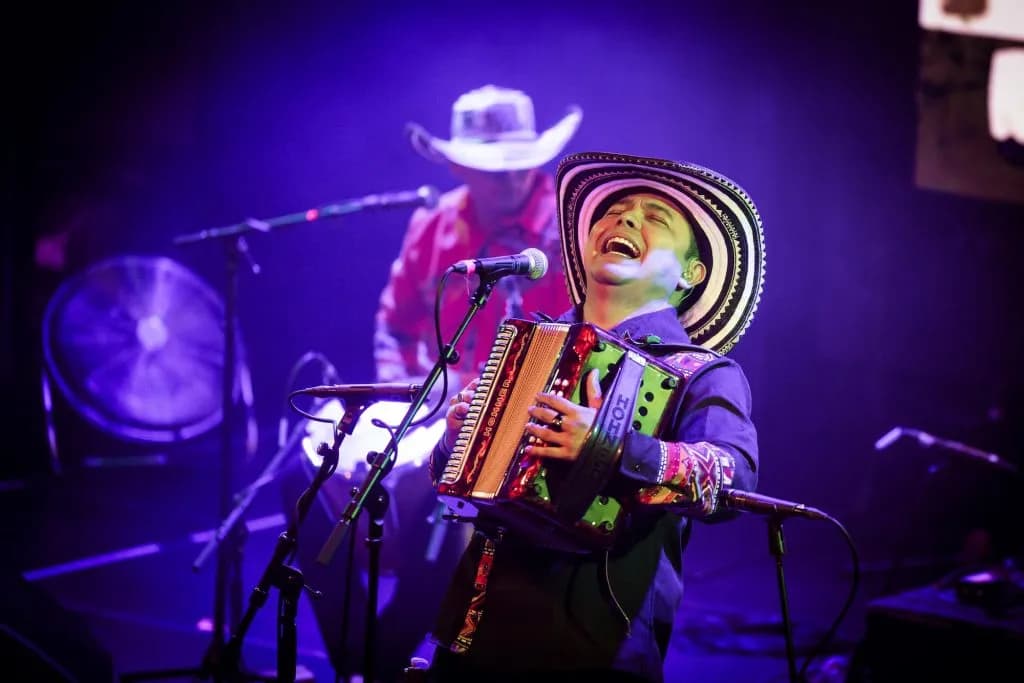
Aspen —The air in Beaver Creek is usually crisp, thin, and quiet, a kind of silence that feels expensive. On October 27, that silence breaks. It shatters against the walls of the Vilar Performing Arts Center with a sound that is loud, sweaty, and unapologetically alive. Yeison Landero brings a six-piece band from the heart of Colombia to play cumbia, and if you think this is just another polite cultural import for a ski town, you are missing the point entirely.
This isn’t about tourism. It’s not a polished, sanitized version of Latin music designed to please a room full of snowboarders. It is about the raw, rhythmic survival of a working class.
Landero doesn’t just play the accordion; he carries it like an inheritance. He learned these rhythms from his grandfather, Andrés Landero, a legendary accordionist who played for people to dance at festivals and patriotic celebrations. Landero studied music at Bellas Artes, earned a law degree, and spent years touring nationally before taking the tradition global. He has played at the Kennedy Center, the Lincoln Theater in the U.S., and venues across Canada, Chile, Mexico, Europe, and Africa. But when he steps onto the stage in Beaver Creek, he is not a celebrity; he is a custodian.
Javier Mutis of OM Producciones Fundación Cultural makes the distinction clear. “Cumbia music is a very exciting and vibrant music that invites people to dance,” Mutis said. “It’s a Colombian rhythm, but it’s taking over all over the world — it’s a rhythm of music that people are exploring, and people want to know more and dance.”
There is a warmth to the history here that defies the cold outside. Cumbia was born in the experiences of farmers and peasants, a way for humble people to express themselves without pretension. It is music from the barrio, rooted in the soil and the struggle of Latin America’s working class. Mutis calls it resilient music, a force that keeps cultural identity alive in a globalized world where everything else tends to blend into beige.
The band is a mix of origins, with five members from Colombia and one from Mexico, but their focus remains on the Caribbean carnival rhythms. They play gaita, a traditional flute, and they use their instruments to speak about the planet. “Our musicians are activists who are very worried about what’s happening with the world today with the conservation and preservation of,” Mutis noted, his voice trailing off into a broader concern for nature that is woven into the traditional rural songs.
It’s easy to dismiss a concert in a mountain resort as a luxury, a nice add-on to a weekend on the slopes. But if you look closely at what Landero brings with him, you see something harder to ignore. He is keeping a legacy alive that was almost lost to the noise of modernity. He felt the connection with his grandfather’s music and his culture, and he is trying to share it with as many people as possible.
The Vilar Center will be full, the lights low, and the floor crowded with people who might not know the history of the cumbia but will feel the pulse in their chest. You can feel it before you understand it, a vibration that comes from the ground up, from the fields of Colombia to the pine-scented air of Eagle County.
The band will play until the energy drains from the room, leaving behind only the echo of a rhythm that has survived centuries to reach this quiet corner of Colorado. The last note will hang in the air, sharp and sweet, a reminder that culture is not something you consume; it’s something you survive.
Keep up with Aspen
The day's Western Slope news, one email each morning. Free.