Aspen Launches 'In Bloom' Mural Project to Calm Traffic on Downtown Streets
Aspen transforms four busy intersections with Carbondale artist Chris Erickson's 'In Bloom' murals, using concrete bulb-outs to narrow lanes, calm traffic, and celebrate the 50th anniversary of the Pedestrian Mall.
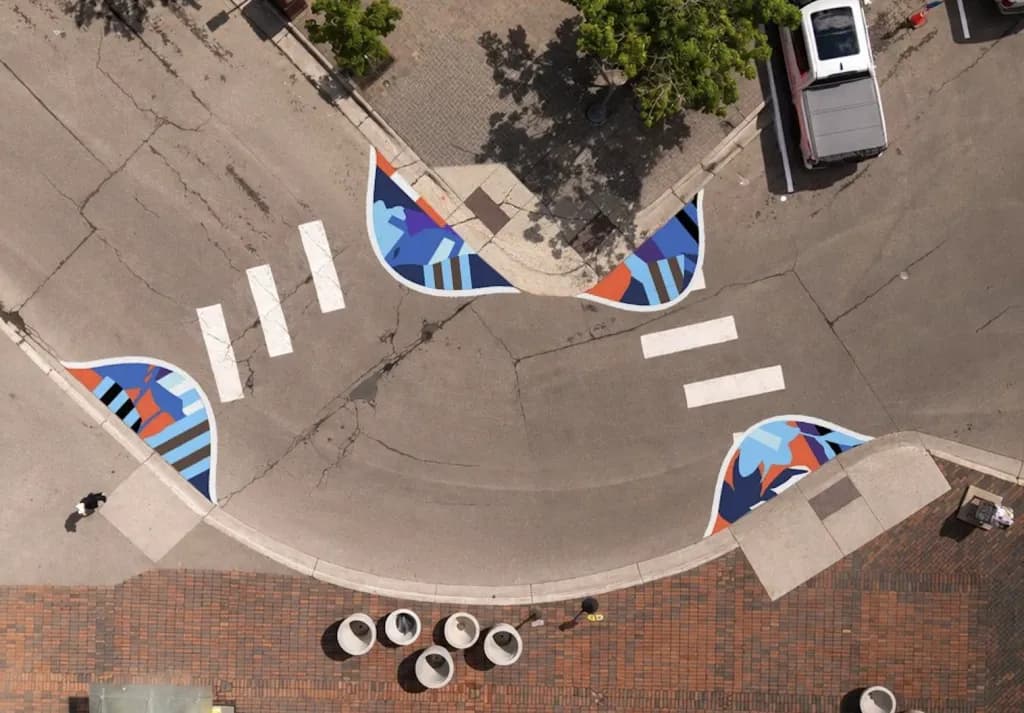
Aspen —The scent of fresh asphalt and wet paint hangs heavy in the crisp Aspen air, a sharp contrast to the dry, high-altitude chill that usually defines late spring in the valley. It is a sensory reminder that something is changing on the ground, not just in the sky. The city of Aspen is merging public safety infrastructure with public art, launching a new mural project called “In Bloom” that transforms four busy intersections into visual anchors for traffic calming. This isn’t just decoration; it’s a functional redesign of the streetscape, executed by the Red Brick Center for the Arts in partnership with the city’s Engineering Department.
The mural is the work of Carbondale artist Chris Erickson, whose reputation for capturing mountain aesthetics and the movement of nature is well-established in the region. Erickson’s goal with “In Bloom” is to celebrate the wildflowers that claim the hillsides and mountaintops as their home, but the execution is deeply rooted in engineering. The artwork is painted directly onto “bulb-outs,” concrete extensions that push the curb out into the roadway by approximately ten feet. These bulb-outs shorten the distance pedestrians must cross at crosswalks and signal to drivers that the lane width has narrowed, effectively calming traffic in the downtown core.
You can feel the intention behind the concrete. By extending the curb, the city is physically narrowing the road, which forces drivers to slow down and pay attention. It is a subtle shift in behavior, achieved through design rather than signage. Senior Project Manager Jack Danneberg notes that this project exemplifies how safety improvements can double as opportunities for community connection, and Project Manager Simeon Britting confirms that the department is working closely with Erickson to ensure the art adheres to strict traffic control measures while minimizing disruption to local businesses.
The locations are specific and strategic: Galena Street intersects with Hopkins Avenue, Hyman Avenue, and Cooper Avenue, while Cooper Avenue also meets Hunter Street. These are not isolated corners; they are the arteries of Aspen’s pedestrian mall. The color palette of “In Bloom” is deliberately chosen to harmonize with “Shifting Light,” a neighboring installation by Rachel B. Hayes, creating a cohesive visual narrative for Mall Fest 50. That festival, celebrating the 50th anniversary of the Aspen Pedestrian Mall, culminates on June 27, and these murals serve as both permanent fixtures and temporary tributes to the mall’s legacy.
Lara Whitley, the Aspen Public Art Program Lead, hopes residents and visitors will feel safer and experience a “spark of joy” while walking through these crosswalks. It is a dual promise: protection and pleasure. The engineering department is currently managing the installation process to ensure that the artistic vision does not compromise the functional safety of the bulb-outs. As the paint dries and the concrete sets, the streets of Aspen will look different, sounding the quiet alarm of a city that refuses to separate its utility from its beauty.
If you stand at the corner of Galena and Hopkins, you will see the curb extend, the paint bloom, and the road narrow. The cars will slow, the pedestrians will cross faster, and the flowers will seem to rise from the pavement, rooted in the same earth that supports the mountains above.
Keep up with Aspen
The day's Western Slope news, one email each morning. Free.
Steamboat Recommends E-Motorcycle Education to Clarify Rules
BLM Clears 113 Roan Plateau Parcels for December 2026 Oil and Gas Lease Sale