Aspen Lynx Population Faces Extinction Risk Amid Rising Fire Threats
Colorado Parks and Wildlife tracks a fragile lynx population near Independence Pass, where fire and prey loss threaten a species that was once extirpated and recently reintroduced.
Aspen —Snow crunches underfoot on Independence Pass, the air thin and biting at 12,000 feet. It’s quiet here, save for the wind moving through the lodgepole pines. But beneath that silence, Colorado Parks and Wildlife is counting on a shadow to stay alive.
The state’s best estimate for the lynx population sits at roughly 65 individuals. The credible range stretches from 45 to 92. This isn’t a census of a thriving herd; it’s a precarious balancing act for a species that has survived on the margins. And yes, the Aspen area is part of that fragile equation.
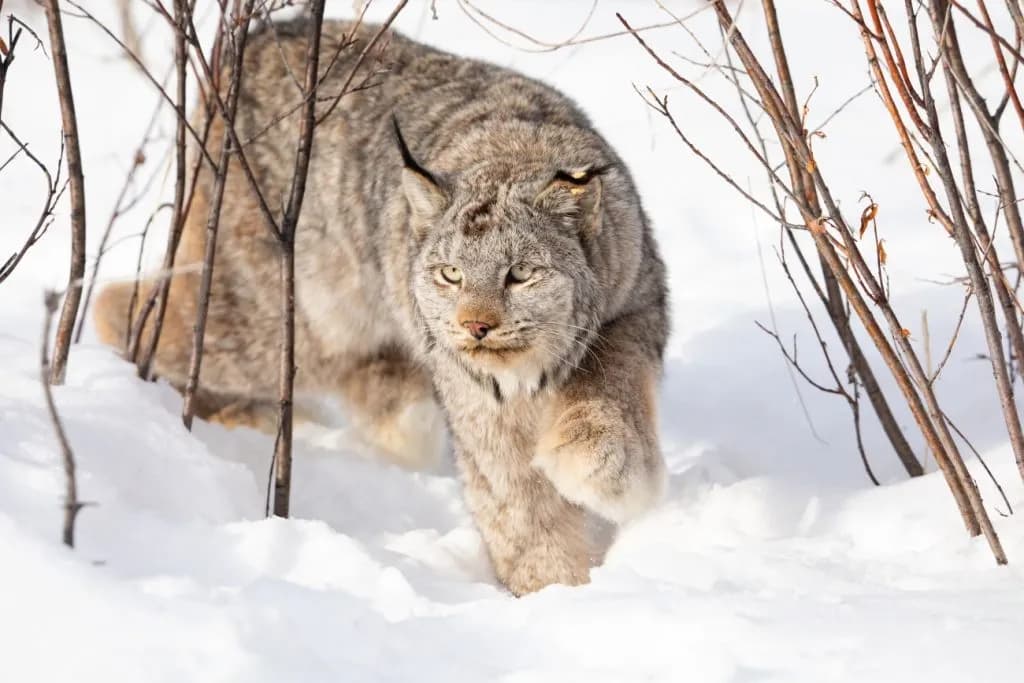
Jake Ivan, a CPW Mammals Researcher, says estimating the abundance of a reclusive, low-density animal is difficult. It’s not like counting elk where you can see the antlers from the highway. Lynx hide in the trees. They move in the shadows. CPW has monitored them for a decade, but that monitoring has been heavily skewed toward the San Juans. The agency conducts annual surveys there, but only a "snapshot" survey every five years for the rest of the state.
That snapshot includes the Aspen area.
"Lynx have been recorded in the Aspen area (toward Independence Pass) and White River National Forest (e.g., near Copper Mountain) periodically up through winter 2024-25," Ivan said.
Karin Teague, executive director of the Independence Pass Foundation, has seen the proof. She’s spotted lynx tracks on the pass herself over the last five to ten years. It’s not just theory. It’s physical evidence in the snow.
The habitat is there. Recent maps label large swathes of forest around Aspen as “Likely Lynx Habitat,” extending west, south, and east. But having the house doesn’t mean the family stays if the roof caves in.
Fire is the big one. Ivan calls it the primary threat. It doesn’t just burn a few acres; it impacts large chunks of habitat in a hurry. Once the fire hits, it renders much of that zone largely useless to lynx for decades. That’s a long time for a population of fewer than 100 animals to recover.
Other threats exist, too. Bark beetle outbreaks. Dispersed winter recreation. Certain forest management practices. Recent research suggests lynx might endure bark beetle outbreaks fairly well, but the caveat is the negative impact on their primary prey, the snowshoe hare. If the hares go, the lynx follow.
The species has a long history here. Lynx were native to Colorado, but by the 1970s, they were extirpated. Unregulated trapping, poisoning, and local habitat loss wiped them out. They were gone.
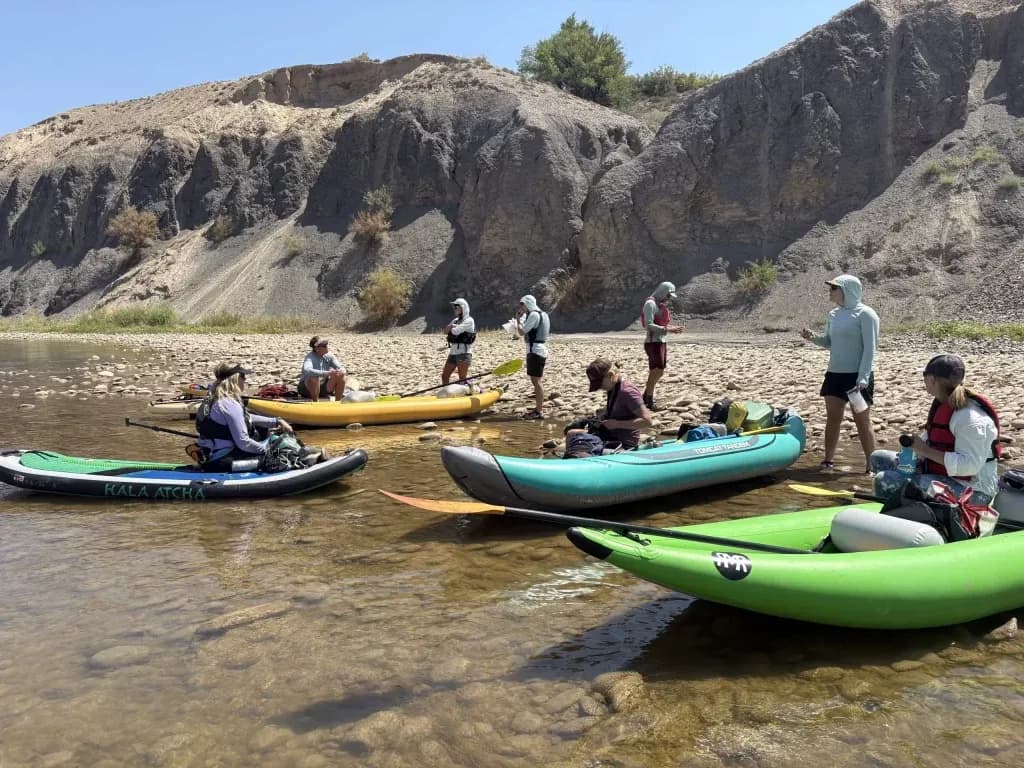
Then came the "pie-in-the-sky" idea during a rafting trip between biologists and higher-ups. They decided to bring them back. Between 1999 and 2000, 96 lynx were reintroduced. CPW ultimately released more than 200 lynx in the San Juans during that seven-year phase, using animals from Alaska and Canadian provinces.
They’ve been listed as a state endangered species since 1976 and federally threatened since 2000. They remain endangered today.
White River National Forest Public Affairs Officer David Boyd confirmed that lynx signs are regularly documented through monitoring efforts on the White River National Forest, including during the spring and winter of 2025. But Ivan noted that CPW doesn’t conduct surveys in the Aspen area often. They rely largely on U.S. Forest Service collaborators to do the heavy lifting.
So, what does this mean for locals? It means the lynx is still here, clinging to the edges of our developed corridors and high-country passes. It means fire risk isn’t just a property concern; it’s an existential threat to a species that took decades to return. And it means we’re relying on a limited number of researchers and collaborators to keep an eye on a population that could vanish again if the wrong fire burns through the wrong patch of forest at the wrong time.
The data is clear. The habitat is mapped. The tracks are in the snow. But the margin for error is razor-thin.
Keep up with Aspen
The day's Western Slope news, one email each morning. Free.