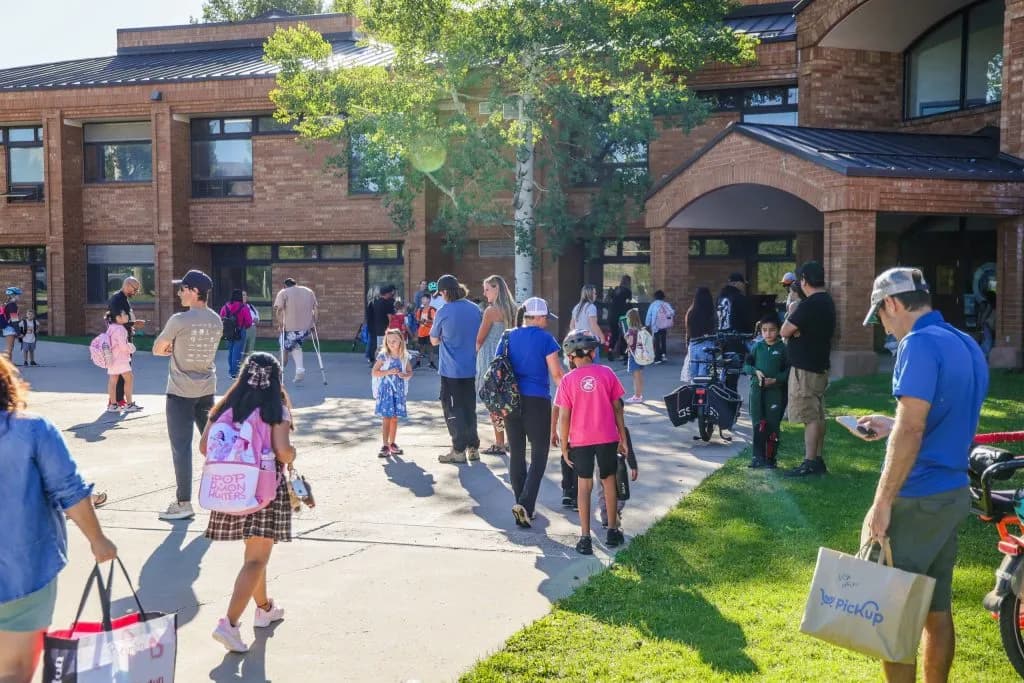
Aspen School Board Approves $2.6M Bond for Deferred Maintenance
Aspen School District officials review student performance data and approve $2.6 million in bond funding for infrastructure while addressing teacher stress over the new August-May calendar.

Aspen —The wind off the Elk Mountains doesn’t just cool the air in Aspen; it sharpens it, cutting through the wool of winter coats and settling into the bones of anyone standing still too long. Inside the Aspen Community School, the atmosphere is less about biting cold and more about the quiet, frantic energy of a place trying to hold its ground. It’s a building that has seen decades of snowpack and student bodies, its walls thick with the history of a town that has always struggled to balance its global fame with its local needs.
On Wednesday, the Aspen School District’s Board of Education gathered for its first public meeting of the month, and the air in the room was thick with the same tension that defines so much of life here: the push and pull between what the town needs and what it can afford. The agenda was a familiar mix of the administrative and the deeply personal — an annual report on student learning, a look at chronic absenteeism, and the heavy question of how to spend the money from the recently approved mill levy override.
Before the board dove into the spreadsheets, the meeting opened with a presentation from student liaisons at Aspen High School, who had been listening to their peers. They reported a strong approval for the new August-May calendar, specifically the shift that puts final exams before winter break. It’s a change that sounds efficient on paper, but the feedback from the faculty told a different story, one of exhaustion and logistical headaches.
“The lack of a fall break for teachers and the finals schedule created more stress as relates to the calendar than anything,” one faculty member noted in a slide shared with the board. “It is unreasonable to ask teachers to score approximately 150 essays during finals week prior to break.”
The problem wasn’t just the volume of grading; it was the timing. Teachers were forced to switch gears to courses they hadn’t taught in years, doing the heavy lifting of preparation over the break itself. It’s a small detail, but it reveals a larger truth about the pressure cooker that is modern education in a high-cost town. You can feel the strain in the way they describe it — not as a policy failure, but as a human one.
Then came the report from Casey White, principal of the Aspen Community School. She stood before the board and laid out a picture of a school that is, by most measures, doing well. Staff retention is high, with teachers averaging 17 years of experience, and attrition is low, hovering between zero and three percent. The focus this year has been on clarity, making sure students know why what they’re learning matters.
The results are visible in the data. English Language Arts scores remain high, with 71% of students meeting or exceeding standards in 2025. But it’s the math that has caught the school’s attention. For years, math was the weak link, the subject that got less time and less love. White was blunt about it: “Math has been a problem for us over the years.”
They changed course. They invested more time in math fluency, and the results have been stark. Math scores jumped by over 20 points from 2023 through 2025, with 68% of students now meeting or exceeding standards. It’s a turnaround worth noting, a reflection of the power of focused effort in a system that often feels stretched thin.
But success brings its own set of demands. Ellie Hahn, executive director of Compass for Lifelong Discovery, presented a request for $2.6 million in bond funding for the Aspen Community School. The money is needed for deferred maintenance and critical infrastructure, but also to expand campus functionality. It’s a significant sum, one that will require careful allocation from the mill levy override funds.
As the meeting adjourned, the discussion shifted to the broader issue of chronic absenteeism, a problem that plagues schools across the country but hits harder in a town where housing instability can mean a child is gone for weeks at a time. The board sat with the numbers, the weight of them pressing down on the room. Outside, the light was fading, casting long shadows across the snow-dusted streets of Aspen, where the next generation is trying to learn, grow, and stay present in a world that often feels like it’s moving too fast.
Keep up with Aspen
The day's Western Slope news, one email each morning. Free.