Aspen School District Drills 1,000 Feet for Geothermal Heat
Aspen School District confirms viable 1,000-foot geothermal depth under its football field, reducing required bore holes and cutting costs for a statewide clean energy model.
Aspen —“Building a strong project pipeline is one of the best ways to grow Colorado’s geothermal market.”
Lauren Suhrbier said that Tuesday. She is with Clean Energy Economy for the Region, a Western Slope nonprofit. Her words confirm what Aspen School District has already done: they found clean energy, 1,000 feet under the high school football field.
This is not a pilot program. It is a proof-of-concept for the entire state.
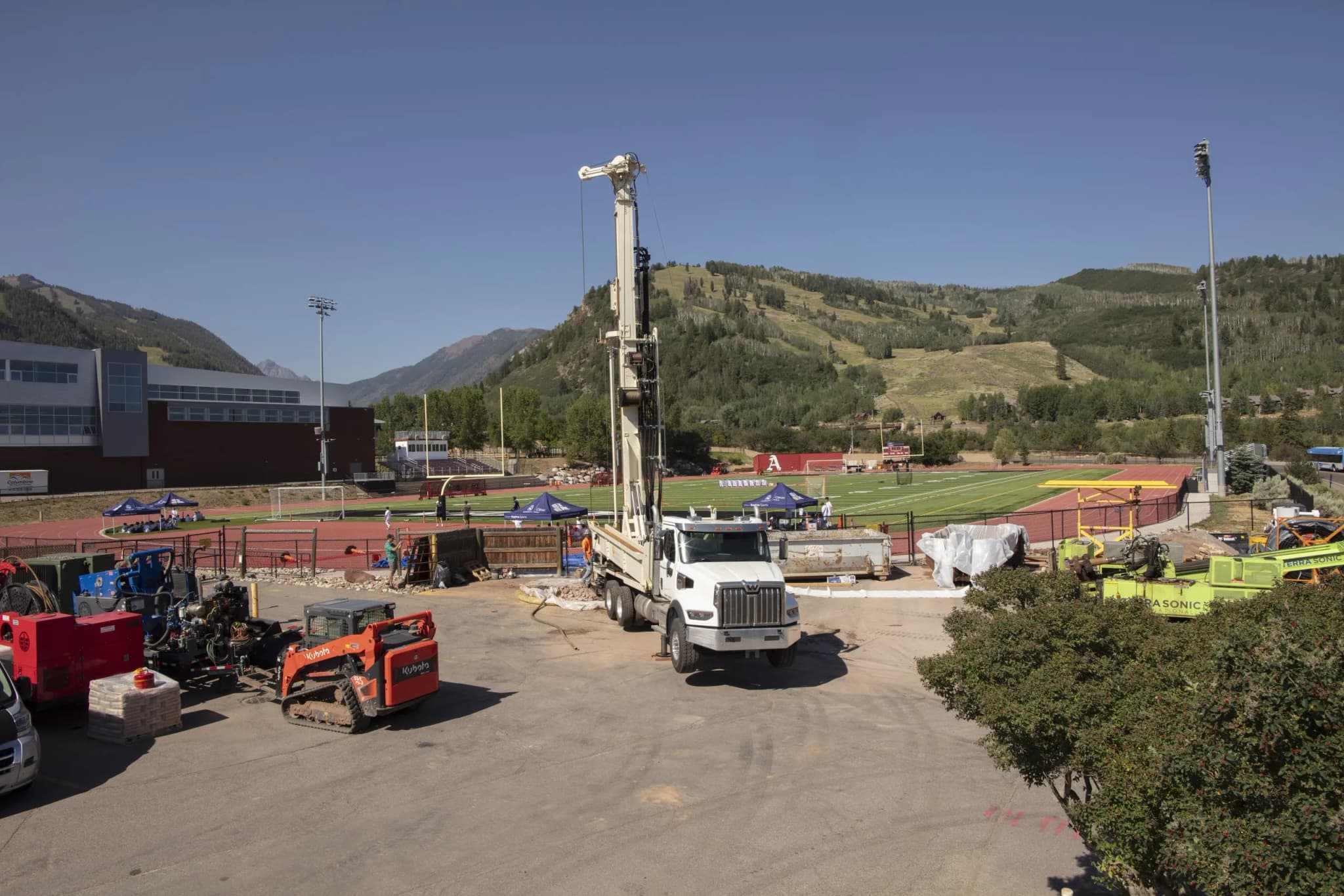
The drill test was rare. Most commercial geothermal projects in Colorado stop at 500 feet. PanTerra Energy drilled past that mark. They hit 1,000 feet of bedrock. The base temperature at that depth is higher and more stable than in shallower holes.
The first few hundred feet were the hardest. Drillers had to punch through layers of “cobble” near the surface. Once they hit solid rock, drilling sped up.
Aspen School District will use this deep bore for a geothermal heat exchange system. The mechanics are simple but effective. Ground-source heat pumps circulate water underground. In winter, when surface temps hit zero degrees, the system pulls up 55-degree water. That warm water becomes the starting point for heating buildings. In summer, that same 55-degree baseline cools them down.
The extra depth provides better efficiency. That is the key takeaway for local taxpayers and school administrators alike.
Construction consultants McKinstry verified the results. They worked alongside PanTerra Energy to prove the depth was viable.
“We’ve really seen an uptick in these projects,” said Ashley Brasovan, a senior account executive with McKinstry. “I think we’re finally able to help drive some of these studies and look at constructability and how can we make them more financially viable, get contractors and drillers more familiar with the technology and being able to move these from study through implementation.”
The financial math is shifting. The successful depth in Aspen could cut the number of required bore holes from 300 down to 150. That is a significant reduction in material and labor costs.
Those 150 holes still represent a big share of Colorado’s planned geothermal activity over the next two years.
Gov. Jared Polis and the Colorado Energy Office have made geothermal a research focus. This Aspen project fits directly into that strategy. It combines federal and state grants, tax credits, and a local bond issue. The district is not paying for this alone.
The implications for the Western Slope are tangible. Projects at this scale force contractors to build experience. They train crews. They expand fleets. New firms can enter the market with a clear template to follow.
Aspen is no longer just testing the technology. They are proving it works at scale. The 1,000-foot mark was previously targeted only by a project in Hayden. Now, Aspen has matched it.
The system will bring clean, low-carbon energy to school and administration buildings across the campus. It cuts the fossil fuel energy needed to reach comfort.
Read that again. The football field is not just for Friday night games. It is a power plant waiting to be tapped.
The short version: Aspen drilled deep, hit stable heat, and saved money on bore holes. The state is watching. The Western Slope has a working model for the future of its own grid.
Keep up with Aspen
The day's Western Slope news, one email each morning. Free.

Colorado Startup Week Bans Screens to Prove Human Connection Still Sells
VEB.RF Bank Fires Chief Economist Who Predicts Social Crisis