Aspen Transportation Committee Discusses $19.6 Million Budget
The Elected Officials Transportation Committee in Aspen discusses the allocation of their $19.6 million budget for 2026, focusing on traffic and congestion issues in the valley.
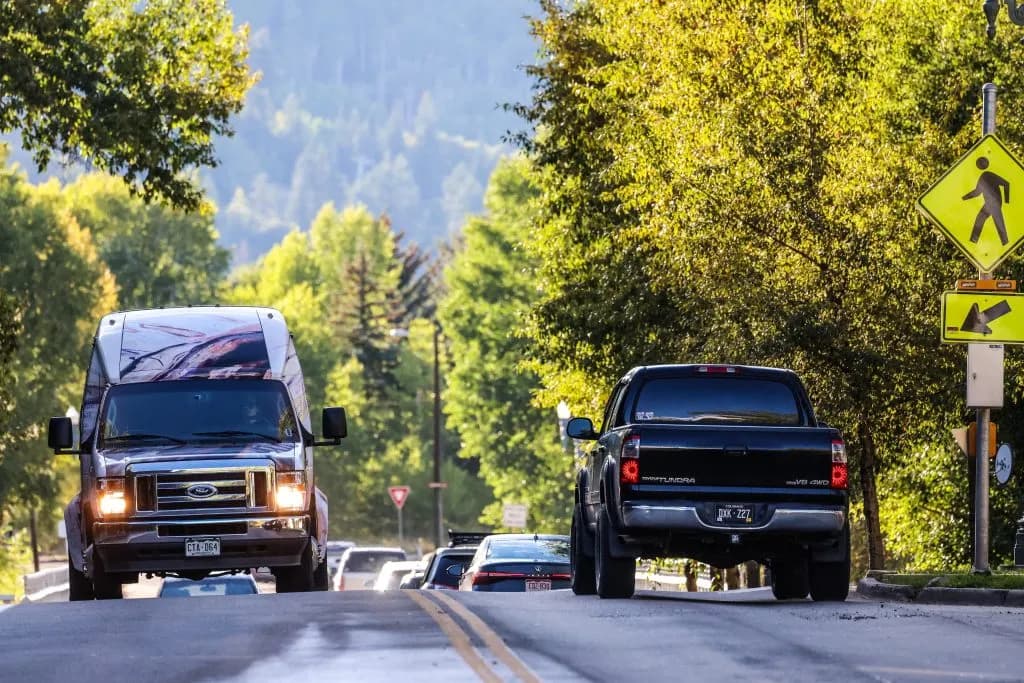
Aspen —$19.6 million. That's the total fund balance for 2026, as presented to the Elected Officials Transportation Committee. The committee, comprised of elected officials from Aspen, Snowmass Village, and Pitkin County, met to discuss the geographic scope of their budget and future projects. On paper, the 2026 budget looks substantial, with a beginning available fund balance of $11.9 million and an ending available fund balance of $13.5 million. However, committee members are questioning how to allocate these funds, particularly in relation to the traffic and congestion issues in the valley.
Let's do the math. The 1% Mass Transit Tax brings in significant revenue, with 48.13% going to the Roaring Fork Transportation Authority (RFTA) and 51.87% split between Aspen and Snowmass Village. The 0.5% Mass Transit Tax also contributes to RFTA, with 81.04% of the funds allocated to the authority. But, as Aspen Mayor Rachael Richards pointed out, the current funding structure may not be equitable, particularly considering that 10% of Aspen's workforce commutes from as far as Rifle, New Castle, and Parachute. For context, these commuters are not contributing to the solutions in the same way as local residents.
Pitkin County Commissioner Francie Jacober emphasized that 50% of the traffic passing through Glenwood Springs is headed to Aspen. However, she also stressed the need for the committee to consider the impact of these commuters on the Glenwood Springs community. In practice, this means thinking about how to distribute efforts and spending throughout the entire valley, rather than focusing solely on upvalley areas. Jacober noted that Garfield County, which is not currently a member of RFTA, should also be contributing to commuter efforts. This lack of participation is, in Jacober's words, "a glaring hole in the continuity in our valley."
Snowmass Town Council Member Tom Fridstein agreed, stating that Garfield County needs to "step up and help out with the transportation, which they haven’t done." Fridstein's comment highlights the challenges of coordinating transportation efforts across different jurisdictions. As Richards also noted, it was initially anticipated that downvalley communities would find their own funding sources, rather than relying on the EOTC to carry the weight for the transportation authority.
The committee's discussion raises important questions about the geographic scope of their budget and how to allocate funds effectively. For locals, the practical impact of these decisions will be felt in the form of traffic congestion, public transportation options, and the overall quality of life in the region. The EOTC's decisions will have real-world consequences, from the availability of bus services to the management of traffic flow. As the committee moves forward, they will need to balance competing priorities and consider the needs of different communities within the valley, and the consequences of their choices will directly affect the daily lives of people in the valley.
In terms of specific numbers, the 2026 budget includes $6 million in reserve for the Snowmass Transit Center. This allocation is part of the committee's broader efforts to address transportation needs. However, as the discussion highlighted, there are still significant challenges to be addressed, from the lack of participation by Garfield County to the need for more equitable funding structures. For folks around here, the bottom line is that the EOTC's decisions will have a direct impact on their daily lives, from commute times to access to public transportation. The committee's choices will directly impact the community, and the needs of the entire valley must be taken into account.
Keep up with Aspen
The day's Western Slope news, one email each morning. Free.