Aspen West End Congestion Project Moves Slowly Amid $14M Feasibility Review
Aspen's $14 million West End Congestion Project is in a data-heavy pause, with staff evaluating targeted traffic enforcement and pedestrian safety strategies rather than implementing immediate major changes.
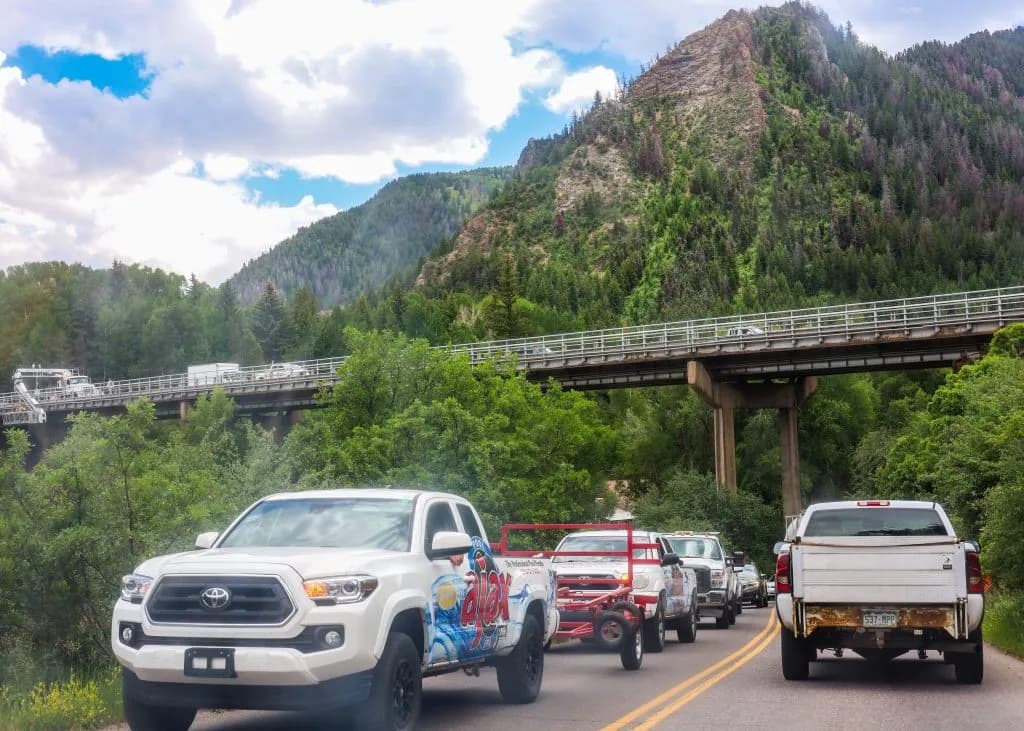
Aspen —A $14 million feasibility review. Twelve specific tasks. That’s the current scope for the West End Congestion Project, and it’s moving slower than rush hour on Highway 82.
Aspen City Council just got an update from staff on how they’re handling the traffic chaos in the West End. The neighborhood has been bleeding drivers who use local streets as a shortcut when the main highway gets clogged. In December 2025, the council approved contracts with Alta Planning + Design and Jacobs to figure out what to do about it.
The goal isn’t to rebuild the whole town. It’s to evaluate existing conditions and assess strategies for congestion, traffic enforcement, and pedestrian safety. The update explicitly states the project is proceeding consistent with prior council direction. They want to complete design and feasibility analysis before committing to any major changes.
Let’s look at what the people actually living there are saying. Jacobs conducted a survey of 103 West End residents. The result wasn’t a call for a complete overhaul. Residents preferred avoiding unnecessary changes. They want targeted, localized solutions. They don’t want broad restrictions that shut down the whole neighborhood.
That preference is being tracked alongside quantitative data. Staff is also considering feedback received outside the formal survey. Residents are worried about traffic enforcement, noise, pedestrian safety, and the pace of implementation. The update notes this feedback is being considered as each task progresses.
On the ground, the physical changes are starting to take shape, but they’re small. Traffic diverters were installed at 1st, 3rd, and 5th Streets on Hallam Street. The 5th Street installation was removed after a field review identified a conflict. The source cuts off there, but the implication is clear: they installed something, it didn’t work, and they took it out.
Alta is currently evaluating pedestrian walkway alternatives on 7th and 8th Streets. This is to address the gap between the 8th Street bus stop and the Aspen Meadows campus. A survey was recently collected for 7th Street, 8th Street, and the intersections of 7th/Smuggler and 8th/Smuggler. Alta is developing curb extension options tied to the completed Smuggler survey. Those alternatives will go back to council for direction.
Jacobs is looking at East/West pedestrian and bicycle routes. They’ve analyzed crash and pedestrian data. Residents have requested a walkway on North Street. But Jacobs says more recent pedestrian data is required before they can determine if a new or modified route is actually supported by use patterns.
In practice, this means you’re not getting a new bike lane on North Street tomorrow. You’re getting data collection. You’re not getting a permanent traffic circle on every corner. You’re getting a feasibility study for a defined scope of work.
The project is designed to return to council for direction only when additional analysis or peak-season data collection is complete. For now, the focus is on evaluating options, not executing them. The diverters are there. The surveys are done. The next step is waiting on the data to tell them if the current plan makes sense.
For locals, this is a pause. A very expensive, data-heavy pause. The $14 million is being spent on analysis to ensure that when they finally do build, it’s not just another fix that gets pulled out after a field review.
Keep up with Aspen
The day's Western Slope news, one email each morning. Free.