Aurora Volunteers Race to Secure Colorado's Graduated Income Tax Initiative
Aurora volunteers collect final signatures for Initiative 195, aiming to replace Colorado's flat income tax with a graduated system that saves middle-income families and raises $2 billion for schools and healthcare.
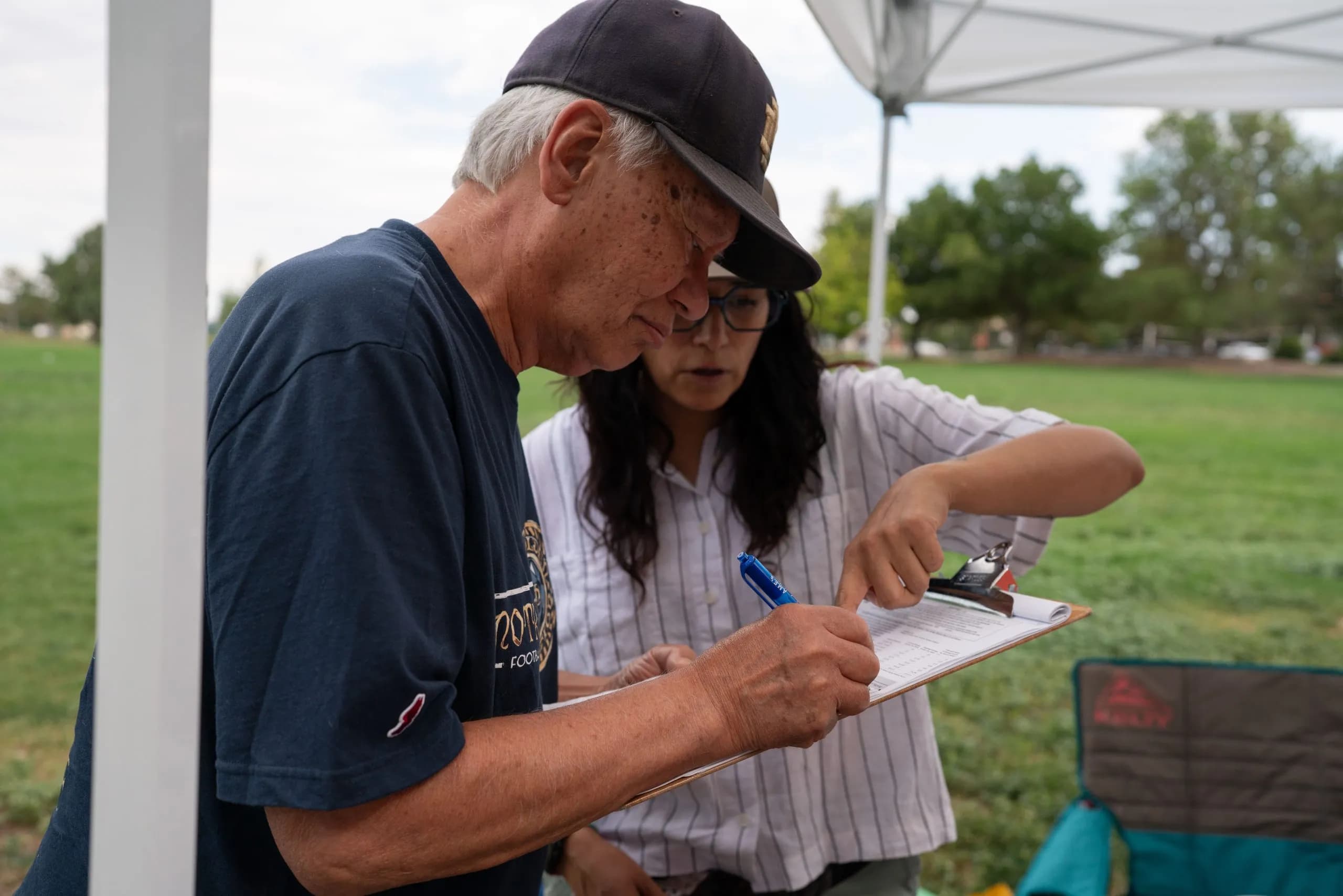
There is a quiet tension humming through Del Mar Park in Aurora, where the air smells of dry earth and possibility. It’s not the frantic energy of a political rally, but something more deliberate: the scratch of pens on paper, the shuffle of feet on gravel, the low murmur of volunteers explaining to neighbors why their tax bill might change. For weeks, this has been a sprint, not a marathon, as backers of Initiative 195 race against the clock to turn in roughly 125,000 signatures before Monday’s deadline.
It is fairly unusual for supporters of a ballot measure to be collecting signatures up until the final hour, yet this campaign has relied heavily on volunteers rather than paid circulators. The result is a grassroots effort that feels less like a corporate machine and more like a neighborhood project, though the stakes are state-wide.
“We’re feeling pretty bullish at the moment,” former state Rep. Chris deGruy Kennedy told The Colorado Sun on Thursday. He now leads the Bell Policy Center, the liberal think tank steering Initiative 195. “We’re feeling like we’re pretty close.”
But it’s not a done deal. The group must still secure signatures from at least 2% of voters in each of Colorado’s 35 state Senate districts, a geographic hurdle that can trip up even the most optimistic campaigns.
The measure itself is straightforward in its ambition but complex in its math. It asks voters to amend the state constitution to replace Colorado’s flat 4.4% income tax with a graduated plan. Currently, everyone pays the same rate on income earned by people and corporations. Under Initiative 195, that rate would shift based on earnings.
For a household earning the median Colorado income of about $95,000, the effective tax rate would drop to 4.07% from 4.4%, saving them a few hundred dollars annually. A family earning $1.2 million, however, would see their effective rate rise to 6.39%, paying nearly $24,000 more in income taxes. On the high end, annual income over $1 million would be taxed at 8.4%, while earnings up to $25,000 would be taxed at 3.7%.
Those changes are estimated to raise about $2 billion annually, funds earmarked for K-12 schools, healthcare, and early childhood programs.
The proposed six-bracket structure applies to federal taxable income for tax years beginning on or after Jan. 1, 2027. The brackets range from 3.71% for income up to $25,000, to 8.41% for income above $1 million.
On Monday, The Colorado Sun was present as volunteers worked at Del Mar Park, gathering petitions and collecting new signatures. The main struggle, Kennedy noted, has been the disbelief that a people-powered campaign could launch statewide without the deep pockets of paid circulators.
If you look closely at the faces in that park, you can see the skepticism turning into curiosity. They are not just signing names; they are weighing their own wallets against the promise of better schools and healthcare. The numbers back up the potential for savings, but only if you fall within the middle brackets. Those at the top will feel the pinch, while those in the middle might breathe a sigh of relief.
The deadline looms large, but so does the potential for change. As the sun sets over Aurora, casting long shadows across the park benches, the volunteers keep writing, one signature at a time.
Keep up with the Western Slope
The day's Western Slope news, one email each morning. Free.