Spain Erects Sea Barrier in Ceuta After 60,000 Migrant Crossing
Spain installed a 500-meter sea barrier in Ceuta following a mass crossing of 60,000 migrants from Morocco. The physical structure aims to manage border security while political tensions rise over Schengen implications.
Aspen —“Morocco is not a threat to Ceuta, or to the rest of Spain. It is a reliable partner.”
Interior Minister Fernando Grande-Marlaska stood there, defending his neighbor across the water. He wasn’t just talking about geography. He was talking about politics, pride, and the sheer chaos of tens of thousands of people deciding to walk, swim, or scramble across a concrete breakwater in a single afternoon.
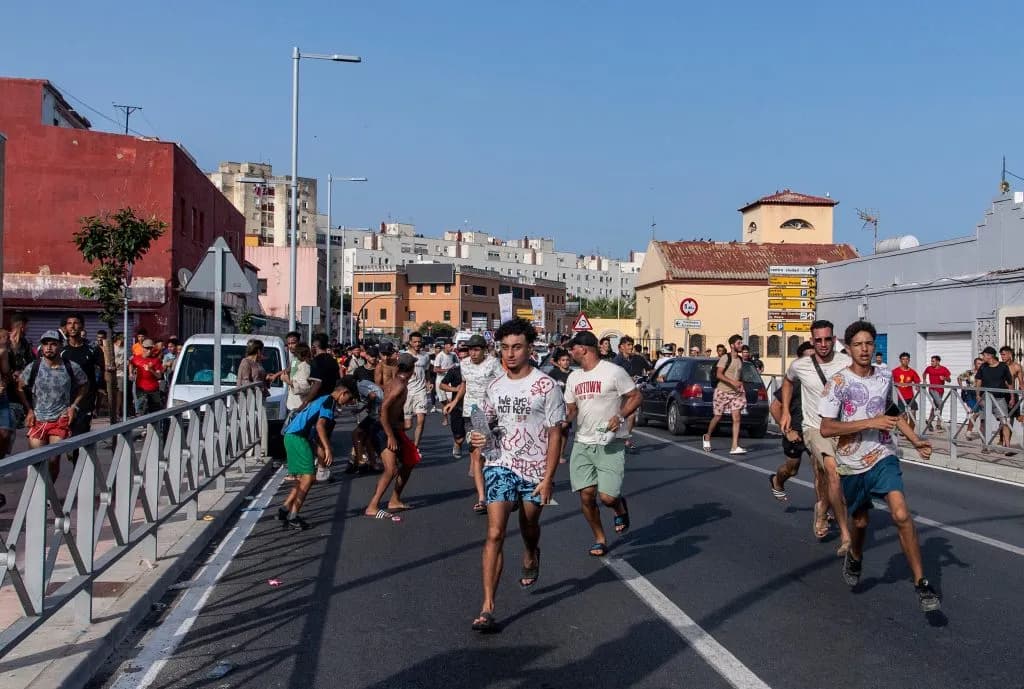
Spain installed a 500-meter-long sea barrier on Saturday, a physical response to a human flood. The new structure stretches 1,600 feet along the coast of Ceuta, Spain’s North African territory. It sits between Ceuta and Morocco. The timing was precise. The barrier went up just as the dust settled on a frontier rush that left at least 67 migrants dead. Some drowned in the surf. Others were crushed in a stampede trying to cross the existing breakwater.
The scale of the movement was staggering. Between Thursday and Friday, 50,000 to 60,000 migrants entered the territory. Most went back. They crossed the border, then turned around and headed home. A handful of exhausted swimmers reached Ceuta’s urban Tarajal beach on Saturday morning. Soldiers met them there, escorting them across the line.
Prime Minister Pedro Sánchez was less concerned with the migrants and more irritated by his European neighbors. He slammed calls to suspend Spain from the Schengen zone as being driven by “prejudice, fake news, ignorance, or political interest.”
He wasn’t wrong to be annoyed. The reaction from other EU capitals was swift and sharp. Leaders of 22 EU countries signed a letter, released Saturday by the Danish prime minister’s office. They asked the current Irish presidency to convene an urgent videoconference of interior ministers. Their warning was clear: uncontrolled mass crossings create a perception that illegal entry can turn into legal stay. If people believe they can slip in and stay, more will try. That undermines confidence in the common migration policy. It has repercussions for everyone, not just those on the front line.
Italian Premier Giorgia Meloni threatened to suspend Italy’s open-border Schengen agreement with Spain. Italy was already reimposing border controls for that reason.
Grande-Marlaska defended the cooperation with Rabat. He said the events require an evaluation by both Spain and Morocco, but it was that partnership that allowed Spain to revert the situation in 24 hours. He asked for a videoconference of EU interior ministers to establish a common response. Security of external borders, he argued, is a shared responsibility.
The part everyone skips past is the logistics of getting 60,000 people through a checkpoint designed for thousands. The heavy security on both sides of the border didn’t stop the breach. It just changed how it happened.
Stand there long enough on Tarajal beach, and you can see the new steel posts rising from the water. They are thin against the vastness of the Mediterranean, but they are there. The soldiers still stand guard. The migrants still cross. And the politicians in Brussels and Rome argue over what it all means for the future of Schengen.
Keep up with Aspen
The day's Western Slope news, one email each morning. Free.