BLM Switches to Helicopters to Cull 245 Sand Wash Basin Horses
The Bureau of Land Management shifts from bait-trapping to efficient helicopter drive-traps to remove 245 excess horses from the Sand Wash Basin, aiming to reduce the population from 507 to a target of 261.
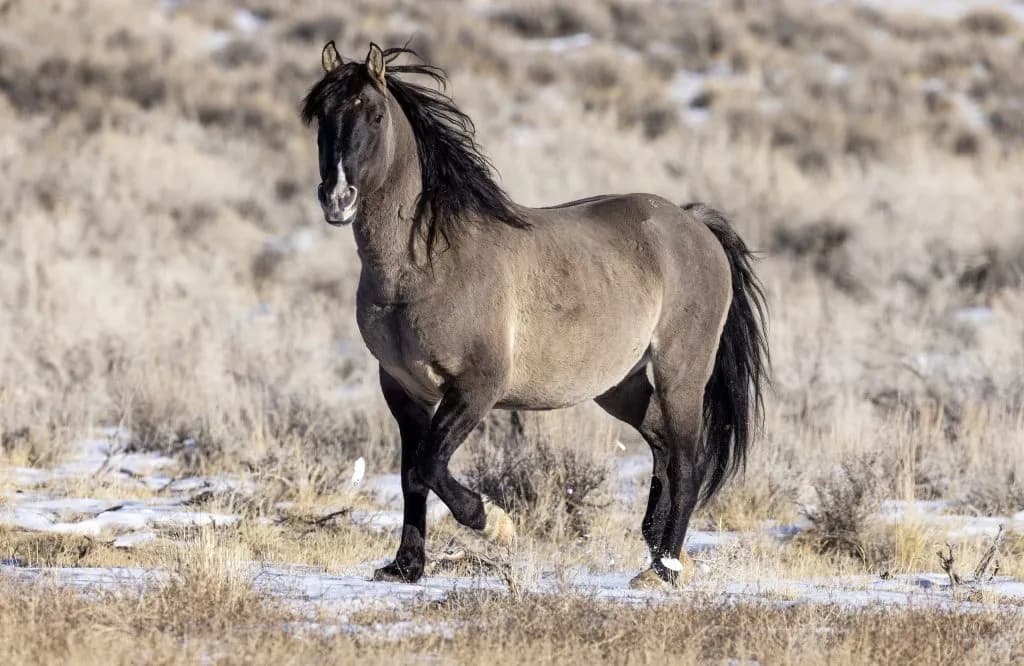
Glenwood Springs —“Colorado has been identified as a priority to bring the wild horse population within appropriate management levels statewide, including removal of excess horses that have moved outside herd management area boundaries,” said Steven Hall, Colorado’s state director for the Bureau of Land Management.
Translation: We’re pulling the plug on bait-traps. We’re switching to helicopters. And we’re taking out more than 245 horses in the Sand Wash Basin by 2026.
The current population sits at 507. The BLM’s “ideal” number is between 163 and 362. That leaves a surplus of roughly 145 to 344 horses, depending on which end of the target range you trust. The agency wants to cut that down to 261. It’s a specific number, which suggests they’ve done the math, even if locals haven’t.
The shift from bait-trapping to drive-trapping is the real story here. Bait-trapping involves luring horses into corral traps with food or water. It’s slower. It’s labor-intensive. And according to Hall, it misses the horses that wander outside the designated Herd Management Area boundaries. Those are the ones trespassing on private land, eating your forage and drinking your water.
Drive-trapping uses a helicopter to herd the animals into a long corridor that funnels them into a trap. It’s faster. It’s efficient. And it catches the stragglers.
“Drive-trap gathers are more efficient for gathering large numbers of horses, and allows the BLM to reach outside the boundaries of a herd management area,” Hall said.
The BLM originally announced in March that they’d be removing 100 horses via bait-trap. Two months later, they changed course. Now, they’re targeting 245 horses using drive-traps. That’s a 145% increase in the number of animals being pulled from the basin.
Why the change? Efficiency and fertility control.
The plan isn’t just to round up and ship out. It’s to dart them. CO2-powered rifles inject fertility control vaccines into the rump. Fewer horses means fewer animals need treatment annually. It’s a long-game strategy to reduce the frequency of future gathers.
“Darting is effective in reducing the frequency of gathers,” Hall noted. “Darting has been effective in Little Book Cliffs, Spring Creek and Sand Wash in reducing the size and frequency of gathers over time thanks to help from BLM partners and friend groups.”
It’s a familiar playbook. The BLM points to Little Book Cliffs and Spring Creek as proof of concept. If it worked there, they argue, it’ll work here. The Sand Wash Basin is already showing signs of the pressure. Horses have migrated outside the management area, seeking water and forage. They’ve trespassed on private property. That’s the friction point for local ranchers and landowners.
The shift caught horse advocacy groups off guard. Scott Wilson, a photographer who leads PhotoAdvoca, was among those surprised by the pivot from bait to drive. The sudden change from a planned 100-horse reduction to a 245-horse cull via a different method creates a logistical shock. It means more helicopters, more noise, and a larger footprint in the basin.
The Piceance herd management areas are in the mix too, with plans to gather around 1,000 horses across the broader region. But Sand Wash is the immediate focus. The goal is to stabilize the population at 261 and keep it there using darting as a maintenance tool.
For the folks living in the basin, this means more aerial activity. It means more horses being moved out of the landscape. And it means the BLM is betting that fewer horses will mean less conflict over resources. Whether that holds up when the next drought hits is uncertain. But for now, the math is clear: 507 is too many. 261 is the target. And they’re using helicopters to get there.
Keep up with Glenwood Springs
The day's Western Slope news, one email each morning. Free.
Twin Lakes Releases 2,500 Acre-Feet to Save Upper Arkansas River

Glenwood Springs Resident Calls for Active Citizenship Amid AI Data Center Water Threats