Brazil's Lula Faces Flávio Bolsonaro in High-Stakes Election
Brazil's 159 million voters choose between President Lula and Flávio Bolsonaro Sunday amid high US tariffs and regional rightward shifts, with a potential runoff looming.
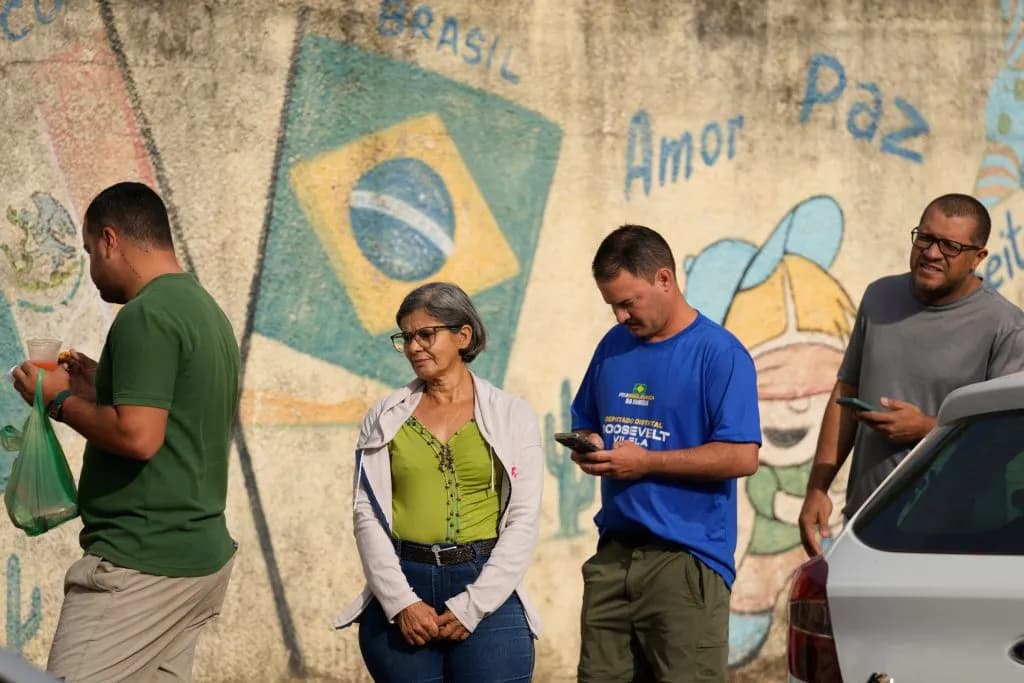
Aspen —The ballot box sits on a folding table in Rio de Janeiro, plastic-wrapped and waiting. Flávio Bolsonaro stands before it, a microphone pressed to his lips by local reporters. He does not pause for breath.
“Brazil needs change,” he says, his voice steady despite the heat of the day. “Brazil can’t stand so much suffering.”
That is the question hanging over every voter in Latin America’s economic powerhouse today: Can Brazil break free of its current political gravity?
For the nearly 159 million eligible voters casting ballots Sunday, the answer depends on who they fear more. Do they trust an 80-year-old incumbent who has survived seven presidential elections, or do they back the son of a far-right icon currently serving a 27-year sentence for a coup attempt?
The stakes are not abstract. They hit the wallet first. The Trump administration has imposed high tariffs on Brazilian exports, revoked the visa of Brazil’s ambassador, and sanctioned a Supreme Court justice who chaired the investigation that led to Jair Bolsonaro’s sentencing. These are not distant policy debates; they are immediate economic pressures on a nation whose rare minerals economy is second only to China’s.
Luiz Inácio Lula da Silva, the incumbent, watched those pressures tighten and adjusted his strategy. He promised to stand up to Washington. It worked. His approval ratings, which had plummeted during his third term, found a new floor among supporters who credit his social policies for improving millions of lives.
But the road to a first-round victory is narrow. If none of the 12 candidates clears the 50% threshold, the top two face a runoff on Oct. 25.
Carlos Melo, a political science professor at Insper University in Sao Paulo, noted that the Lula campaign was not expecting such a difficult election just weeks ago. He wrote for the Vail Daily that it is clear to the campaign that this is a tough battle, and that future elections without Lula could be even more so.
Lula told journalists after voting Sunday that he needs “to do double of what we have done” if reelected. He expressed confidence in a first-round win, but the numbers suggest otherwise. The affordability crisis is real, and a corruption scandal has ensnared the same justice who led the investigation into his predecessor.
Flávio Bolsonaro, meanwhile, leans hard into his proximity to the White House. He denies his campaign received help from the U.S. government, but he touts the alliance openly. He has promised to crack down on criminal groups and strike better deals with the Trump administration. He also campaigned on releasing his father.
The region is shifting right, a trend visible in recent elections across Argentina, Colombia, Honduras, and Peru. Brazil’s vote will determine if that shift holds or if the incumbent can hold the line against a tide of economic anxiety and political realignment.
Back in Rio, the lines at the voting center are thinning as the afternoon wears on. The plastic wrapping has been cut from the ballot box. Inside, the choices are sealed. Outside, the sun beats down on the pavement, indifferent to which name will end up in power come Monday.
Keep up with Aspen
The day's Western Slope news, one email each morning. Free.