Carbondale Bike Project Secures 501(c)(3) Status After 15 Years
Carbondale Bike Project secured its own 501(c)(3) status after 15 years, aiming to unlock new grant funding. The shop has diverted 12,000 pounds of metal from landfills annually.
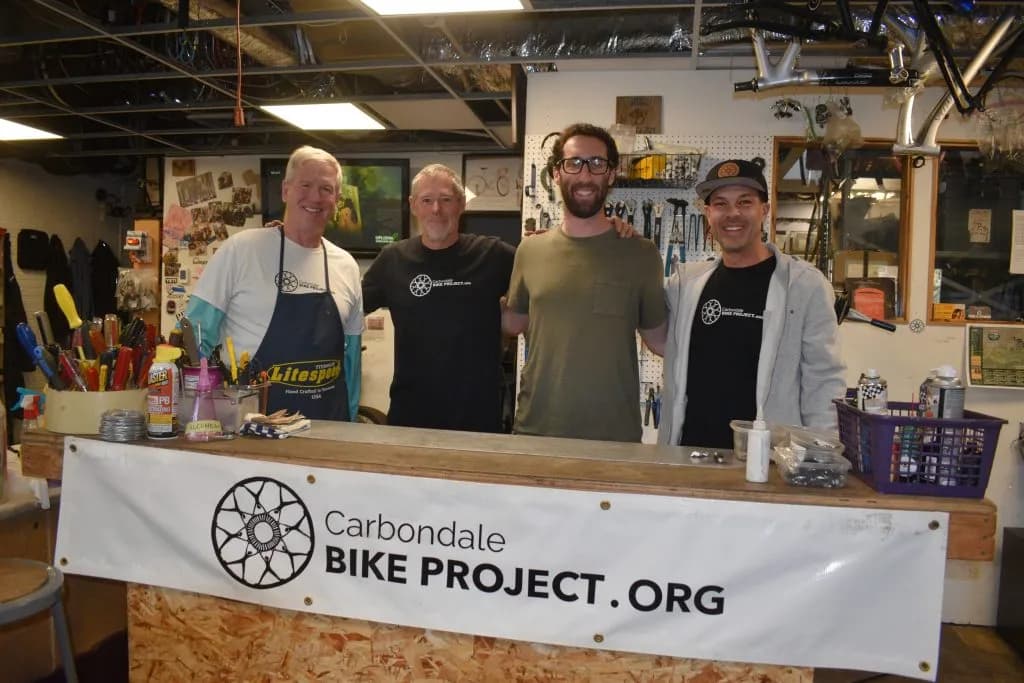
Aspen —Most people assume that a small, volunteer-run repair shop needs a formal nonprofit designation just to survive. The Carbondale Bike Project proves otherwise. For fifteen years, it thrived under the umbrella of another organization. Now, having finally secured its own 501(c)(3) status, the project isn’t just celebrating independence; it’s betting that legitimacy will unlock funding it never had access to before.
Erik O’Connell, the project’s manager, is candid about why the change matters. For decades, the shop has operated as a fiscal sponsor client of The Way of Compassion Dharma Center. That arrangement worked, but it kept the Bike Project in the shadows. “It does allow us a little bit more exposure (to funding), and I think it’s just more legitimacy,” O’Connell said. The new status forces the organization to file a Form 990, publicly detailing where every dollar goes. To O’Connell, that transparency is a feature, not a burden. “We’ve been going for long enough that we should be on our own two feet now,” he noted.
The business case for staying independent is rooted in the shop’s core mission: keeping bikes on the road and out of the landfill. The math holds up. Over the last few years, the project has diverted an average of 12,000 pounds of metal from local landfills annually. But the impact extends far beyond waste management. In the past three years alone, the organization has shipped 320 bikes to Africa through Bike for Humanity, 57 to the Navajo Nation via Navajo YES, and 48 to seasonal workers in Palisade with La Plaza. These aren’t charity handouts; they’re functional assets delivered by a network that now has a recognized nonprofit identity.
Locally, the shop operates on a do-it-yourself model that sets it apart from commercial competitors. Customers pay $10 per hour for labor, but they do the work themselves, guided by staff. If someone can’t pay cash, they can trade volunteer hours instead. This low-barrier entry point encourages a culture of self-reliance. “We want to empower people to fix it themselves,” O’Connell explained. He often suggests customers videotape the process so they can replicate it later. This approach also creates a clear boundary with local bike shops. “There’s always going to be people who don’t want to do the work, and so we’ll leave that up to those bike shops to do,” O’Connell said. It’s a pragmatic division of labor that prevents direct competition.
One of the shop’s most unique assets is its inventory of used parts. While commercial shops stock new components, the Carbondale Bike Project maintains a vast collection of hard-to-find parts for vintage and older models. Most of these items sell for just $5. For owners of bikes from the 1980s and 1990s, this resource is invaluable. “That parts room is a godsend,” O’Connell said. He described how riders frequently arrive seeking specific, discontinued components that no other local business carries. “A bike shop doesn’t carry stuff from the ’80s and ’90s,” he added. “They’ve got new parts and maybe a few used things here and there, but for a place for somebody to come and find used bicycle parts because they don’t want to get something brand new, it’s a godsend.”
The transition to full nonprofit status opens new doors for grants and major donations. Previously, potential donors might have hesitated to give directly to a program operating under another entity’s name. Now, the Carbondale Bike Project stands as a distinct legal entity. This shift allows O’Connell and his team to pitch larger institutional funders with greater confidence. The organization’s track record of shipping hundreds of bikes to underserved communities provides a compelling narrative for grant applications.
As the project moves forward, the focus remains on maintaining the balance between service and sustainability. The $10 hourly rate keeps repairs accessible, while the parts sales generate steady revenue. The volunteer model ensures that labor costs remain low, allowing the organization to reinvest in its mission. With its new nonprofit status, the Carbondale Bike Project is poised to expand its reach, both locally and globally.
O’Connell sees the future in terms of continued growth and deeper community integration. The shop is more than a repair center; it’s a hub for education and environmental stewardship. By teaching neighbors how to maintain their own bikes, the project reduces reliance on commercial services and extends the life of existing equipment. This dual benefit — economic savings for individuals and waste reduction for the community — makes the model resilient.
The final word belongs to the person who has steered this ship for years. O’Connell’s outlook is grounded in the tangible results of the work. He doesn’t promise revolution, but he promises consistency. “We’ve kept on average, every year for the last two or three, 12,000 pounds of metal out of potentially going into the landfill,” he said. That statistic isn’t just a number; it’s a promise that the bikes will keep rolling.
Keep up with Aspen
The day's Western Slope news, one email each morning. Free.