Carbondale Fire, Wolf Policy Shifts, and Early Snow Define Week
A Carbondale home burned to the ground, USDA urged Colorado to review wolf policies for ranchers, and early snowstorms hit Vail and Aspen as the region faced a volatile week.
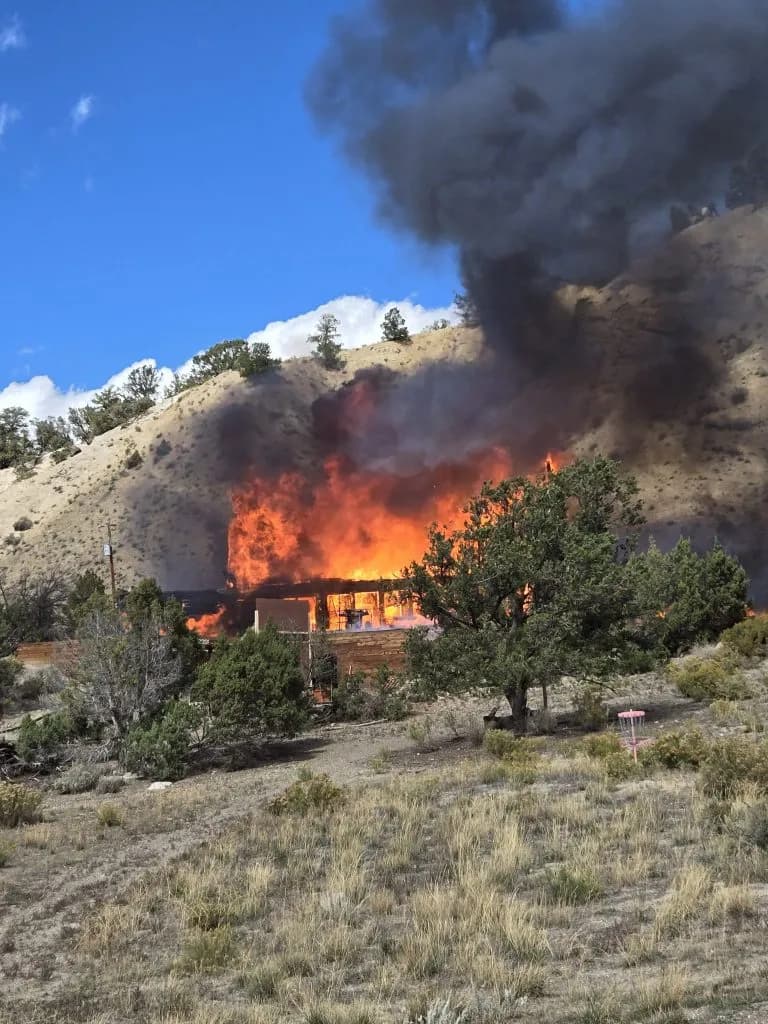
Aspen —The smell of smoke is a specific kind of scent, one that clings to wool sweaters and lingers in the back of your throat long after you’ve left the scene. For a family of three in Carbondale, that scent became the defining memory of their lives on Monday afternoon. They lost everything — their home, their business, and the belongings that made a house feel like a place you belong.
The Carbondale and Rural Fire Protection District arrived at 16400 Highway 82 at 1:16 p.m., only to find the single-family residence fully engulfed in flames. It’s a terrifying image, one that plays out with grim regularity on the Western Slope where dry timber and low humidity conspire against us. Yet, in a moment that feels almost miraculous given the intensity of the blaze, all residents escaped safely. No injuries were reported. Taylor Cramer covered the incident for the Post Independent, and it was the story that pulled readers in this week. When a neighbor loses their roof, the whole valley holds its breath; we look at our own dry yards and check our smoke detectors with a new, urgent vigilance.
That sense of precariousness wasn’t limited to residential fires. The conversation on the slope turned sharply toward the wild, as the U.S. Department of Agriculture asked Colorado to review its wolf policies. It’s a move that lands with heavy force on ranching communities, where the line between agriculture and wilderness is drawn in blood and bone. Following President Trump’s Sept. 4 order titled “Supporting America’s Ranchers,” Secretary of Agriculture Brooke Rollins urged states to listen to producers and revise standards for lethal takings. Ali Longwell reported on the directive in the Post Independent, noting that while the federal government looks at delisting gray wolves from the Endangered Species Act, the pressure is now on state-level protections. For those who work the land here, this isn’t just policy; it’s a daily negotiation with predation.
Then there was the snow. It arrived early, a stark reminder that winter is always just over the ridge. A storm moved through the western mountains, bringing up to 12 inches of snow to Colorado’s High Country. Vail Mountain received nearly three inches on Tuesday, a significant accumulation given that the resort’s target opening date is Nov. 13. The National Weather Service issued a winter weather advisory, predicting 4 to 8 inches in towns like Aspen and Snowmass Village, with wind gusts hitting 35 miles per hour. The snow fell on the peaks above us, a white silence that contrasts sharply with the smoke and the political noise of the week.
We read about the fire because we know how quickly a structure can go from solid to ash. We turned to the wolf story because we know what it means when the land you work on is no longer safe. And we followed the snow because we are always waiting for it, even when we’re not supposed to be. The week ended with the sky clearing over the valley, leaving behind a thin layer of ice on the windshield and a quiet that felt both peaceful and fragile.
Keep up with Aspen
The day's Western Slope news, one email each morning. Free.