Colorado Climber Survives 500-Foot Fall Off North Maroon Peak
A 28-year-old climber survived a 500-foot fall from North Maroon Peak in August, suffering multiple fractures but avoiding fatal head or spinal injuries during a traverse of the deadly range.
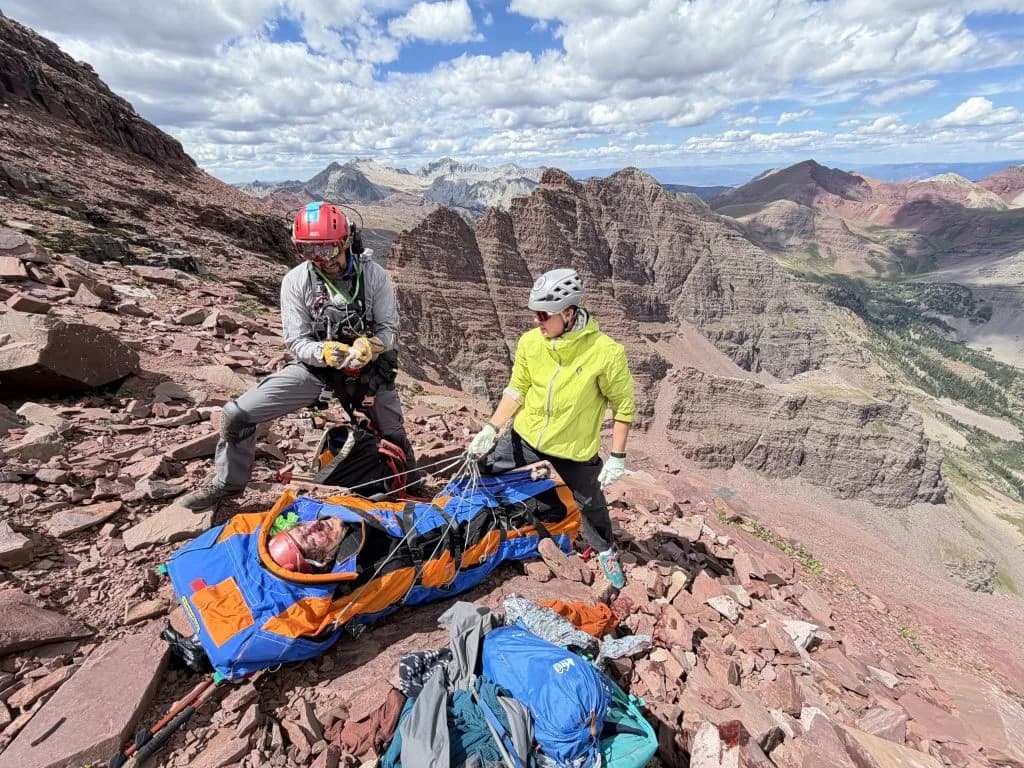
Glenwood Springs —Brandon Hinkle fell 500 feet off North Maroon Peak on Aug. 16 and lived to tell the tale.
The 28-year-old Colorado native suffered fractures to his lower leg, arm, nose, cheek, and ribs. He also sustained a pneumothorax in his lung and a dislocated knee. He did not suffer spinal or brain injuries.
That distinction matters. Most people who fall that far on the peaks did not walk away with just broken bones.
Hinkle was attempting a traverse of the range, starting up South Maroon Peak and moving across to North Maroon. He reached the summit of South Maroon at 7 a.m. with two friends. They met a fourth friend, Hope, at the top to celebrate her final 14er. The group shared spicy Cheez-its and stories before beginning the descent.
Hinkle slipped on loose rocks during the drop-off. He tumbled over a series of cliffs rather than taking one sheer plunge, according to Jordan White, president of Mountain Rescue Aspen.
“If he went off the next cliff, it was over,” White told The Aspen Times. “He was really lucky.”
Hinkle has climbed every one of Colorado’s 58 fourteeners at least once. He called the location a place where he finds solitude and peace, describing the feeling of walking above tree line as the sun rises. He had completed this specific route eight years earlier.
The mountain has a grim reputation. Between 2000 and 2015, 20 climbers died on the Bells, according to previous reporting from High Country News. The peak has earned the nickname “The Deadly Bells” for a reason. Hinkle avoided that fate, but the odds were not in his favor.
Mountain Rescue Aspen coordinated a helicopter evacuation from the High-Altitude Army Aviation Training Site. Hinkle was transferred to Swedish Health in Englewood, where he has remained since the accident.
He credited everyone on the mountain that day with saving his life.
Hinkle’s mother planted the seed for his climbing career before she passed away in 2018. He spoke about her influence while reminiscing at the summit with his friends, moments before he left the top of the world.
The twin peaks sit in Pitkin County, accessible from Aspen and Roaring Fork Valley communities. The traverse route is technical and exposed. Loose rock, steep drops, and thin air combine to make it one of the most dangerous hikes in the state. Hinkle’s survival is a statistical anomaly, not a standard outcome.
He joked that he is “missing something in my brain” regarding the fear of heights. That missing piece may have kept him calm during the fall, or it may have contributed to the slip. White did not specify which factor played a larger role in the incident.
Hinkle is expected to recover, though his injuries are extensive. He has been in the hospital since Aug. 16. His girlfriend, Caroline, was with him at Swedish Health in Englewood.
The rescue operation required coordination between local mountain rescue teams and military aviation assets. It was not a routine extraction. The terrain around North Maroon Peak offers few safe landing zones for helicopters, especially in August when snowfields are gone but rock is loose.
Hinkle’s story highlights a risk that locals and visitors alike underestimate on the Western Slope. The beauty of these peaks draws people in. The danger hides behind that beauty. Twenty deaths in fifteen years is not a small number for a single mountain range.
Hinkle will return to the mountains eventually. He said he always feels at peace above tree line. The wind on his face, the sunrise, the rock formations that look like desert sand after a flood. Those are the things he chases.
He chased them on Aug. 16, too. Just a little further than he should have.
Keep up with Glenwood Springs
The day's Western Slope news, one email each morning. Free.