Colorado Congressional Map Redraw Attempt Funded by House Majority Forward
A nonprofit organization tied to Democratic leadership in the US House is funding an attempt to redraw Colorado's congressional map, potentially giving Democrats an advantage in the state.
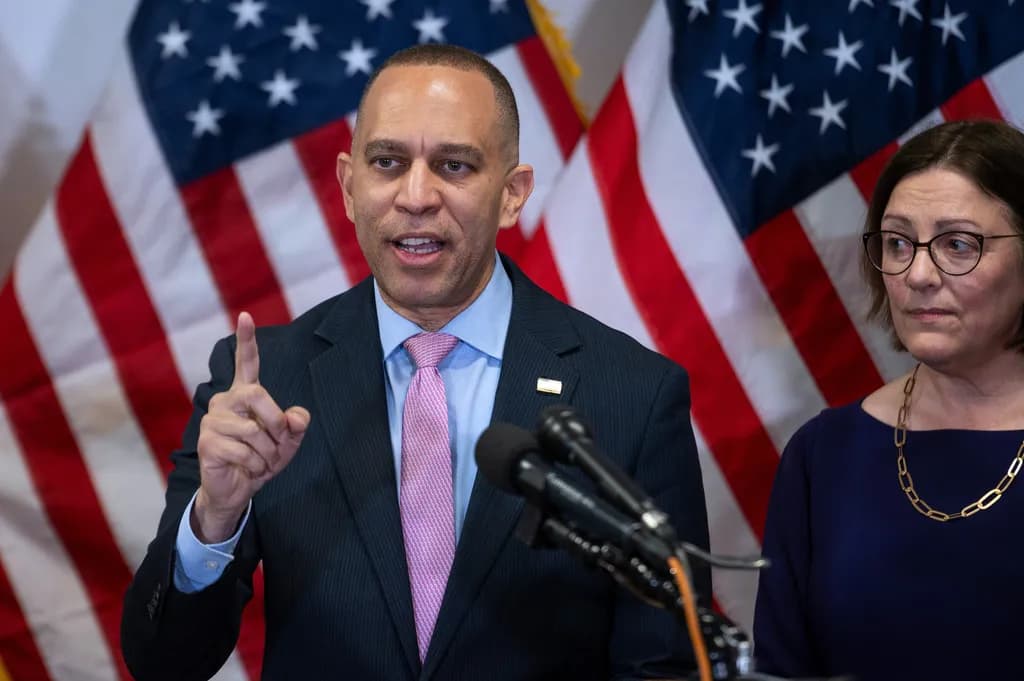
Colorado —A nonprofit organization tied to Democratic leadership in the US House, House Majority Forward, is funding an attempt to redraw Colorado's congressional map. The group has given $150,000 to Coloradans For a Level Playing Field, an issue committee working to put a measure on the November ballot that would redraw the state's congressional districts. This move could potentially make Democrats favored to win seven of the state's eight congressional seats, up from the four they currently control.
As House Minority Leader Hakeem Jeffries, a New York Democrat, looks to gain more seats for his party, it's clear that Colorado is a key target. The $150,000 infusion from House Majority Forward made up the bulk of Coloradans For a Level Playing Field's $250,000 in fundraising from January 1 through April 29. The group also received $90,000 from the Fairness Project, another liberal political nonprofit that doesn't disclose its donors.
The proposal put forth by Coloradans for a Level Playing Field would ask voters to adopt a new congressional map in Colorado for the 2028 and 2030 elections. This would be a significant change, as the state's independent congressional redistricting commission is currently set to draw a new map for the 2032 election based on 2030 census data. Colorado's current congressional map was drawn by the commission in 2021, after voters handed congressional and state legislative redistricting power to the commission in 2018.
The question is whether this new proposal would truly create a more level playing field, as the group's name suggests. As the Colorado Supreme Court reviews the proposal, it's worth noting that the new congressional districts proposed by Coloradans for a Level Playing Field would make it easier for Democrats to win in the 3rd, 5th, and 8th congressional districts. These seats are currently held by Republican U.S. Reps. Jeff Hurd of Grand Junction, Jeff Crank of Colorado Springs, and Gabe Evans of Fort Lupton, respectively.
The numbers back up the idea that this proposal would benefit Democrats. If the new map were to be adopted, it's likely that the party would gain a significant advantage in the state. However, the potential implications for the state's voters and the democratic process as a whole will become clearer as the situation unfolds.
As the community considers this proposal, looking at the potential impact on local towns and cities is necessary. For example, the new map could potentially change the representation for Grand Junction, Colorado Springs, and Fort Lupton. Folks around here should be aware of the potential changes and consider how they might affect their daily lives.
A spokesperson for Coloradans For a Level Playing Field refused to say who was funding the group when it was first formed in February. However, with the recent filing of the group's first campaign finance report with the state, it's now clear that House Majority Forward and the Fairness Project are key players in this redistricting push.
As the situation continues to unfold, the motivations behind this proposal are complex. As House Minority Leader Hakeem Jeffries puts it, the goal is to create a more favorable map for Democrats. However, the question remains whether this initiative is truly in the best interest of the state's voters.
In the end, it's up to the voters to decide whether to adopt this new map. The community will weigh the potential benefits and drawbacks, and consider the long-term implications. The numbers may favor Democrats, but the potential impact on the state's democratic process and the representation of local towns and cities is a concern. As the Colorado Supreme Court continues to review the proposal, the community will be watching closely to see how this situation unfolds.
The proposal's outcome will have significant implications for the state's political landscape, and locals will be eager to see how the redistricting process plays out. The situation develops, and the complexity of the issue becomes more apparent, with the state's congressional map hanging in the balance.
Keep up with Colorado
The day's Western Slope news, one email each morning. Free.
Federal Report Sets 200,000 Acre-Foot Water Conservation Target for Upper Basin

Colorado Parks and Wildlife Deploys Precision Drones for Weed Control