Colorado Faces Challenging Fire Year Amid Drought
Colorado officials warn of a challenging fire year due to widespread drought, with 100% of the state facing some level of drought. Residents are advised to prepare for potential wildfires.
Steamboat Springs —The sun beats down on the dry, cracked earth of a Routt County pasture, the grass a dull brown from lack of moisture. A rancher, worn denim and a faded ball cap, surveys the land, eyes squinting against the glare - this is what drought looks like.
Colorado wildfire leaders are warning of a "very challenging fire year" amid widespread drought, and it's not hard to see why. The latest U.S. Drought Monitor Report shows 100% of Colorado and roughly 70% of the West facing some level of drought. Michael Morgan, director of the Colorado Division of Fire Prevention and Control, says "we are facing a very challenging fire year, where our resources will be tested across not only Colorado but across the West."
The state's snowpack was dismal this year, with Morgan anticipating about 95% of the state being in some level of drought for the months of June and July. Most of these areas are extremely challenged - they haven't had enough rain, and they haven't had enough snow. It's going to be a challenging year, and that's not just speculation - the numbers back it up. The National Interagency Fire Center's Significant Wildland Fire Potential Outlook shows above normal wildfire risk across Colorado's Western Slope during June and July.
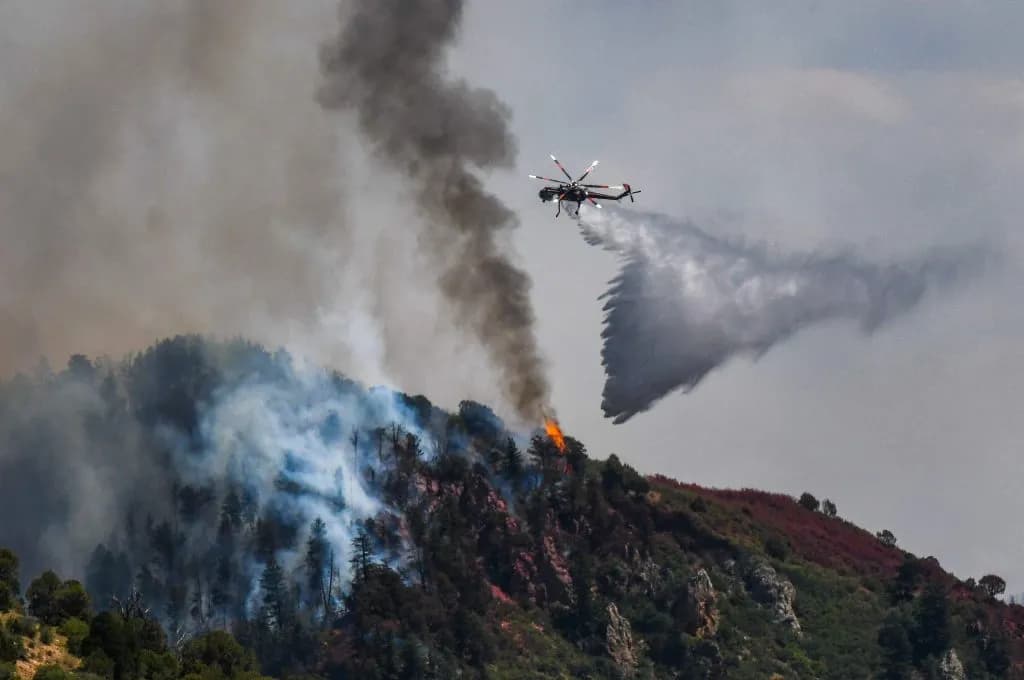
Governor Jared Polis says the state is more prepared than it has ever been to respond to major wildfires, with years of investment in wildfire response capabilities, including purchasing its own multi-mission aircraft and putting more resources toward mitigation. But he also acknowledges that there's an elevated risk of major events this coming summer. The state has experienced some of the worst wildfires in its history within the past decade, including the Marshall Fire that destroyed more than 1,000 homes in 2020.
Coloradans, especially on the Western Slope, need to prepare - and that's not just a vague warning. The drought conditions in northwestern Colorado are some of the worst in the West, with nearly all of Routt, Summit, Grand, Lake, Pitkin, Eagle, and Jackson counties under exceptional drought. Stan Hilkey, executive director of the Colorado Department of Public Safety, warns that "there will be big fires" this summer, given the dry conditions statewide.
Picture this: a fire breaking out in one of those exceptionally dry areas, spreading fast with the wind. It's a scenario that's all too possible, and one that locals should be prepared for. The state is ready to respond, but it's up to individuals to take steps to protect themselves and their property.
A fire danger sign on a rural road in Moffat County reads "EXTREME" - a stark reminder of the risks that come with living in a beautiful, but fragile, landscape. Neighbors are advised to stay vigilant, to report any signs of fire to the authorities immediately. It's a collective effort, one that requires everyone's attention and cooperation.
The dry earth of that Routt County pasture seems to stretch on forever, a barren expanse that's just waiting for a spark. And that's the thing - it doesn't take much to start a wildfire. A discarded cigarette, a faulty engine, a lightning strike. The list goes on, but the result is always the same: destruction, chaos, and a reminder that nature is a force to be reckoned with.
As the sun dips below the horizon, casting the landscape in a golden glow, it's hard not to feel a sense of unease. The fire season is coming, and it's going to be a long, hot summer.
Keep up with Steamboat Springs
The day's Western Slope news, one email each morning. Free.