Colorado Needs a Primary, Not a Caucus
The article argues that Colorado's caucus system is undemocratic and favors activists over general voters, advocating for a simpler primary election to ensure the winner truly reflects the people's will.

Colorado —Melat Kiros didn’t just win her district’s Democratic nomination. She crushed it. The 15-term incumbent, Diana DeGette, barely scraped by. That’s the story of Colorado’s caucus system: a small, loud group of activists deciding who actually runs the state, while the rest of us wait in line.
It’s undemocratic. It’s absurd. And it’s time to scrap it.
The current system demands you show up, stand in a room, and listen to speeches. You need hours. You need to leave work. You need to be a loyalist. If you’re independent — and more than half of us are — you’re locked out. The process favors the organized. It favors the extremes. It does not favor the general voter.
Look at the Republican side. Ron Hanks, the far-right challenger, qualified through the assembly. Incumbent Jeff Hurd? He got booed for using the petition route. The message was clear: stick to the script, or get pushed out.
On the Democratic side, it was worse. Sen. John Hickenlooper quietly withdrew. He didn’t want to fight the assembly machine. He just gathered signatures. Sen. Michael Bennet didn’t even show up. Meanwhile, Kiros, a Democratic Socialist, trounced DeGette. That’s the problem. The people who dominate the small sample size of caucus-goers don’t always win the general election.
History proves it. In 2018, Cary Kennedy had nearly double the delegate support of Jared Polis at assembly. Polis won the primary by 20 points. In 2024, Ken Buck won his primary by 48 points after nearly being kept off the ballot at assembly. The system is broken. It produces winners who look nothing like the final ballot.
The short version: we need a primary. Not a complicated, multistep caucus-and-assembly hybrid. A real primary. One where every registered voter gets a say. One where independents can vote if they choose. One where the candidate who wins the popular vote actually gets the nomination.
This isn’t just about Denver or Boulder. It’s about every precinct in the state. It’s about Delta County. It’s about the folks in the valley who work all day and can’t spend three hours in a high school gym listening to a speech about delegate ratios.
The statehouse proposal was to keep the 19th-century process. It was to let a self-selecting group pick the date, the location, and the winner. It was to let a handful of motivated friends rig the outcome. We rejected that idea when we first heard it. We should reject it now.
The current structure grows less representative with every cycle. It’s easy to manipulate. It’s easy to control. It’s time to trade it for a 21st-century democracy.
Read that again. The people who dominate the fractional turnout at party assemblies regularly lose in the primaries. The system is designed to keep the general electorate in the dark until the final vote. That’s not representation. That’s a filter.
We don’t need more complexity. We need simplicity. A primary. A clear winner. A result that matches the will of the voters, not just the will of the activists.
The chaos is real. The cost is high. And the solution is simple. Make it go.
Keep up with Colorado
The day's Western Slope news, one email each morning. Free.


Federal Report Sets 200,000 Acre-Foot Water Conservation Target for Upper Basin
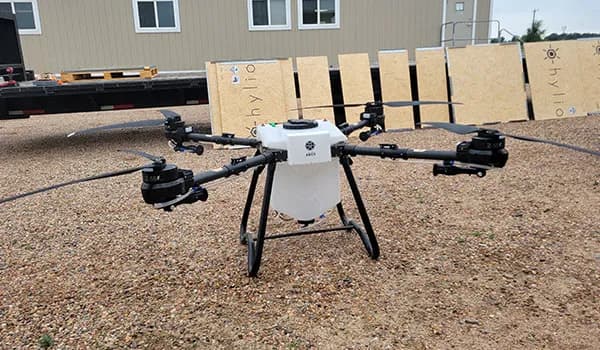
Colorado Parks and Wildlife Deploys Precision Drones for Weed Control