Colorado Parks and Wildlife Lifts Fishing Limits at Drying Banner Lakes
Colorado Parks and Wildlife suspended bag and possession limits at Banner and McKay Lakes to salvage fish from drying ponds caused by severe 2026 drought conditions.
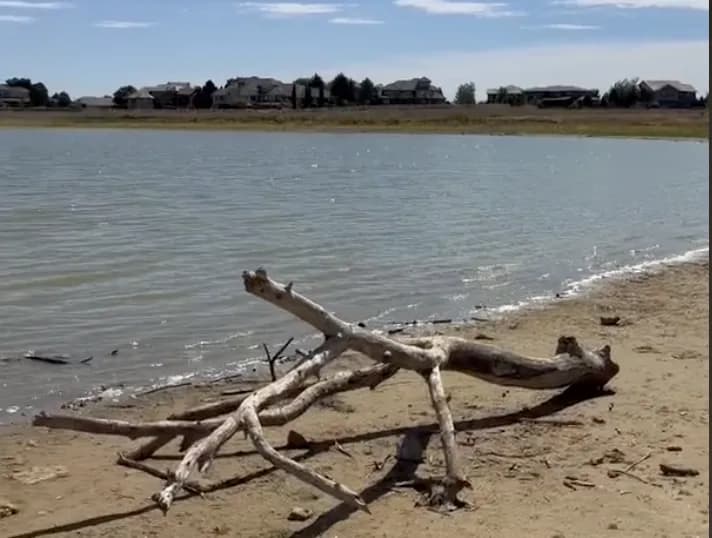
The hum of a diesel pump vibrates through the dry earth near Keenesburg, where the water line at Banner Lakes has retreated so far it looks like a mistake. On Aug. 18, 2026, depths at Westminster’s McKay Lake hit four feet, exposing mudflats that haven’t seen sunlight in decades. This isn’t a seasonal low; it’s a structural collapse of the fishery caused by rapid evaporation and aggressive water rights calls.
The result is an immediate, no-nonsense response from Colorado Parks and Wildlife (CPW). They have suspended all bag and possession limits at McKay Lake and Banner Lakes. Anglers can take unlimited fish using any legal method, including cast nets, dip nets, hand-catching, and bowfishing. The goal is simple: get the fish out of drying ponds before they die, then move them to reservoirs that still hold water.
This shift from the Eastern Plains to metro suburbs marks a change in how Colorado manages its shrinking water assets. The 2026 drought severity triggered early alarms as far back as June 1, when CPW called for a public fish salvage at Nee Noshe Reservoir in Kiowa County. Earlier this year, the state salvaged more than 1,000 trout from Antero Reservoir after Denver Water began draining it to reduce evaporation losses. Now, that same logic is hitting denser population centers.
“Due to the imminent loss of the fishery from drought conditions” at Banner Lakes, CPW stated clearly. The agency noted that anglers may use all legal methods, including cast nets and bowfishing. Banner Lakes has been stocked with black crappie, largemouth bass, and channel catfish for years. Now, they are being harvested at a rate that prioritizes survival over sport.
The impact extends west to Mueller State Park, near Colorado Springs. CPW warned visitors that Geer and Dragonfly ponds are facing significant water losses to meet downstream rights. Geer Pond is effectively dry for backcountry hikers. Dragonfly, typically a children’s and educational fishing area, will lose another three feet of water for the rest of the year.
This rapid succession of salvage operations means CPW is already looking ahead to next season. Kara Van Hoose, a CPW public information officer, said the agency will evaluate stocking strategies over the winter months. “I don’t think we’re expecting any budget crunch in that area yet,” Van Hoose said. She explained that CPW uses an adaptive management style, placing fish in strategic areas based on water availability and angler demand. This year, they stocked some fish early or moved locations to match conditions.
Local water officials are monitoring the situation closely, though their optimism is measured. Shonnie Cline of Aurora Water noted that recent rains “have not made a dent” in the outlook for spring 2027 reservoir storage.
For locals, this means less regulation and more access, but also a reminder that the water is finite. The unrestricted fishing at McKay and Banner Lakes isn’t just a perk; it’s a necessary extraction event. If the snowpack doesn’t improve for the 2026-27 season, expect more ponds to follow this model: drain them, save the fish, and move on.
Keep up with the Western Slope
The day's Western Slope news, one email each morning. Free.