Colorado Parks and Wildlife releases 26 grouse into Grand County
Colorado Parks and Wildlife biologists released 26 Columbian sharp-tail grouse from Moffat County into Grand County, continuing a 25-year effort to restore the species to its native Western Slope habitat.
Glenwood Springs —Colorado Parks and Wildlife biologists captured 26 Columbian sharp-tail grouse from Moffat County and released them into Grand County this spring, marking the latest step in a 25-year effort to restore the species to its native Western Slope habitat.
The move is part of a broader conservation strategy that has seen the birds re-establish themselves in areas where they vanished from the landscape decades ago. Large populations once roamed across 22 counties on the Western Slope until the mid-1980s, when a combination of factors caused the birds to disappear from all but one corner of the state. Today, the species occupies less than 10% of its former range, a decline attributed largely to the loss and degradation of habitat due to the conversion of native grasslands.
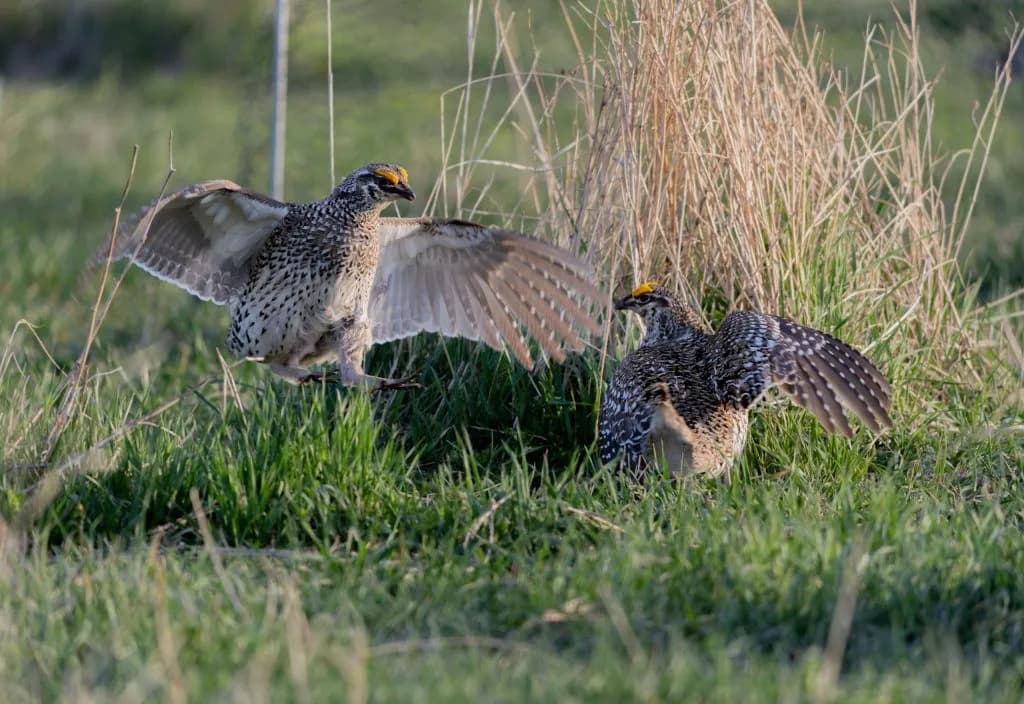
Brian Holmes, Colorado Parks and Wildlife’s senior conservation biologist on the Western Slope, described the effort as keeping a "cool part of the native fauna of Colorado" alive. The birds, which Lewis and Clark recorded in the sagebrush and bunchgrass plains of the Columbia River, are easily identified by their orange eye combs, a distinct black V-shape on their breast feathers, and a bright purple spot on the male’s neck. They possess a "frosty appearance" caused by white spotting on their body and wing feathers, a visual texture that blends them into the high-altitude terrain they inhabit.
The restoration work focuses on the birds' unique breeding behavior. Holmes explained that the grouse do not spend much time together throughout the year, but they converge on specific "dancing grounds," or leks, from late March to mid-May. These gatherings are critical for reproduction. Males dance to attract females, breed, and then the females leave to find appropriate places to raise their chicks. It is a group effort, Holmes noted, comparable to how elk gather, bugle, and spar in the fall. The leks can range from just two or three males vying for attention to gatherings of 50 or 60 males.
The Columbian sharp-tail grouse belongs to the Galliformes family, a group of ground-feeding, chicken-like birds that includes turkeys, pheasants, partridge, and ptarmigans. According to Parks and Wildlife’s conservation plan, the Columbian sharp-tail grouse was once considered the most abundant bird of this family in the intermountain region.
Now, the focus is on ensuring that the 26 birds released from Moffat County can thrive in their new home. The release is not an isolated event but a continuation of a long-term strategy that has yielded some of the most successful restoration results for the species in the nation. The birds are returning to a landscape that has been slowly recovering from the pressures of agricultural conversion and habitat loss, offering a glimpse of the ecological resilience that defines the Western Slope.
The air in Grand County carries the scent of sage and the dry rustle of bunchgrass, a sound that has echoed across these plains for millennia. It is a sound that the sharp-tailed grouse know well, a sound that signals the return of spring and the start of the dance.
Keep up with Glenwood Springs
The day's Western Slope news, one email each morning. Free.