Glenwood Springs Data Reveals Hidden ICE Surge on Western Slope
Glenwood Springs advocacy group reports 637 verified ICE incidents on the Western Slope, disproving national narratives of quiet summer enforcement and highlighting local family impacts.
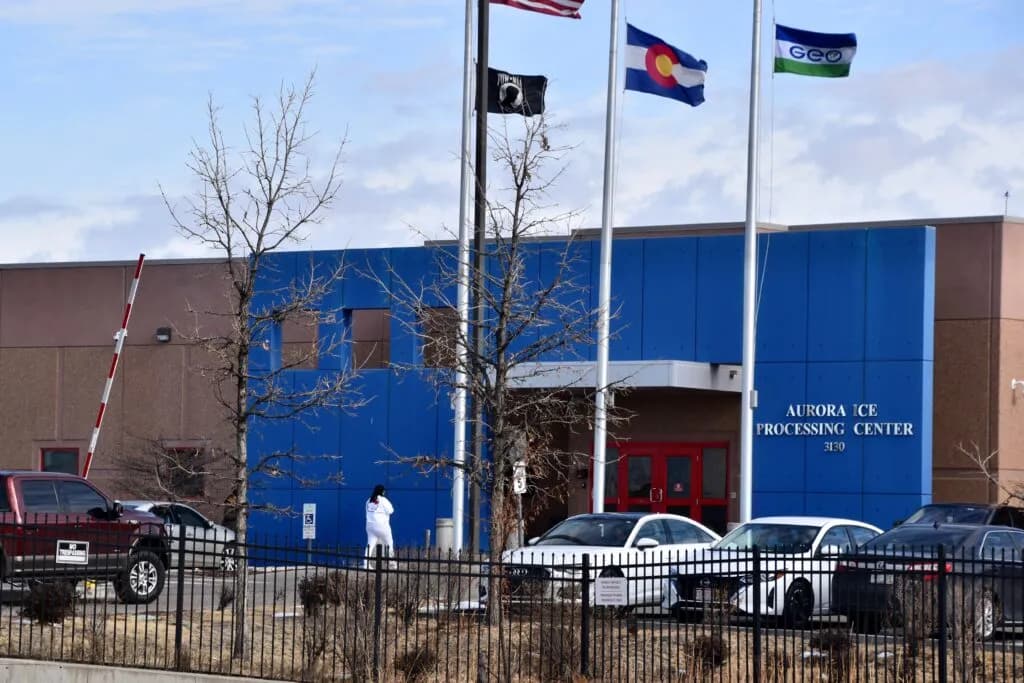
Aspen —Do you remember the feeling of that summer heat settling over the valley, when the news cycles turned their gaze north to Minneapolis and south to Texas, and we were told the big sweeps were over, that the chaos had quieted down? It’s a comfortable narrative, isn’t it? That the violence was an anomaly, a temporary spike in the big cities, while our Western Slope communities remained relatively untouched by the federal immigration enforcement machine. But if you listen closely to the people tracking the data right here in Glenwood Springs, that comfort is a lie. The surge isn’t just happening elsewhere; it’s happening in our backyards, and it’s far from quiet.
The national press has been busy proclaiming a “quiet and steady” increase in U.S. Immigration and Customs Enforcement (ICE) arrests this summer, a phrase that feels almost ironic when you look at the raw numbers. Austin Kocher, an assistant research professor at Syracuse University, reported that the agency arrested an average of 1,474 people a day over the first 11 days of July — the highest rate in this administration. While headlines focused on the visible, sometimes deadly sweeps in Minneapolis where citizens like Renee Good and Alex Pretti were fatally shot, the reality on the ground in Colorado tells a different, more intimate story.
“It’s not quieter and we don’t have to look to Texas or we don’t have to look to Minnesota,” Alex Sánchez told reporters in a phone interview Friday. Sánchez, who founded the Glenwood Springs-based advocacy organization Voces Unidas de las Montañas, argues that we need to stop looking at distant states to understand the scope of the crisis. “Say that to the families of these 600 or 700 some people who have been removed (from Colorado’s Western Slope). They don’t need to be reminded about Minnesota or Houston. They know that it’s happening here.”
The data supports his assertion. As of Friday, Voces Unidas had reported 637 independently confirmed and verified ICE incidents across 22 western Colorado counties since the start of 2025. These aren’t abstract statistics; they are real people, their names and stories confirmed through a dedicated hotline and cross-referenced with the ICE database. The numbers show a persistent presence: 35 cases in January, 38 in February, and a steady trickle continuing into the summer months. Each number represents a family waiting for a call that might never come, or a worker who was taken from their job and shuttled across the country.
Sánchez points to Delvin Rodriquez as a poignant example of this local impact. A worker with only two minor vehicle infractions, Rodriquez was detained by ICE agents in Summit County in September 2025. He was shuffled around the country before allegedly dying by suicide in an ICE facility in Mississippi in December. What makes his case particularly jarring is the logistical failure — he missed multiple ICE flights to his native Nicaragua, a detail that underscores the chaotic, almost arbitrary nature of these detentions. “He is one of the many cases of people who are sort of thrown into this dark hole and he should have been deported,” Sánchez said, noting that Rodriquez had signed a self-deportation order. “He signed self-deportation.”
The scope of the detention itself remains near record levels, with 65,765 people in ICE custody as of July 11, according to Kocher. The largest group within that number consists of immigrants with no criminal history at all, a share that has been growing since April even as the proportion of those with charges or convictions falls. This isn’t just about the criminals we expect to see removed; it’s about neighbors, workers, and families who are being swept up in a system that prioritizes volume over precision.
When you drive down Highway 82, past the familiar storefronts and the quiet stretches of the Roaring Fork Valley, you might assume the federal agents are focused on the big cities. But the data suggests otherwise. The “quiet” surge is here, measured in the confirmed cases of people like Rodriquez, in the verified incidents reported by local advocates, and in the growing number of families waiting for word. It’s a reminder that the national narrative doesn’t always align with the local reality, and sometimes, the truth is hiding in plain sight, just beyond the edge of the valley.
Keep up with Aspen
The day's Western Slope news, one email each morning. Free.