Colorado Republican Party Faces Uncertain Future
The Colorado Republican Party is at a crossroads, struggling with internal conflicts and facing an uncertain future in the state's increasingly blue political landscape.

Colorado —Standing in the midst of Grand Junction's bustling downtown, surrounded by the familiar sights of Colorado Avenue, it's hard to ignore the undercurrents of a brewing storm in the party. The sound of chatter and clinking dishes from the local cafes fills the air, but the tension is palpable. A $14 million project, like the ones often discussed in local development meetings, seems insignificant compared to the $14 million that could be spent on TV ads in the 8th Congressional District alone. Twelve units of political fodder are being carefully crafted, but the real question is, will they be enough to sway the unaffiliated voters who hold the key to the party's survival?
For context, the Colorado Republican party is at a crossroads, engaged in a long-term civil war between MAGA zealots and somewhat-less-crazy MAGA types. This internal conflict has left the party without a leader and, more importantly, without a clear direction. The recent ruling from U.S. District Court Judge Philip A. Brimmer, which found the state's requirements for a party to opt out of an open primary to be too burdensome, has sparked a new wave of desperation. The state party's subsequent motion to block unaffiliated voters from participating in June's GOP primaries is a telling sign of the party's attempts to cling to power.
Let's do the math: with Donald Trump's approval ratings in the state registering in the mid-30s, the prospects for the GOP in the coming midterms are, indeed, bleak. The party's attempts to intervene in the state party's lawsuit to block unaffiliated voters, led by U.S. Reps. Lauren Boebert, Jeff Hurd, Jeff Crank, and Gabe Evans, alongside the National Republican Congressional Committee (NRCC), seem like a long-shot bid for party sanity. On paper, this move might appear strategic, but in practice, it's a desperate attempt to hold onto power.
The Democrats, on the other hand, are bringing in the troops and the cash, targeting vulnerable Republican strongholds like the 5th CD, which has forever been a Republican bastion. The 3rd CD, represented by Jeff Hurd, is also under attack, with Trump's past criticism of Hurd as a RINO still lingering in the air. As things stand today, this could be a critical moment for Republicans in Colorado, one that will determine their relevance in the increasingly blue state.
In Delta County, where road maintenance is a significant concern, the $14 million that could be spent on TV ads in the 8th Congressional District is equivalent to the county's entire road maintenance budget for a year. For folks around here, the question is not about which party will win, but about how this will impact their daily lives. The outcome of this internal conflict will have far-reaching consequences for the people of Colorado. The practical bottom line is that this will cost taxpayers, and the true extent of that cost is still unknown.
Keep up with Colorado
The day's Western Slope news, one email each morning. Free.

Federal Report Sets 200,000 Acre-Foot Water Conservation Target for Upper Basin
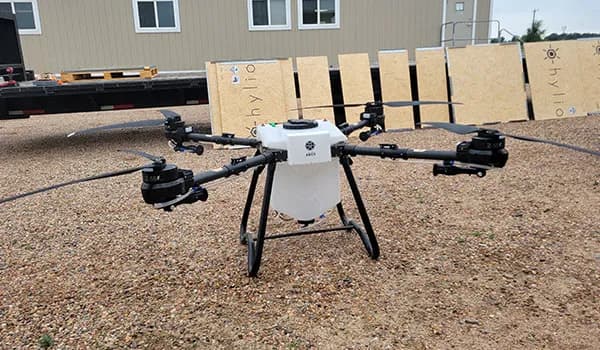
Colorado Parks and Wildlife Deploys Precision Drones for Weed Control