Colorado Sues Nebraska Over Water Rights in Supreme Court
Colorado filed a 58-page counterclaim with the U.S. Supreme Court, arguing Nebraska is illegally taking water from Lodgepole Creek and misinterpreting the 1923 interstate compact.
Will Nebraska get to dig a canal through Colorado?
That is the question sitting on the desk of Justice Department officials in Denver right now. The answer, according to Attorney General Phil Weiser’s office, is a resounding no — not yet. Colorado returned fire Monday in the long-running water war with Nebraska, filing a 58-page counterclaim directly with the U.S. Supreme Court. The state is telling the high court that it is actually Nebraska, not Colorado, that is taking more than its fair share of the water out of the river system.
Nebraska’s original lawsuit argues it holds a right under a 1923 interstate compact to build a canal into Colorado to tap the river. The Cornhusker State sued because it claims Colorado is illegally blocking efforts to buy farmland for that canal. Nebraska also argues that Colorado’s augmentation plan — a system where farmers put extra water in ponds during the off-season to replenish the aquifer, is a "bogus" mechanism that fails to restore river flows to required levels.
"We will defend the rights of Colorado water users, which is why we are asserting our own claims against Nebraska for using water that belongs to Colorado under the compact," Weiser said in a release accompanying the brief. "If anything, Nebraska owes Colorado for the water that the Cornhusker State has wrongfully taken."
The legal battle hinges on a fundamental misunderstanding of what the 1923 compact actually guarantees. Colorado has acknowledged since the canal plans first surfaced in 2021 that Nebraska holds some kind of canal right. But the attorney general’s office is drawing a hard line between having a "priority" and having a fixed entitlement to flow.
"It has a priority for some water over some Colorado water users - a place in line to water when and if available," the brief states.
That distinction matters because Nebraska’s position is that Colorado has intentionally developed South Platte Basin water as much as possible for growth and agriculture, leaving very little "available" for Nebraska’s canal. To hear them tell it, Colorado is hoarding the resource. But the math holds up differently if you look at where Nebraska is actually pulling water from right now.
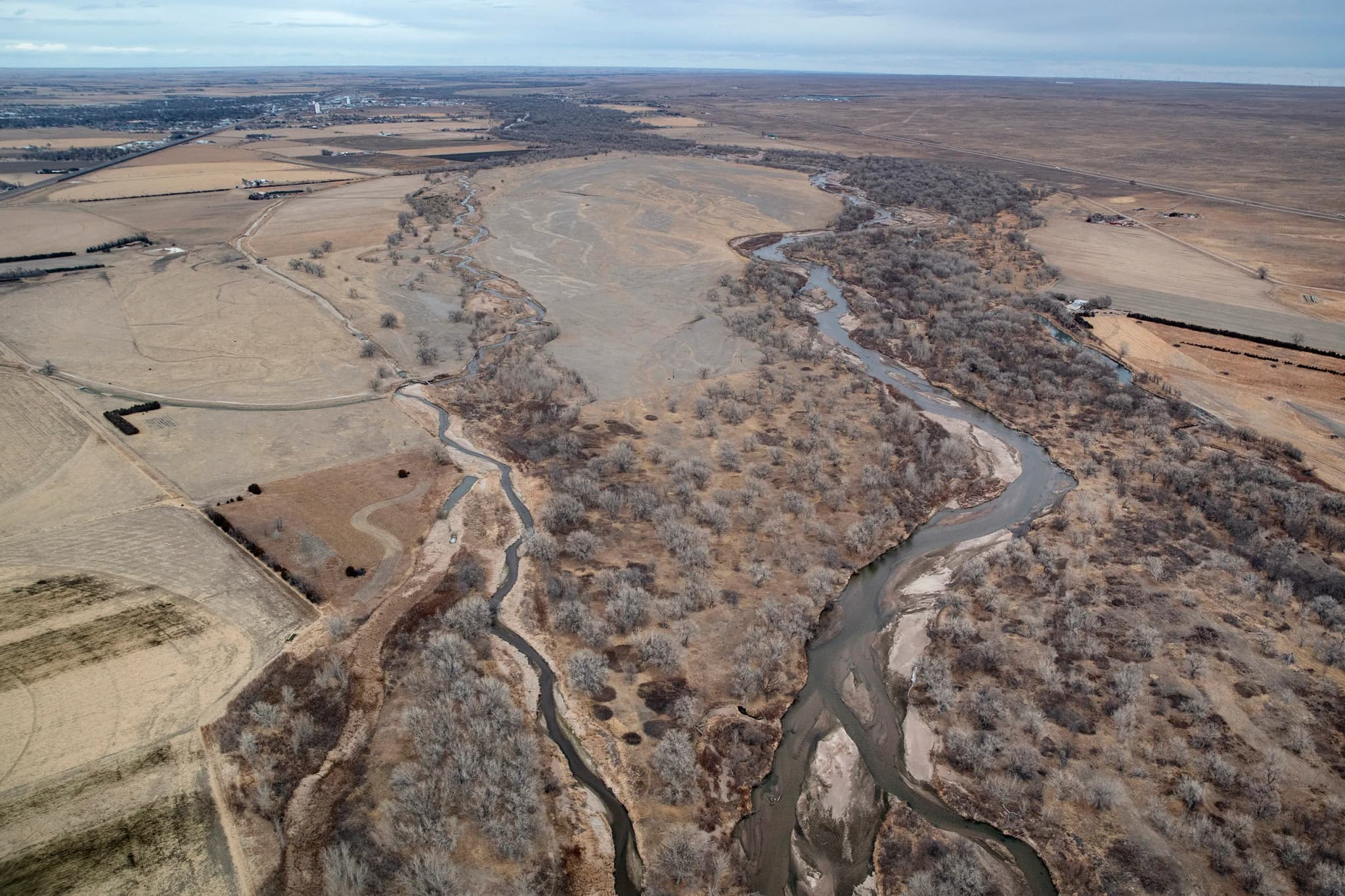
Colorado’s counterclaim shifts the focus to Lodgepole Creek, a tributary that flows into northern Colorado before meeting the South Platte. The brief alleges that Nebraska farmers pumping from groundwater wells are taking too much water out of the creek before it crosses state lines.
"Nebraska has been violating its obligation to preserve the last two miles of Lodgepole Creek within Nebraska for Colorado’s use, as required," the counterclaim says.
For folks in the valley, this isn't just a legal squabble between state capitals. It is about who gets to decide how much water flows through the South Platte when it reaches communities like Julesburg. Interstate water disputes go directly to the Supreme Court as final arbiter of these complex, decades-old negotiations. There is no intermediate appeals court to filter the arguments; what you see in the briefs is what the Justices will weigh.
The question is whether the Court will side with Nebraska’s desire for a guaranteed flow via a new canal, or Colorado’s insistence that the compact only grants a place in line. Weiser’s office is asking for a partial dismissal of Nebraska’s claims, arguing that the Cornhusker State is trying to rewrite a 100-year-old agreement.
As the case moves forward, the stakes remain high for agriculture and development on both sides of the state line. But for now, Colorado is holding its ground, arguing that if Nebraska wants to prove it’s being robbed, it should look at its own wells first.
"Nebraska has been violating its obligation to preserve the last two miles of Lodgepole Creek within Nebraska for Colorado’s use, as required," the brief concludes.
Keep up with the Western Slope
The day's Western Slope news, one email each morning. Free.