Colorado Unifies Three Agencies to Restore Beaver Populations
Governor Jared Polis declared beaver restoration a top priority, prompting three state agencies to unify efforts. The plan uses $1 million in oil and gas fees to boost populations.
Aspen —“Successful beaver restoration can improve watershed health and resilience.”
That statement comes from Ally Sullivan, a spokesperson for the governor’s office. It lands with weight because it signals a shift in state policy. Governor Jared Polis has declared beaver restoration a “wildly important goal.” That is not casual language. It triggers specific, high-priority policy directives that force state agencies to align their efforts.
The Vail Daily reported on the move. Seven months after the department finalized its plan to boost beaver numbers, three state agencies are now on the same page. Parks and Wildlife is joined by the Colorado Department of Agriculture and the State Land Board. They are pushing the conservation program forward under a unified banner.
The short version: The state is betting big on beavers to fix its water problems.
At its September commission meeting, staff laid out the details. The strategy includes nine measurable targets. These cover staffing, habitat restoration, coexistence with landowners, translocation, and interagency collaboration. The work is bankrolled by $1 million in funding from oil and gas production fees. That money comes from the same industry that has long been a flashpoint in Western Slope politics.
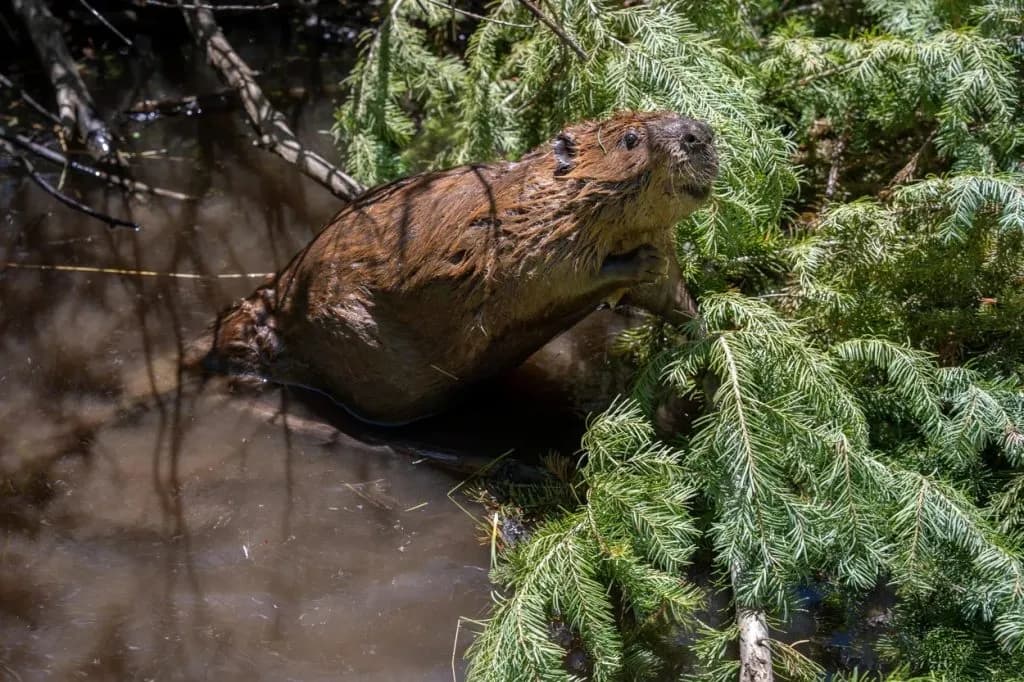
Sherri Huwer, the terrestrial programs supervisor for the agency, explained the ecological logic. “Beavers are essential ecosystem engineers that play a pivotal role in building drought resilience, improving water quality, creating critical wetland habitats and increasing biodiversity across our state,” she said.
The strategy’s overarching goal is to increase beaver populations and beaver-occupied wetland habitats until a social or ecological carrying capacity is reached. That phrase, “social carrying capacity,” does a lot of heavy lifting. It implies that the state expects friction between beavers and people. The plan acknowledges this tension exists but does not fully detail how it will be managed on a farm or ranch.
The numbers behind the push are stark. North American beaver populations fell from an estimated 60 to 400 million animals before European settlement. Today, estimates sit between 6 and 12 million. The strategy reports that it is “generally believed” Colorado’s trends follow this national drop. Our local beaver population is greatly reduced from former levels. Habitat degradation has been the largest driver of that decline.
Beavers build dams. These structures slow and spread out water flow. That process rehabilitates wetlands. In Rocky Mountain National Park, the Kawuneeche Valley Restoration Collaborative is already at work on a project that mimics beaver engineering to restore suitable habitat. It is one of many such projects across the state.
The fiscal year for this goal runs from July 1 to June 30, 2027. That is a tight window for achieving measurable ecological shifts in a landscape that has been altered by centuries of development.
The plan relies on translocation as one of its nine targets. Moving beavers from established populations to new areas is a standard tool, but it is also the most likely source of conflict with local landowners. The strategy mentions “coexistence with landowners” as a target, but the specific mechanisms for managing complaints or property damage are not detailed in the initial update.
Sullivan’s statement emphasized that Polis knows a cross-agency effort will “further improve Colorado’s watershed health and balance our ecosystem.” The word “balance” is doing quiet work there. It suggests a return to a pre-settlement equilibrium, or at least an approximation of it.
For folks in the valley, this means more state presence on private land and public waterways. It means federal and state dollars flowing into conservation projects that alter how water moves through the landscape. The $1 million in oil and gas fees is a drop in the bucket compared to the scale of watershed restoration needed, but it signals political will.
The strategy aims for a carrying capacity. It does not define what that looks like in practice for a rancher whose fence line gets chewed through or a developer whose wetland buffer expands.
The governor’s office is treating this as a priority. The agencies are moving forward. The beavers will do the work. The question is whether the rest of us can keep up with the changes they bring to our water and land.
Keep up with Aspen
The day's Western Slope news, one email each morning. Free.