Colorado Winter Traction Law Clarifies Two-Wheel Drive Rules
Colorado’s winter traction laws took effect Sept. 1, clarifying that two-wheel-drive vehicles must carry chains or compliant tires when traveling the I-70 corridor.
Glenwood Springs —The wind off Blue Mesa Lake cuts through a jacket even in September, and the first dusting of snow on the higher peaks near I-70 catches the morning light. For drivers heading up the corridor, that white line on the horizon isn’t just a scenic backdrop; it’s a legal trigger.
Colorado’s winter traction laws are officially in effect as of Sept. 1, according to a news release from the Colorado State Patrol. These regulations apply to all vehicles on the Interstate 70 mountain corridor and other designated mountain roads, running through May 31. The goal is straightforward: keep traffic moving when ice and snow threaten to turn the highway into a parking lot.
Colorado State Patrol Chief Matthew C. Packard noted in a statement that preventing gridlock is the primary concern as winter conditions set in. “Snow and ice can impact a vehicle of any size, so now is the time to check the condition of your tires and check that you have chains,” Packard said.
For the last few years, there was genuine confusion about what two-wheel-drive vehicles needed to carry. House Bill 26-1237, signed into law May 5, fixes that ambiguity. The bill clarifies that the passenger vehicle traction law applies to all vehicles, explicitly including two-wheel-drive cars alongside their four- and all-wheel-drive counterparts.
Let’s do the math on what that actually means for your vehicle. Under the law, CDOT can restrict travel on roads like I-70 when conditions warrant it. When they do, the restriction is announced via variable message boards and on COTrip.org. To pass through those checkpoints, your vehicle must meet one of two criteria:
- You have tires with a tread depth of at least 3/16-inch that are rated as “all weather” or “mud and snow.”
- If your tires don’t meet that tread and rating standard, you must have chains or an approved alternative traction device installed on two or more tires.
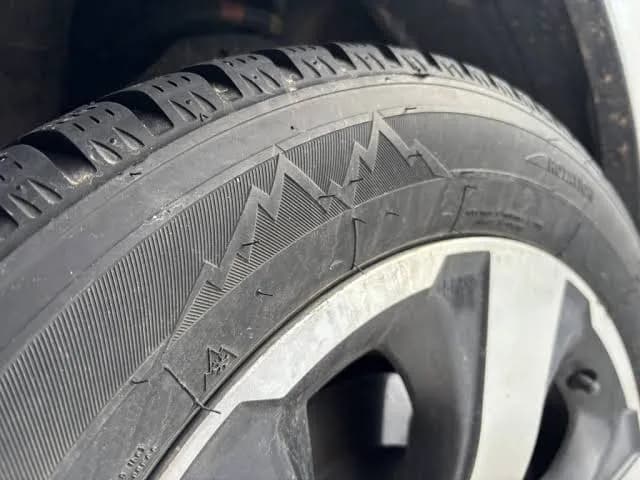
State officials point out that drivers can verify their tire compliance by looking for specific markings on the sidewall: “All season,” “M+S,” “M/S,” or an icon of a mountain with a snowflake. If you’re driving a sedan or a truck that relies on standard summer tires without those markings, and the tread is worn down below 3/16-inch, you are not compliant.
GoI70 Executive Director Jonathan Godes wrote in a blog post urging drivers to get ahead of the curve. “If you travel between the Front Range and the mountains, now is a good time to make sure your vehicle — and your tires — are ready,” Godes said. He advised all drivers to check tire condition, verify compliance with the state’s laws, and practice installing chains before their first winter trip.
The penalty for getting this wrong is modest but annoying: a $50 fine plus a $17 surcharge. That’s not a bankruptcy-level expense, but it is the cost of being stranded on a mountain pass or sitting in a line that wasn’t supposed to be there.
For folks around here, the practical impact is about preparation, not panic. The law doesn’t require you to drive with chains on every clear day. It requires that you have them if your tires don’t meet the tread and type standards, and that they be installed when CDOT activates the restriction.
Check your tires this weekend. Measure the tread depth. Look for the snowflake icon. If you’re borderline, buy a set of chains and practice installing them in your driveway before the first real snowstorm hits the corridor. The state has clarified the rules; now it’s on you to make sure your vehicle can legally cross the mountains.
Keep up with Glenwood Springs
The day's Western Slope news, one email each morning. Free.