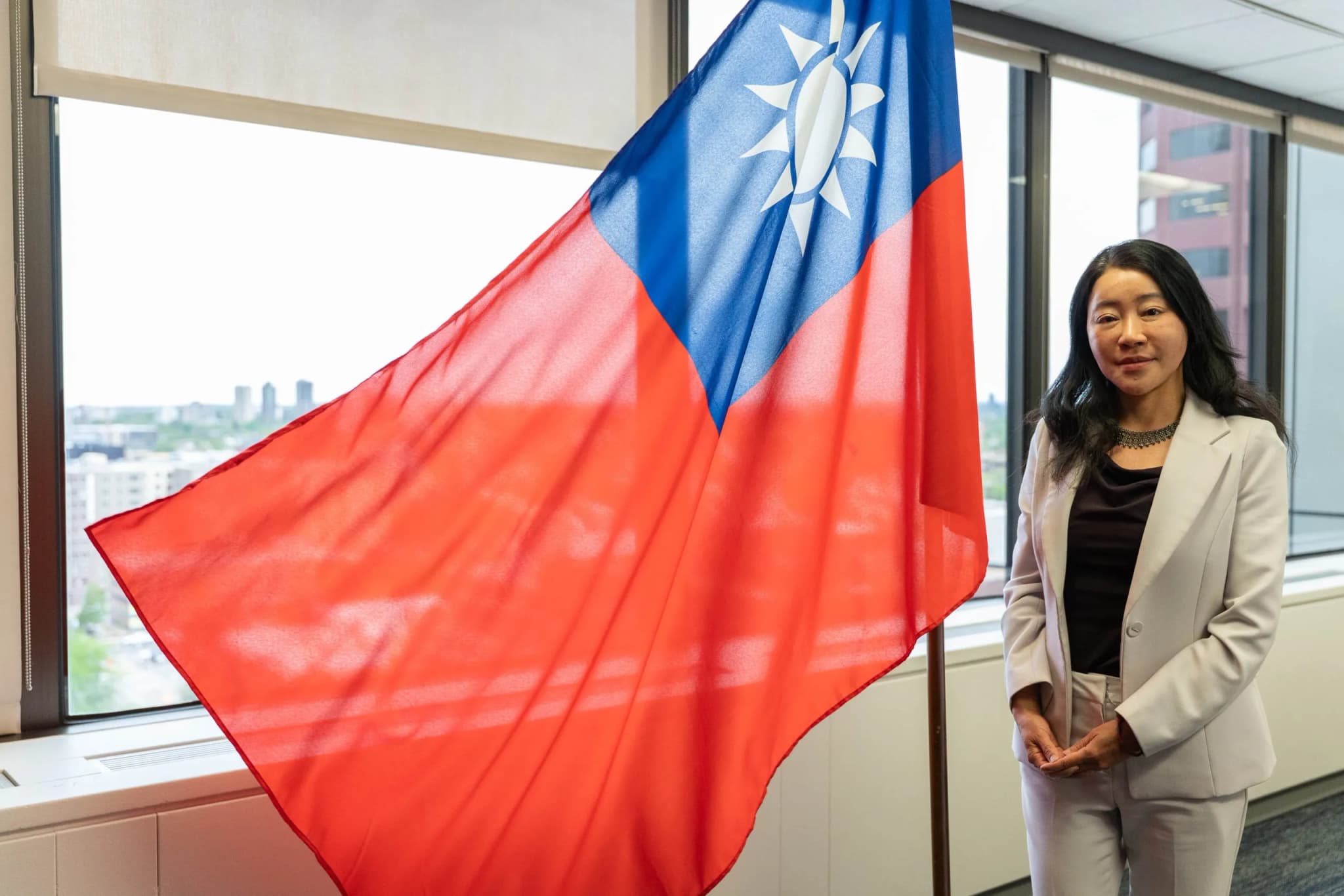
Debby Huang Leads Taipei Office in Downtown Denver
Debby Huang explains why the Taipei Economic & Cultural Office chose downtown Denver as its hub for six states, prioritizing logistical reach via Denver International Airport over prestige.
Colorado —Does the air in a downtown Denver office smell like diplomacy, or does it just smell like old paper and espresso?
It’s a specific question because, for most of us, a consulate is a place of heavy bureaucracy, of lines and forms and the quiet anxiety of waiting for a passport. But when you step into the Taipei Economic & Cultural Office in downtown Denver, the vibe is different. It feels less like a government outpost and more like a hub of quiet, persistent connection. Debby Huang, who leads this regional “consulate,” sits in her office, surrounded by the hum of the city outside and the weight of a complex geopolitical story inside.
You might wonder why Denver. Why here, in a city known for craft beer and ski resorts, rather than a more obvious diplomatic center? The answer, as Huang explains it, isn’t about prestige. It’s about pragmatism. It’s about the roar of jet engines at Denver International Airport.
“We cover six states: Colorado, Missouri, Kansas, Nebraska, South Dakota and North Dakota,” Huang says. “All of them can be reached nonstop from Denver.”
That logistical reality drove the move from Kansas City about a decade ago. It wasn’t a symbolic gesture; it was a calculation of reach. If you want to connect with the heartland, you need a hub that doesn’t force you to change planes three times. But once the logistics were settled, the work began. It became about building relationships, not just managing paperwork.
What does that work look like? It looks like visiting governors and state senators. It looks like trying to make the abstract concept of “Taiwan” feel real to Coloradans who might otherwise only see it in headlines about China.
“The most important job for me is to help more Americans better understand Taiwan and what Taiwan’s challenges are in the international society,” Huang says.
And what is that challenge? It’s the shadow of China. It’s the constant, low-grade threat that hangs over the island nation. But in this office, that threat isn’t just a political talking point; it’s the context for everything they do. They issue visas. They handle passports. They enjoy diplomatic immunity and tax exemptions, driving cars with special plates that mark them as distinct, as separate, even if the world isn’t always sure how to categorize them.
I asked Huang what drew the Taiwanese government to Denver in the first place. She didn’t talk about culture or history. She talked about the mountains. “I think my colleagues probably visited here and saw the beauty of the Rocky Mountains,” she said. It’s a human detail in a story usually dominated by geopolitics. It suggests that sometimes, the best diplomacy isn’t about treaties; it’s about shared appreciation for a landscape.
The office functions like a consulate, even if the name is longer. They have the privileges. They have the plates. They maintain the mission. And they have a decade of history in this city, building bridges across the Pacific, one flight, one conversation, one passport at a time.
Outside, the light hits the brickwork of the downtown buildings, turning the glass windows into mirrors that reflect the sky. It’s a quiet moment, but it’s charged with the kind of significance that doesn’t make the evening news. It’s just the work of being here, of being visible, of being present in a way that matters.
Keep up with Colorado
The day's Western Slope news, one email each morning. Free.


Federal Report Sets 200,000 Acre-Foot Water Conservation Target for Upper Basin
Colorado Parks and Wildlife Deploys Precision Drones for Weed Control