Denver Startup Prints Affordable Homes from Recycled Plastic
Denver-based Azure Printed Homes uses robotic arms to extrude walls from recycled plastic bottles, offering $70,000 units that are 30% cheaper and 70% faster to build than traditional tiny homes.
Colorado —Jack Tiebout stands in the middle of a warehouse in northeastern Denver, watching three robotic arms move with the rhythmic precision of a metronome. They are extruding a continuous ribbon of material, layer by layer, building the walls of a home from the ground up. It looks less like construction and more like a giant, industrial glue gun melting down plastic bottles.
It’s 24 hours in. The shell is taking shape.
“To build housing faster, more efficiently, more affordably. That’s the goal,” Tiebout says, gesturing to the turntables that rotate the structure as the arms work.
The result of this process is a sturdy, solar-powered starter home or mountain cabin. The company claims it costs about 30% less than a comparable tiny home and takes 70% less time to build. Somewhere between 100,000 and 150,000 plastic bottles are recycled into the walls.
The question is whether this technology can actually move the needle on Colorado’s housing crisis, or if it’s just a novelty for the wealthy looking for a weekend cabin.
Azure Printed Homes started in Los Angeles, tackling the same trifecta of problems that plague California: skyrocketing prices, NIMBY protests, and the need for disaster-resilient housing. The founders saw the same dilemmas waiting in Colorado and tapped Tiebout, a former state affordable housing finance official, to open this Montbello warehouse.
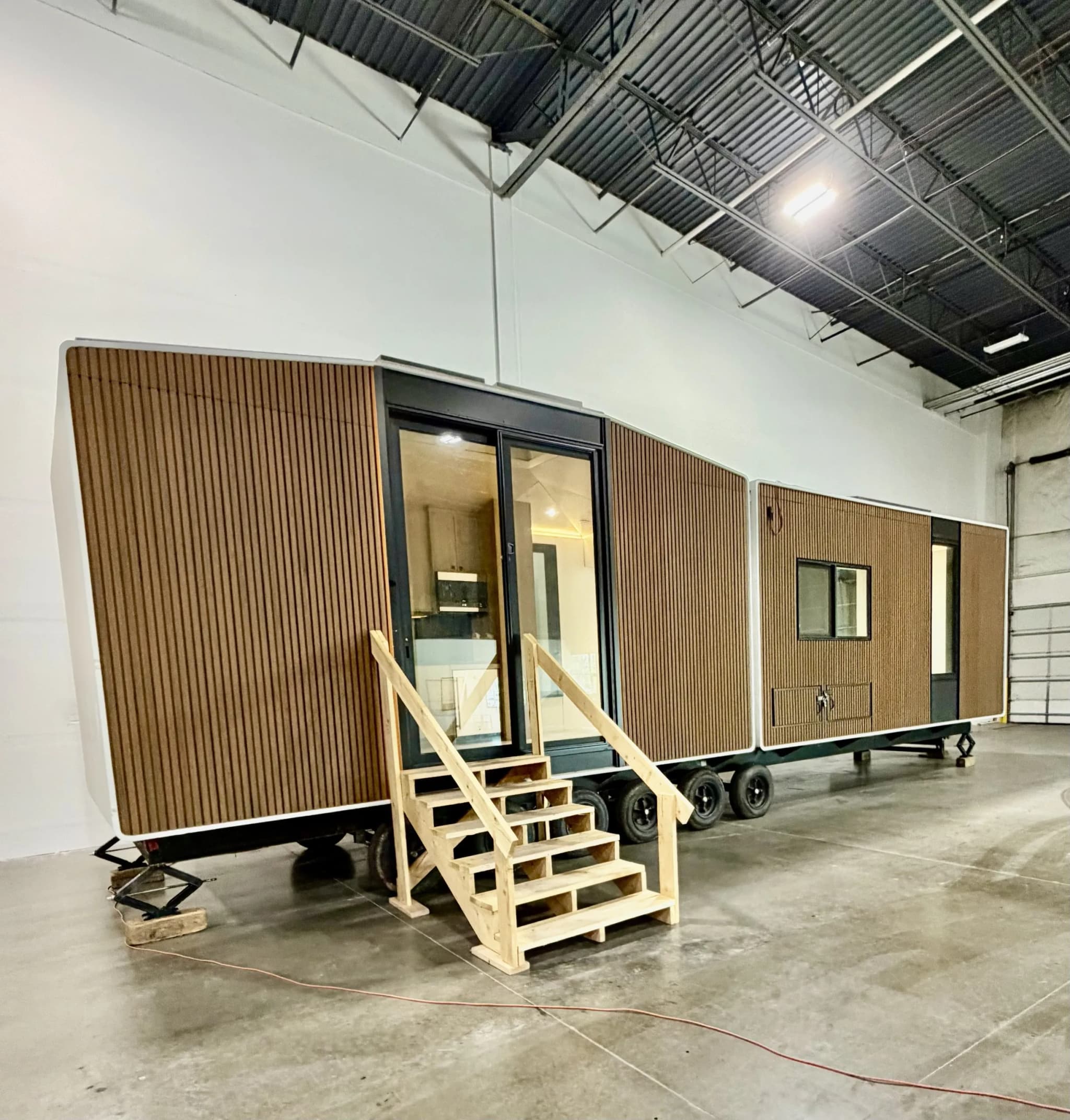
The base product is a tiny home: nine feet wide by 20 feet long. It’s designed to stay on transport wheels or be anchored to a foundation. One end holds a separate bathroom; the other is a main studio room with a small kitchen. There’s just enough room for a small dining table that gets cleared away at night to make room for a Murphy bed.
The price tag? About $70,000 for the single unit. Connect a second unit for two bedrooms, and it runs about $110,000.
That’s cheaper than a stick-built tiny home, but is it affordable for the folks who actually need help?
Tiebout and the founders hope Azure offers one small piece of the solution to a market that is tens of thousands of homes short of historic supply. With interest rates remaining high, traditional construction has stalled. Azure’s units can serve as backyard accessory dwelling units, remote cabins, or part of a tiny home village.
The company is currently in negotiations with campground operators and resorts looking to buy multiple units. It’s a clear market: people who want a low-maintenance, off-grid capable space without the headache of traditional maintenance.
But the real test is whether this can scale beyond the warehouse. The process is automated. Once the design software launches the printers, they run overnight, unattended. Work crews then step in to run electrical wires and plumbing through preprinted holes, fill the space between the plastic layers with insulation, and frame out the ceiling and interior walls.
It’s a manufacturing model applied to housing. It’s predictable. It’s fast.
As Tiebout puts it, the goal isn’t just to build houses; it’s to build them differently. The plastic and fiberglass pellets are melted and extruded, creating a shell that is both durable and lightweight.
The cost savings are significant. The speed is undeniable. But whether this becomes the standard for affordable housing or remains a niche product for resorts and remote cabins depends on how quickly the market accepts the technology.
Keep up with Colorado
The day's Western Slope news, one email each morning. Free.
Federal Report Sets 200,000 Acre-Foot Water Conservation Target for Upper Basin
Colorado Parks and Wildlife Deploys Precision Drones for Weed Control