Denver Transforms Civic Center with $50M Renovation
Denver launches a $50 million project to revitalize Civic Center park and the McNichols Building, aiming to transform the historic site into a vibrant downtown destination by fall 2027.
Colorado —“Who’s ready to picnic in downtown Denver’s Civic Center park?”
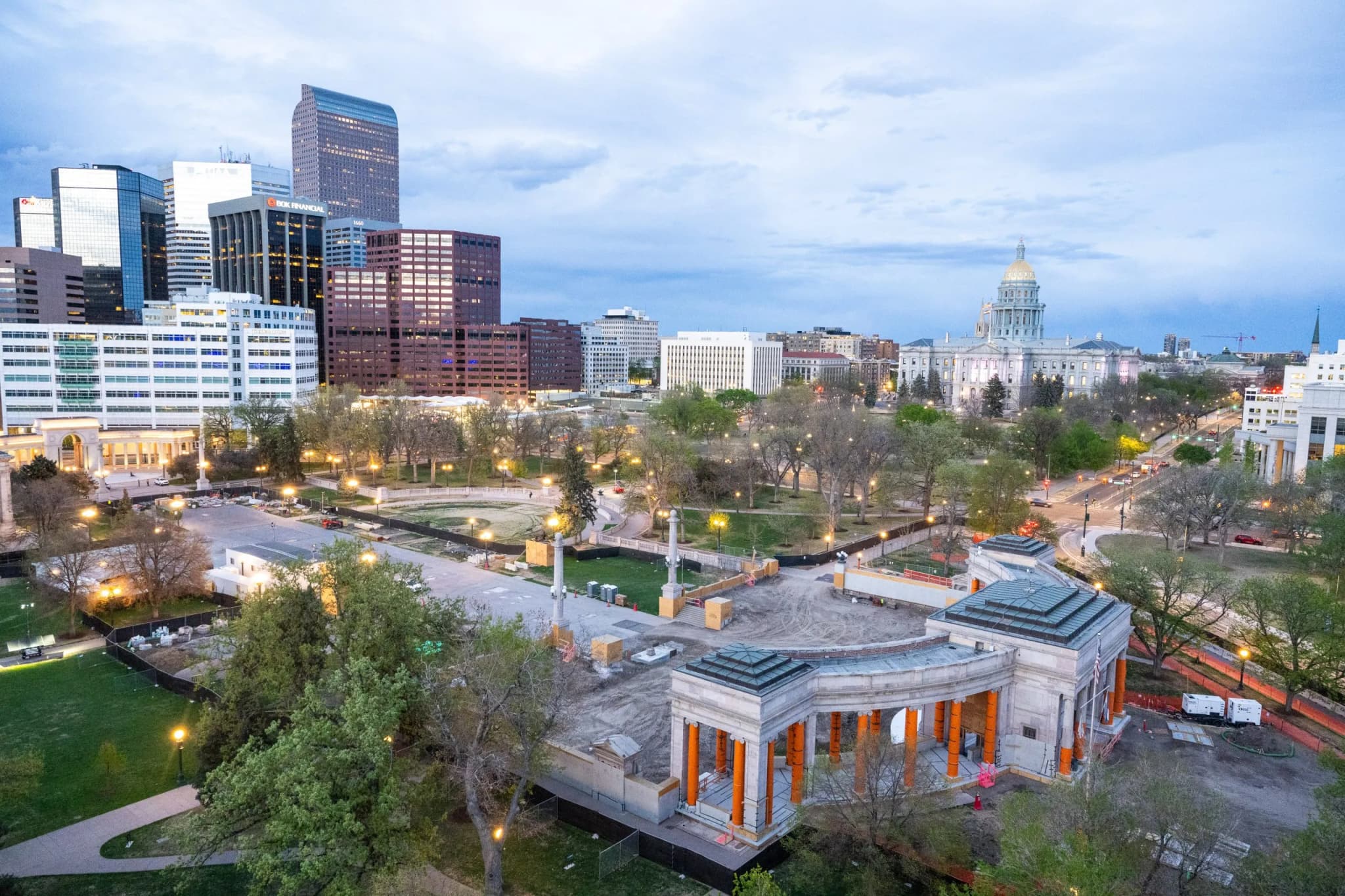
The question hangs in the humid air above the construction site, a rhetorical jab at a place that has spent decades repelling anyone looking for a leisurely lunch. Civic Center isn’t just a park anymore; it’s a $50 million construction zone, a $12.5 million McNichols Building renovation, and the centerpiece of Mayor Steve Hancock’s bid to turn downtown Denver from a ghost town at 5 p.m. into a vibrant, walkable destination.
It’s the people’s park, the heart of downtown, and it’s currently wrapped in temporary fencing and plywood boxes. The historic columns of the Greek-style theater are visible through the dust, but the real story is in the details of the rebuild. Shady outdoor “garden rooms” are being carved out of the existing landscape. Winding pathways are replacing the straight, utilitarian walks of the past. And the theater itself? It’s being wired for concerts and performances, a stark contrast to its current state as a backdrop for political rallies and occasional, underfunded summer concerts.
The timeline is aggressive. The refreshed public space, spanning from the Denver City and County Building to the state Capitol, is expected to reopen in the fall of 2027. That’s two years away. Two years of jackhammers, two years of navigating around the “On the War Trail” statue, which stands today inside a protective plywood box, looking like a prisoner of its own heritage.
Here’s the thing though: the physical renovation is only half the battle. The other half is the $12.5 million revival of the McNichols Building at the park’s edge. This isn’t just about fixing up a historic structure; it’s about injecting commerce into the void. The plan includes a restaurant serving dinner on the lawn, a patio for lunchtime coffee, and to-go sandwiches. It’s a strategy to lure people from the fringe neighborhoods, from the sprawl where they already have their own parks and outdoor markets. It’s an attempt to bring back the workers, the apartment dwellers, and the suburbanites who currently treat downtown as a place to drive through, not stay in.
The funding is a patchwork quilt of voter-approved initiatives. $30 million comes from the Downtown Denver Development Authority, a direct result of sales and property taxes collected downtown. Additional funds are trickling in from the Elevate Denver bond and the Denver Parks & Recreation budget. The Civic Center Conservancy is currently trying to raise another $10 million in donations. It’s a lot of money, but it’s not exactly cheap to turn a 12-acre lot into a high-end leisure destination.
And that matters because the goal isn’t just aesthetic. It’s economic. The city is betting that if you build the garden rooms and the restaurant, the people will come. They’re betting that the perception of crime and filth — historical ghosts that have haunted Civic Center for a century — can be outlasted by fresh paint and better lighting. The 1920s photographs show crowds watching the Denver Municipal Band, a time when the park drew people in. Now, it repels them. The hope is that the new design, with its winding paths and shaded retreats, will reverse that trend.
But will it? The McNichons Building’s new restaurant will serve dinner on the lawn, yes. But will locals trust the space enough to sit there after dark? Will the to-go sandwiches actually draw a crowd, or will they just be another expensive snack option for tourists? The physical transformation is underway, but the social transformation is still just a rendering on a wall.
Picture this: It’s October 2027. The fencing is gone. The “On the War Trail” statue has been freed from its plywood cage. A family is unpacking sandwiches from the McNichols Building onto a blanket near the new garden rooms. The Greek theater is humming with a concert. It’s not exactly a guarantee, but it’s the vision. For now, the park waits, fenced off and under construction, a silent argument for the future of downtown Denver.
Keep up with Colorado
The day's Western Slope news, one email each morning. Free.
Federal Report Sets 200,000 Acre-Foot Water Conservation Target for Upper Basin
Colorado Parks and Wildlife Deploys Precision Drones for Weed Control