$2.6M Grant Fixes Pitkin County’s Deadly Highway 82 Intersection
A $2.6 million federal grant funds a Michigan Left redesign for Pitkin County’s deadliest intersection, targeting high-speed crashes on Highway 82 with construction starting in 2027.
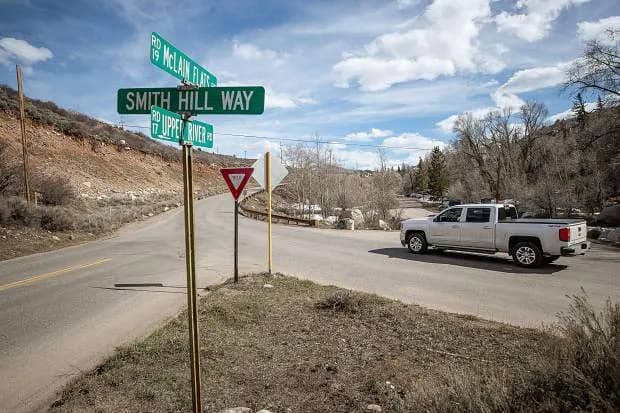
Gunnison —The asphalt at Smith Hill Way is still warm from the July sun, but the memory of the blood spatter from last week’s double accident has cooled into a dark, permanent stain. It’s the kind of detail you notice when you stand there long enough, staring at the intersection where the McLain Flats shortcut meets the main artery of Highway 82. For two decades, this corner of Pitkin County has been a statistical anomaly — a place where the geometry of the road seems to actively invite disaster.
The obvious take is that we’ve simply been waiting for the inevitable. After all, the data is brutal. According to the Colorado Department of Transportation, between 2018 and 2022, 18 accidents occurred here. Seventeen involved injuries; one was fatal. Add to that the four lives lost in a New Year’s Eve crash in the early 2000s, and the case for action feels like it should have been settled years ago. But that’s the part everyone skips past: the difference between knowing a place is dangerous and actually fixing it.
Andrew Knapp, the county engineer who spent 15 years at CDOT before joining the county, admits the conversations have been going on for a long time. “I remember even when I was at CDOT, lots of conversations around this intersection and the concerns of its safety performance,” he said. But talk is cheap, especially when it’s free. What changes the equation now isn’t a new study or a viral Facebook post. It’s money. Specifically, $2.6 million in federal grants from the Highway Safety Improvement Program.
This is not a small amount. It covers the bulk of the project, though the county is self-funding the remaining balance, including almost $200,000 in design costs. The plan, which will go out for contractor bids in November, is to build a “Michigan Left.” This is a specific type of intersection design that removes the option to turn left directly across oncoming traffic. Instead, drivers turn right into a new lane and make a U-turn. It’s a bit clunky, sure, but Knapp argues it’s significantly safer than the alternative, which previous designs considered: a simple traffic light.
“A traffic signal gives that perception of safety,” Knapp said, “but we’re focusing on what would make the intersection safer.” He’s referring to the elimination of broadside collisions, which happen when two vehicles hit each other from the side. Those are often the worst kind of crashes. A Michigan Left eliminates them entirely at this intersection.
The timing is tight. Construction is slated to begin in 2027 and be completed by the end of that year. That means the next few years are a holding pattern. We’ll be living with the same dangerous geometry, the same high-speed traffic, the same shortcuts. Sheriff Michael Buglione points to “the volume and speed of traffic” as the primary contributor to accidents. Commuters use this turn to get to town faster. They’re not wrong to want to get to town faster. But speed and volume are the enemies of a poorly designed intersection.
There’s a silver lining in the construction plan itself. Project designers have identified ways to mitigate the impacts of the work. Lanes will not be closed during peak periods — the up-valley morning commute or the down-valley afternoon rush. Most of the construction will occur on the median, which creates less traffic backup. It’s a thoughtful approach, but it doesn’t change the fact that we’re driving through this mess for another few years.
The funds will also be used to provide safety updates at the Lazy Glen intersection, where an up-valley acceleration lane could be added. It’s a secondary benefit, but it shows the county is thinking about the broader network, not just the one notorious corner.
So, where does that leave us? Closer to safety, yes. But not safe yet. The Michigan Left is a good plan. It’s a proven design. It addresses the specific failure mode of this intersection. But it’s still a plan. It’s still on paper. Until the cranes show up and the concrete is poured, Smith Hill Way remains what it has always been: one of Pitkin County’s most dangerous intersections.
The stain on the asphalt is fading. It’s been rained on. It’s been washed by the tires of a thousand cars. But it’s still there. You can see it if you look. And you should look. Because until 2027, that’s the only warning sign we have.
Keep up with Gunnison
The day's Western Slope news, one email each morning. Free.