Eagle County Pays $8,000 to Reactivate PulsePoint App for Faster Cardiac Response
Eagle County Paramedic Services covers the $8,000 annual fee to reactivate the PulsePoint Respond app, alerting nearby residents to public cardiac arrests and aiming to reduce response times below the critical four-minute mark.
Aspen —Five to seven minutes. That is the average time it takes for Eagle County Paramedics to arrive on the scene of an emergency. For a cardiac arrest victim, brain damage begins at the four-minute mark. You are losing time whether you are waiting for a siren or just hoping someone nearby knows what to do.
Eagle County Paramedic Services is betting on you to bridge that gap. The county has reimplemented the PulsePoint Respond app, a tool that alerts nearby citizens when a public cardiac arrest occurs. This isn’t a new concept for the region; the app was previously funded by Starting Hearts. Now, the financial burden shifts to the paramedic service itself.
Let’s look at the cost of keeping this system alive. For a population under 50,000, the annual fee is $8,000. Eagle County is just over that threshold, but Jackie Christiansen, Starting Hearts’ Director of Business Development, confirmed the fee will be rounded down. New locations typically face a $15,000 setup fee. Because Eagle County has used the app before, that setup cost is waived. It’s a modest investment for software that relies on the goodwill of locals, but it’s still a line item in the budget.
The logic is simple: if the app notifies bystanders, response times drop. If response times drop, survival rates rise. Christiansen noted that the team chose not to restrict who can use the app. They want everyone in the zone, not just certified EMTs. “With PulsePoint, the 911 dispatch is able to notify people that can possibly help,” Christiansen said. “Without PulsePoint, then the cardiac arrest victim is just relying on chance for someone to happen to see them, that happens to know what to do.”
Even if you are clueless, the app guides you. A 911 dispatcher can walk you through CPR over the phone. If an Automated External Defibrillator (AED) is nearby, the machine itself provides step-by-step instructions. Coloradans are also shielded by Good Samaritan Laws, which protect volunteers from tort liability if they break a rib or cause injury while giving aid. “We don’t discourage anyone from signing up for this app,” Christiansen said.
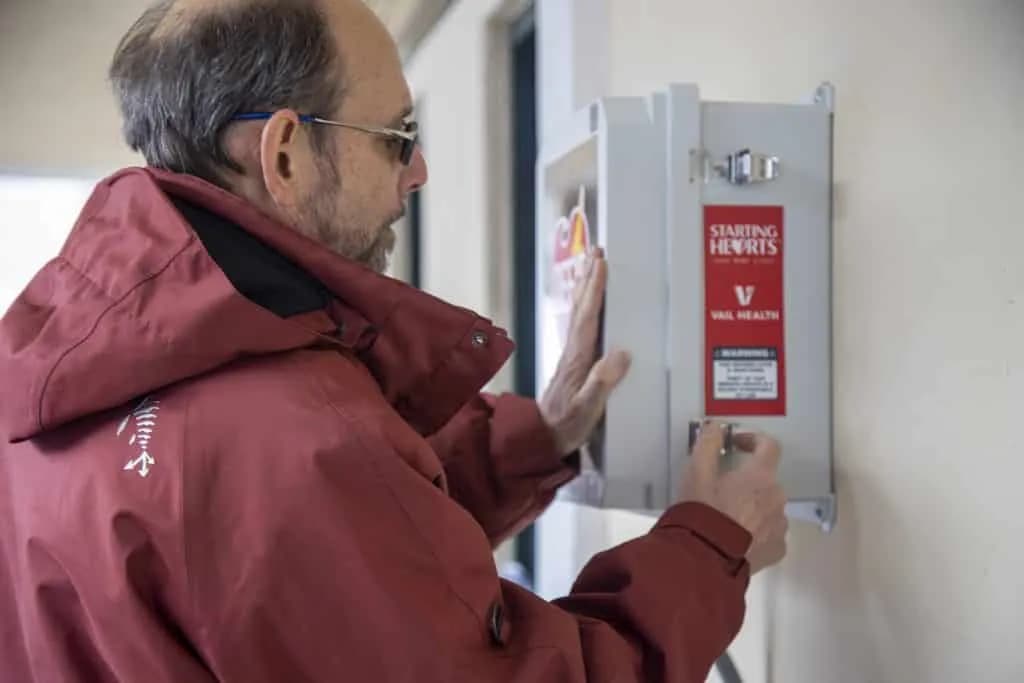
There is a companion app, PulsePoint AED, which helps map out where those defibrillators are hiding. Users can log an AED they find that isn’t recorded, and local EMS personnel approve the entry. This turns every resident into a potential surveyor for emergency equipment.
Brandon Daruna, CEO of Eagle County Paramedic Services (ECPS), framed this as part of a broader strategy to improve cardiac arrest outcomes. “Generally what we’re seeing throughout Colorado and Eagle County, there is an opportunity for us, as it relates to cardiac arrest, is improving bystander CPR,” he said. The sentence trails off in the reporting, but the intent is clear: better bystander intervention leads to better incident numbers.
For context, the app notifies subscribers in real time. It’s not a broadcast to the entire county simultaneously; it’s a targeted alert based on proximity. If you live or work in the valley, you might get pinged. If you don’t have the app, you don’t get the ping. The county is covering the $8,000 annual fee to ensure the infrastructure is there. You just need to download the app and keep your phone charged.
The bottom line is that the county is paying $8,000 a year to turn you into a backup first responder. It’s a low-cost insurance policy against the five-to-seven-minute wait for professional help. If you want to shorten that window, you need to sign up. If you don’t, you’re still relying on chance.
Keep up with Aspen
The day's Western Slope news, one email each morning. Free.