Eagle Valley Enterprise Marks 125 Years with History of Community and Chaos
A look back at the Eagle Valley Enterprise's 125-year history, tracing the region's evolution from a rugged mountain settlement to a hub for recreation and civic pride.
Aspen —The ink was still wet on the first edition of the Eagle Valley Enterprise when it hit the newsstands on May 24, 1901, carrying a cover story that promised readers a glimpse into the future of a place that felt, to its founders, both wild and civilized. That single issue, dated 125 years ago today, didn’t just announce the birth of a newspaper; it announced the arrival of a community ready to define itself. The paper’s inaugural headline, “The Eagle Valley, Its Present State of Development, and Its Future Possibilities,” set a tone of ambitious optimism that still echoes through the valley’s history, even as the physical landscape shifts beneath our feet.
At the time of that first publication, the valley supported a population of at least 1,200 people. It was a number that felt substantial then, a cluster of lives bound together by the rhythm of the seasons and the flow of the river. The Enterprise described a “sparkling, swift stream” that sprang “from the summit of one of the great chains of the Rocky mountains,” fed by “eternal snows.” You can almost hear the water rushing over the rocks, cold and clear, cutting through the granite. It was a landscape that demanded respect, yet the paper insisted that “every evidence of refinement may be noted in our communities.”
That word — refinement — does a lot of heavy lifting. It suggests that despite the rugged terrain, the people here were building something permanent. They were interested in education. They were interested in social structures. The only secret order represented at the time was the Woodmen of the World, with lodges established in Eagle, Gypsum, and Wolcott. Three towns, bound by a shared civic identity and a shared belief that this valley was more than just a pass through the mountains. The climate, the paper claimed, was “equable and invigorating,” a phrase that feels less like meteorological data and more like a sales pitch for a life lived in the open air.
If you look closely at the history of the Enterprise, you see that this sense of place has always been tied to the land’s raw power. Just a few decades later, in 1926, thirteen stowaways on the Denver and Rio Grande Western Railroad attempted to hold up the train in the Tennessee Pass area, threatening to take charge of the train when ordered to get off. The trainmen wired ahead to Salida, and two special agents, assisted by Sheriff Schrader and Undersheriff Otwell, rounded up the “free passengers” at Malta and put them in the Leadville jail. It was a moment of chaos in a valley that prided itself on order.
Then came the fire. In 1951, a wildland blaze at the east end of Eagle County opened the fire season early, burning more than 50 acres near Red Cliff. Forest Ranger Fred Cook reported the fire, of unknown origin, which broke out near the D & R.G. railroad track a mile above Red Cliff and burned upward to the snowline. Volunteer warden Homer Tippett and cooperators Walter Owen, Frank McDonald, Buster Beck, and Ronnie Dump brought it under control. The land was always there, waiting, indifferent to the refinements of the Woodmen of the World or the stowaways in the caboose.
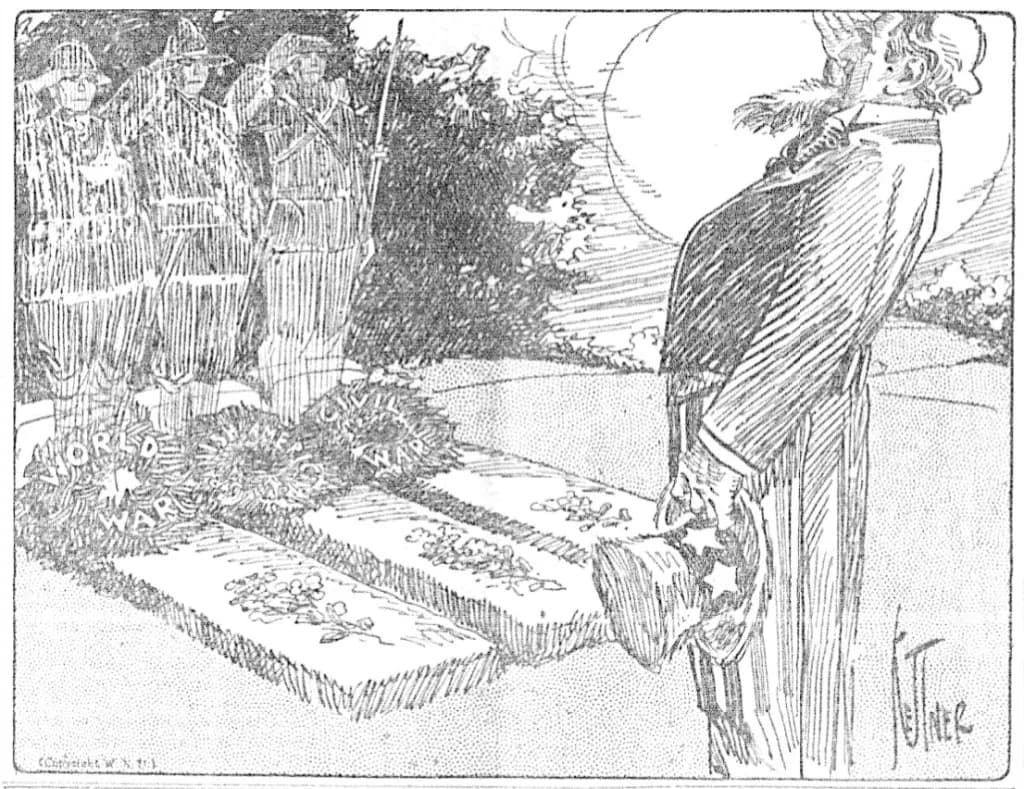
Fifty years ago, in 1976, the valley turned its attention to memory and loss. The public was encouraged to participate in annual memorial services atop Tennessee Pass, where a 14-ton granite monument, engraved with the listing of 992 10th Mountain Division men killed in action, stood as a silent witness. Col. ‘Pete’ Peterson conducted the wreath-laying ceremony, a solemn ritual that connected the living to the dead across the thin air of the pass.
And just twenty-five years ago, in 1901, the focus shifted again, this time to recreation and identity. The Teva Whitewater Festival in Vail was set to showcase the new Vail Whitewater Park on Gore Creek, which had just been completed. The festival served notice that the valley was officially seeking status as a whitewater mecca, a project geared toward the mainstream surge in popularity of kayaking around the country. The man-made features in Gore Creek were designed to harness the same “sparkling, swift stream” that the Enterprise had described a century earlier, but now it was a playground, a spectacle, a draw for tourists from out of state.
The Enterprise’s first issue claimed the climate was equable. It claimed refinement. It claimed a future full of possibilities. The paper didn’t know that the stowaways would hold up trains, that the fires would burn upward to the snowline, or that the whitewater would become a tourist attraction. It only knew that the people here were interested in their communities, that they were building lodges, and that the water was cold and clear.
Today, as we drive down I-70 or hike the trails above Gypsum, we’re still living in that same valley, under that same sky. The population has grown, the refinements have multiplied, and the stowaways are long gone, but the river still cuts through the granite, fed by eternal snows, carrying the weight of 125 years of history in its swift, sparkling current.
Keep up with Aspen
The day's Western Slope news, one email each morning. Free.
Aspen's ACES Returns Annual Harvest Party to Rock Bottom Ranch
Glenwood Ghostwalk Brings Frontier History to Life in Linwood Cemetery