Fort Cyclists Tackle 643-Mile North South Colorado Race
Thirty-six riders began a 643-mile gravel journey from Fort Collins to Trinidad, navigating fire-scarred landscapes and testing the limits of self-supported endurance cycling.
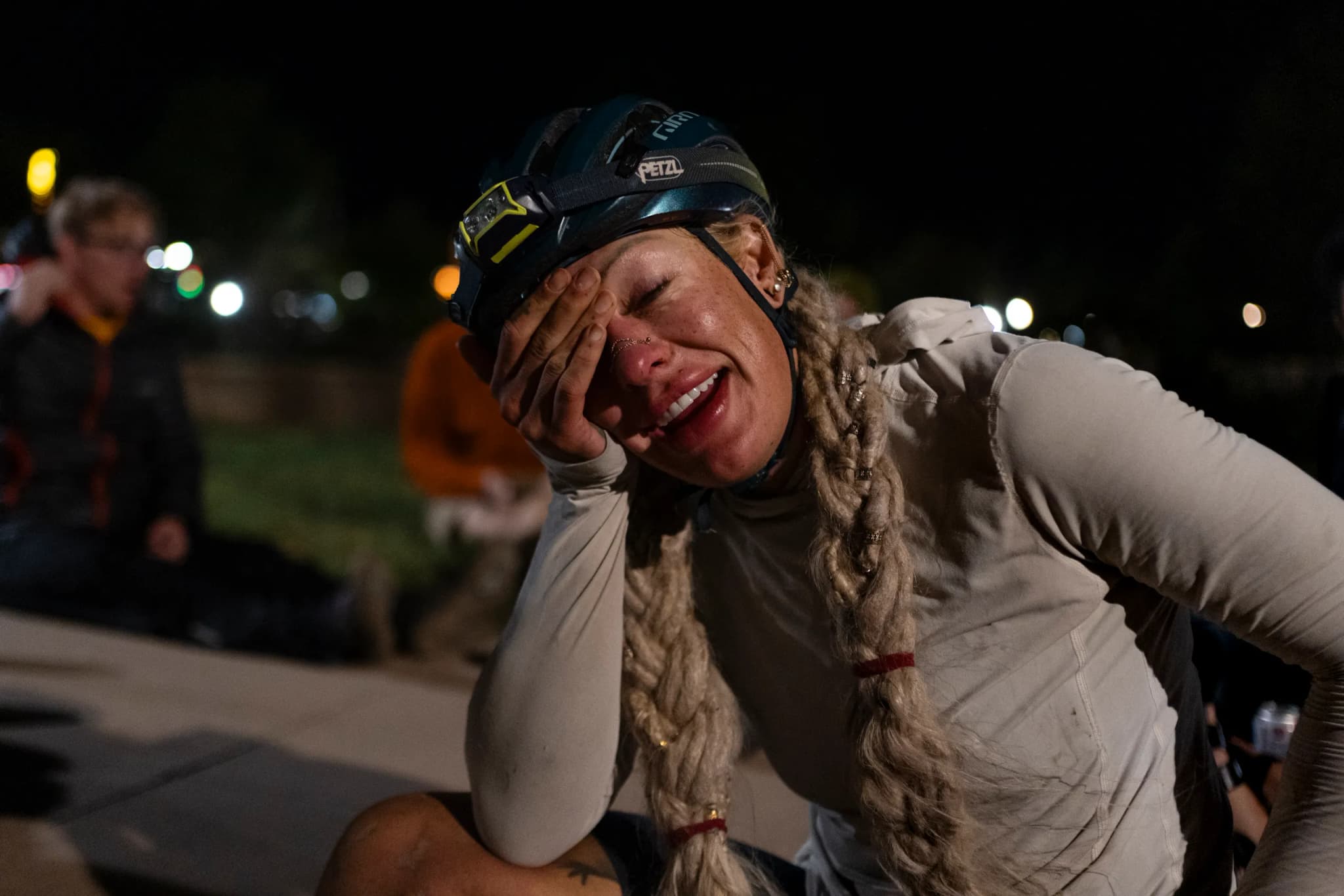
The air in Lee Martinez Park smells like chain lube and cold coffee. Three dozen cyclists stand motionless on a cracked basketball court, their bikes loaded with gear for a journey that will take them from the foothills of Fort Collins to the high desert of Trinidad. It is 7:21 a.m. on Aug. 28, and the silence is heavy until Al Parks, co-director of North South Colorado, steps to center court. He doesn’t offer a pep talk. He offers warnings: don’t leave trash, don’t start fires, and the post office in Granby is not a good place to sleep.
Parks said that last point was based on experience. Then he backed off the court, told them it was 7:30, and they went.
This is the sixth annual North South Colorado race. It covers 643 miles of gravel, a distance that sounds like a logistical nightmare until you realize it’s just another day in the rapidly expanding world of endurance cycling. The field was 36 racers, down from nearly 70 who signed up. They came from California and Arizona, but mostly from other Colorado towns. Some were sleepy; some were slightly hungover from a welcome party the night before.
The Colorado Sun reported on the event, noting that gravel racing has overtaken road racing in popularity over the past decade. It’s no longer just a niche hobby; it has splintered into its own subgenres, attracting the best bike racers in the country who often compete for little more than social media footage and a few bucks.
Corporate giants have noticed. Life Time, the fitness center chain, acquired the Leadville 100 series in 2010 and Unbound Gravel in 2019. They now produce about a dozen dirt races annually. Their entrance injected the sport with a status it hadn’t previously realized, though opinions differ on whether that’s good for the scrappy grassroots scene. North South remains a self-supported, grassroots effort. No pacers. No support vehicles. Just the rider, the bike, and 643 miles of Colorado terrain.
The route takes them through Poudre Canyon in Larimer County, where the landscape is still scarred by fire. It’s a visual reminder of what these riders are actually doing: traversing a state that is changing, physically and culturally. They aren’t racing against each other in the traditional sense. They are racing the distance, the elevation, and their own limits.
For context, 643 miles is roughly the distance from Denver to Salt Lake City and back. But on a bike, with loaded panniers, it’s not just distance; it’s time. It’s days of pedaling through small towns where the post office is a landmark, not a shelter. It’s navigating roads that are technically public but practically wild.
The appeal isn’t just the adrenaline. It’s the autonomy. Gravel racing rejected the exclusivity of road racing, where fans stayed on the sidelines and racers were treated like athletes in a stadium. Here, the race is the road. The audience is anyone who happens to be on that stretch of gravel in Larimer County or the high desert near Trinidad.
In practice, this means a 643-mile race is a test of endurance that doubles as a deep dive into the state’s geography. You see the burn scars, the dry washes, the quiet towns that exist only on a map. You feel the shift from the humid foothills to the arid plains. It’s not a spectacle; it’s an immersion.
The practical bottom line for locals is simple: the road is shared. When 36 loaded bikes roll through a small town, they take up space. They stop at the post office. They sleep in places that aren’t designed for sleeping. And they leave, eventually, having covered a distance that most people only drive in an hour and a half. The race doesn’t cost the town money, but it does demand attention. And in a state that prides itself on open space, that’s the real price of admission.
Keep up with the Western Slope
The day's Western Slope news, one email each morning. Free.