Vail Health Hosts Grief Documentary Screening at Mountain School
Vail Health hosts a Saturday screening of the award-winning documentary 'A Sacred Pause' at Vail Mountain School, featuring a panel on integrating animal-assisted grief support into local behavioral health resources.
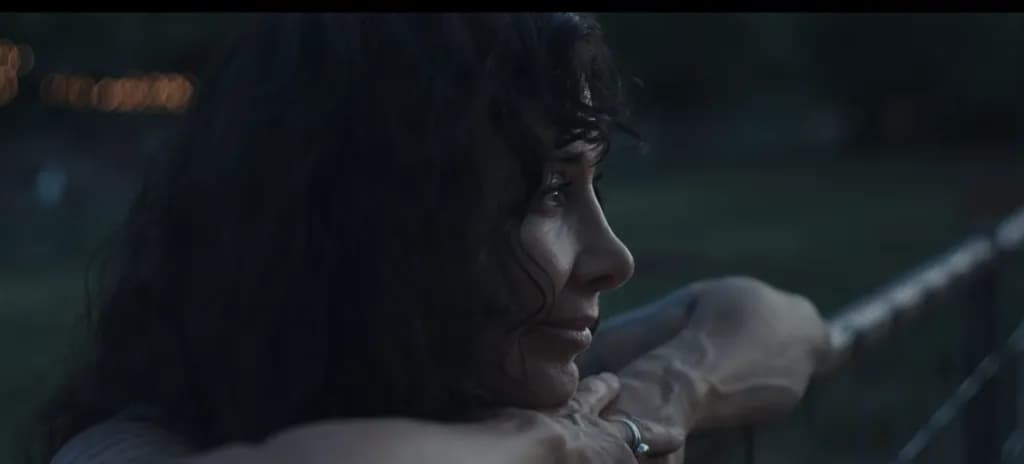
Aspen —The silence of a 20-acre farm in Sedona, Arizona, is not empty. It is filled with the lowing of rescued cattle, the crunch of hay under boots, and the heavy, unspoken weight of people who have lost everything. It is a place where grief does not need to be fixed, only witnessed. This is the premise of "A Sacred Pause," a 30-minute documentary that will screen at Vail Mountain School on Saturday, Nov. 7, from 4 to 6 p.m., hosted by Vail Health. The film follows six individuals attending a grief workshop at Selah Carefarm, a facility that pairs bereaved humans with animals saved from abuse. It is a counterintuitive setting for healing, yet the evidence suggests that this specific mix of rural isolation and animal companionship offers something sterile clinical offices often cannot.
The obvious take on grief support is that it happens in a room, with a therapist, and a notebook. But for Sue Franciose, who lost her only daughter Emily in 2023, that model failed. She searched the county for a space to make sense of what happened, but found no fit until she discovered Selah. "It changed my life and gave me hope," Franciose told the Vail Daily. Her struggle was not just emotional but logistical; she couldn't attend community events or sit comfortably with friends. The farm provided a container for that chaos. "It just changed my life to be around other people that understood what I was going through... it was a game change for me as far as finding my people," she said.
The film, which won Best Documentary Short at the 2026 Sedona International Film Festival, centers on Dr. Joanne Cacciatore, the farm’s creator. Cacciatore is a professor at Arizona State University who runs a graduate certificate program in trauma and bereavement. She founded the farm in 2016, years after losing her own daughter. In the film’s trailer, she offers a perspective that challenges the standard American narrative of resilience: "There are some losses in which there is no recovery. I needed help from someone who understood this or who could at least stay with my pain and not avert their gaze."
That refusal to look away is the core of the Selah model. When Franciose asked Cacciatore how to fit back into her life, the professor’s answer was blunt: "You’re never going to be the same person." Franciose noted that this simple statement was a relief precisely because it contradicted the well-meaning advice she had received elsewhere. "The fact that (Cacciatore) experienced it herself and dedicated her life to helping others that are going through it, it’s just incredibly powerful," Franciose said.
The local angle
For folks around here, the screening is more than a cultural event; it is a resource map. Vail Health Behavioral Health Executive Director Chris Lindley will join film director Jon Bregel and Cacciatore for a post-screening panel. The presence of Lindley signals that Vail Health is looking to integrate these types of non-traditional support models into its local offerings. Franciose, who calls herself a frequent flyer of the Carefarm, hopes viewers will learn about this type of grief counseling locally. She felt traditional options were insufficient for the depth of her loss, and she wants neighbors to know that other pathways exist.
The film does not promise a cure. It doesn't even promise happiness. It promises presence. As the lights dim at Vail Mountain School, you can feel it in the room: the collective exhale of people who have been told to "move on" and haven't. The camera lingers on the faces of the participants, not to pity them, but to honor their endurance. There is a warmth to that gaze, a recognition that some wounds don't close; they just scar over, and the scar is part of the map.
The final shot of the documentary rests on the quiet dignity of a horse standing in the late afternoon light, its coat dark against the fading sun. It doesn't speak. It just stands there, steady and alive, a reminder that even in the deepest valleys of loss, something remains.
Keep up with Aspen
The day's Western Slope news, one email each morning. Free.