Aspen Council Debates $6,500 Employer Housing Fee
Aspen council members debated a proposed $6,500 annual employer fee for the Lumberyard housing program, raising concerns about worker leverage and subsidy dependency.
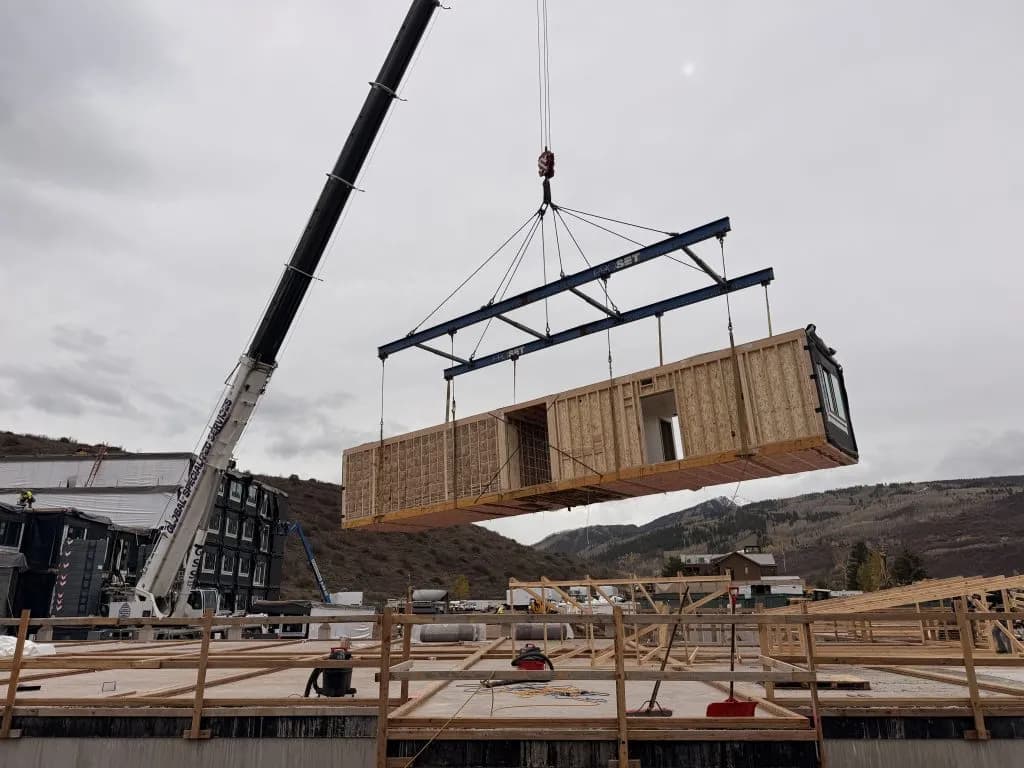
Aspen —Bill Guth looked at the spreadsheet and shook his head. He didn't just dislike the numbers; he found them absurd.
“The least amount of you’re going to pay for a free market, one-bedroom apartment in Aspen right now is $5,000 a month,” Guth told the council during Monday’s work session. “We are talking about $5,000 a year to secure subsidized housing?”
He called the proposed fees “orders of magnitude” too low.
Guth wasn’t alone in his skepticism. The Lumberyard Employer Partnership Program aims to give local businesses priority access to the housing lottery for their staff. It’s capped at 50 units. Employers pay an annual fee ranging from $3,000 to $6,500 per employee.
But the real friction isn’t about the math. It’s about who holds the power.
Mayor Rachael Richards voiced a fear that shared by several council members: if employers pay the fee, they gain leverage over employees.
“I don’t want the housing to become a pressure on the employee because the employer controls it,” Richards said.
She asked the obvious question: how do you protect the worker?
Council member Sam Rose pointed out the gap in the current proposal. What happens if a dispute arises? Who decides if the employee keeps the unit?
There is no clear answer yet.
Chris Everson, the project manager, noted that the city held a workshop in August to shape the program. Business representatives attended. The topics were broad: eligibility, administration, fees.
Everson described the conversation as “robust.”
That’s a diplomatic way of saying everyone had strong opinions.
The fee structure itself is complex. It uses eight tiers. Two factors determine the cost: the size of the employer and whether they are a nonprofit or for-profit. Smaller companies pay less. Nonprofits pay less.
This design attempts to balance fairness with sustainability. But it adds layers of bureaucracy.
Aspen City Council hasn’t voted on the final fee schedule. The work session was meant to refine the details before a public hearing.
The underlying tension is simple. Aspen needs affordable housing. Local businesses need workers. But the mechanism linking the two — money flowing from employer to employee via a housing subsidy — creates a dependency.
If an employer pays $6,500 a year for an employee’s housing, that employee knows the value of that benefit. Losing the job means losing the housing advantage. That’s a powerful retention tool.
Is it fair? That depends on your view of labor relations.
Some council members, including Christine Benedetti, argued that the program would benefit smaller businesses more than large corporations. Large employers already have resources to attract talent. Small shops and nonprofits do not.
Benedetti suggested prioritizing those groups. She also supported lower rates for nonprofits.
Her logic: if the goal is to keep local jobs alive, focus on the entities most likely to close if they can’t find staff.
That’s a pragmatic argument. It shifts the focus from ideological debates about employer power to practical outcomes for the community.
But it doesn’t solve the core issue of employee vulnerability.
Richards’ concern remains valid. An employee who relies on employer-sponsored housing is in a precarious position. They may hesitate to negotiate wages or complain about working conditions.
The council needs to address this. They can’t just approve the fees and hope for the best.
They need to build in protections. Maybe a cap on how many units one employer can sponsor. Maybe a requirement that employees sign a lease directly with the property operator, not the employer. Maybe a grievance process independent of the employer.
These are details. But they matter.
The Lumberyard project is a major investment. It’s supposed to provide long-term stability for Aspen’s workforce. If the employer partnership program creates instability instead, it fails its purpose.
Guth’s initial reaction was about the price tag. But the deeper issue is structural.
The council is still working through it. No final decision has been made.
For now, the fees stand as proposed. But expect changes.
Read that again: the fees stand as proposed.
That’s the current state. Not the final state.
The next step is a public comment period. Then a vote.
Until then, the debate continues.
Keep up with Aspen
The day's Western Slope news, one email each morning. Free.