Aspen Adds 14 EV Chargers to Meet 2021 Infrastructure Goal
Aspen installed seven dual-port Level 2 stations, adding 14 public charging spaces to reach 38 total plugs. This expansion fulfills the city's 2021 EV infrastructure master plan targets.
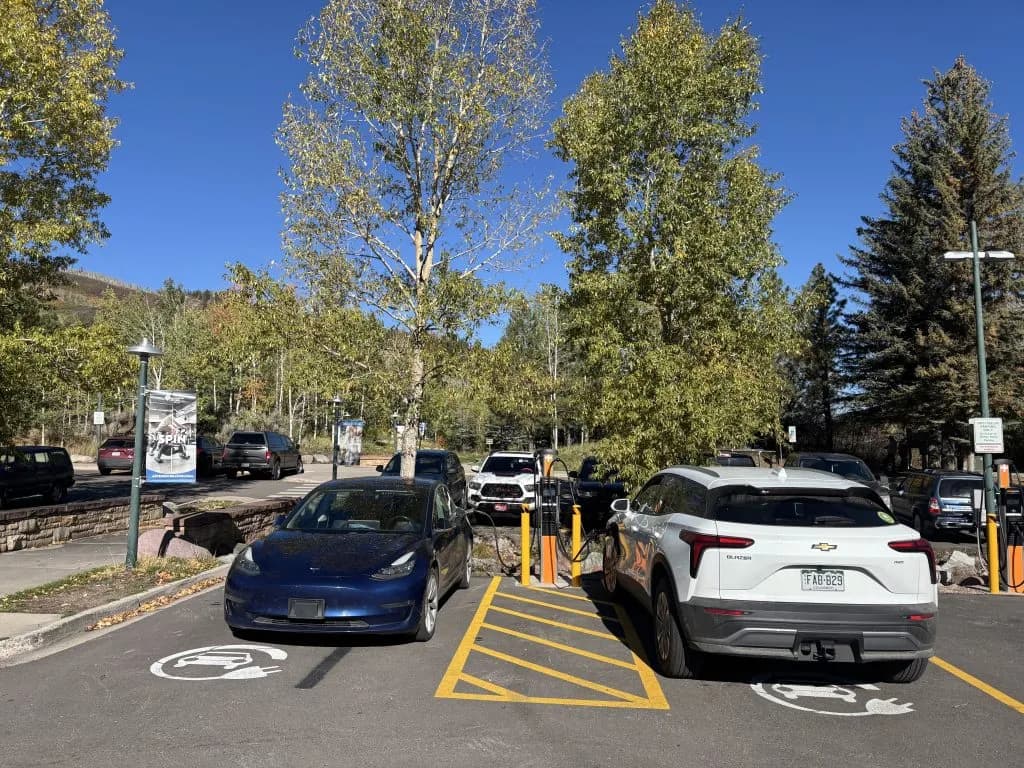
Aspen —Fourteen new public charging spaces. That is the number Aspen just added to its grid, a move that officially closes out the city’s 2021 Public EV Charging Infrastructure Master Plan.
The Aspen Times reported that the city introduced seven new dual-port Level 2 electric vehicle charging stations. Each station has two ports, which is how you get to the total of 14 spaces. For context, this isn’t just a cosmetic update. It is the fulfillment of a specific goal set five years ago to establish between 35 and 45 public plugs.
Tim Karfs, Aspen’s Sustainability Programs Administrator, said the expansion brings the city’s total network from 12 plugs in 2021 to 38. That puts Aspen squarely within the target range established by the master plan.
The locations are spread across four sites:
- The Aspen Recreation Center (ARC) hosts two stations
- The Aspen Golf Club/Nordic Center features two stations
- Truscott gets two stations
- The Red Brick Center receives one station
The ARC chargers are live. The rest go online sometime next week, according to Karfs.
Each new location includes a van-accessible charging space. This is a detail often buried in infrastructure announcements, but it matters for residents with mobility devices or larger vehicles who need wider turning radii.
Karfs framed the investment as a tool for equity and emissions reduction. “For the city, investing in public charging is about ensuring that the benefits of electric vehicles, including lower operating costs and zero tailpipe emissions, are accessible to more people in our community,” he said.
The strategy is explicit: place chargers where they do the most work. The city prioritizes sites near multi-family and affordable housing, workplaces, public transit stops, and other city facilities. Karfs noted that installing chargers in multi-family properties is complicated by HOA rules, limited parking, and electrical constraints. The city’s public chargers serve as a fallback for those residents who cannot install home units.
Let’s do the math on adoption. Karfs confirmed that EVs now represent approximately 6% of registered vehicles within the Aspen Electric service territory. That is a pool of more than 4,400 registered EVs across Pitkin, Eagle, and Garfield counties.
Utilization is the metric that tells you if the infrastructure is actually being used, not just installed. The city’s newsletter notes that several Aspen charging locations exceed 60% utilization during peak seasons. For comparison, the industry benchmark for a high-performing station is 20%. At 60%, these chargers are working hard.
The city also cited a strategic approach to installation costs. By coordinating new charger installations with existing utility work or road resurfacing projects, the city aims to “reduce construction costs and avoid duplicative work.” This is a standard practice in municipal planning, but it matters here because it suggests the city is trying to keep the tax burden manageable while expanding capacity.
Karfs also pointed to local financial support mechanisms. CORE and Holy Cross Energy offer rebates and grants that can help support multi-family EV charging projects, providing a pathway for private buildings to add their own infrastructure if public chargers remain busy.
The practical impact is straightforward. If you drive an EV in Aspen and don’t have a garage or dedicated parking spot with power, your options just expanded. The network is no longer limited to a handful of plugs scattered around town; it now covers key residential, recreational, and commercial hubs.
The 38-plug network is the current ceiling for this phase of the master plan. Whether that capacity holds up as EV adoption continues its upward trend is a question for the next planning cycle. For now, the city has hit its target number. The chargers are installed, the vans have their spaces, and the grid is ready for the next wave of drivers.
Keep up with Aspen
The day's Western Slope news, one email each morning. Free.