Fruita Snyder Fire Claims 3 Wildland Firefighters as 46 Square Miles Burn
The Snyder Fire in Fruita has consumed over 46 square miles and claimed the lives of three wildland firefighters, prompting Gov. Jared Polis to order flags at half-mast.
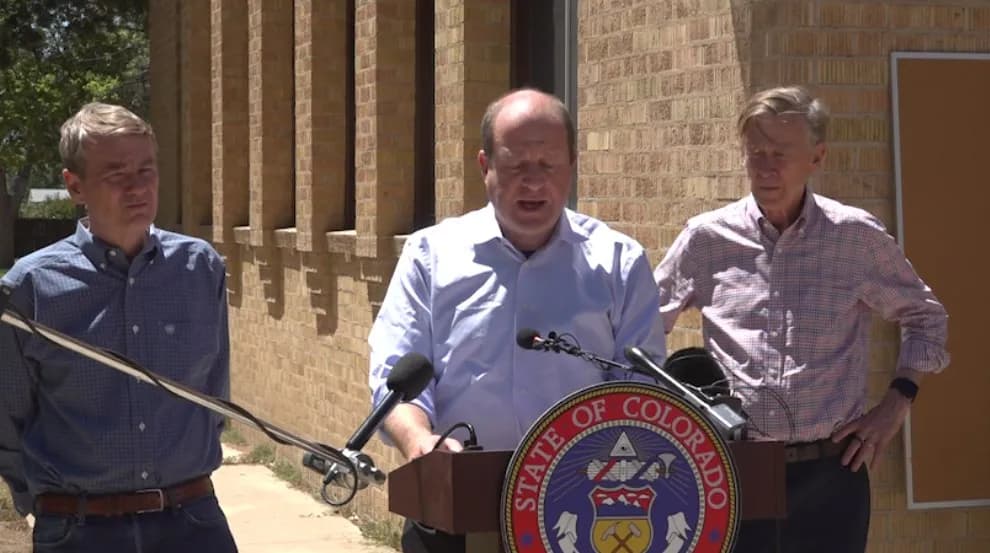
Fruita —The air in Fruita tastes like ash and exhaustion. It is Monday afternoon, and the command center is humming with the low-grade anxiety of people who have been awake too long, staring at maps that keep getting bigger.
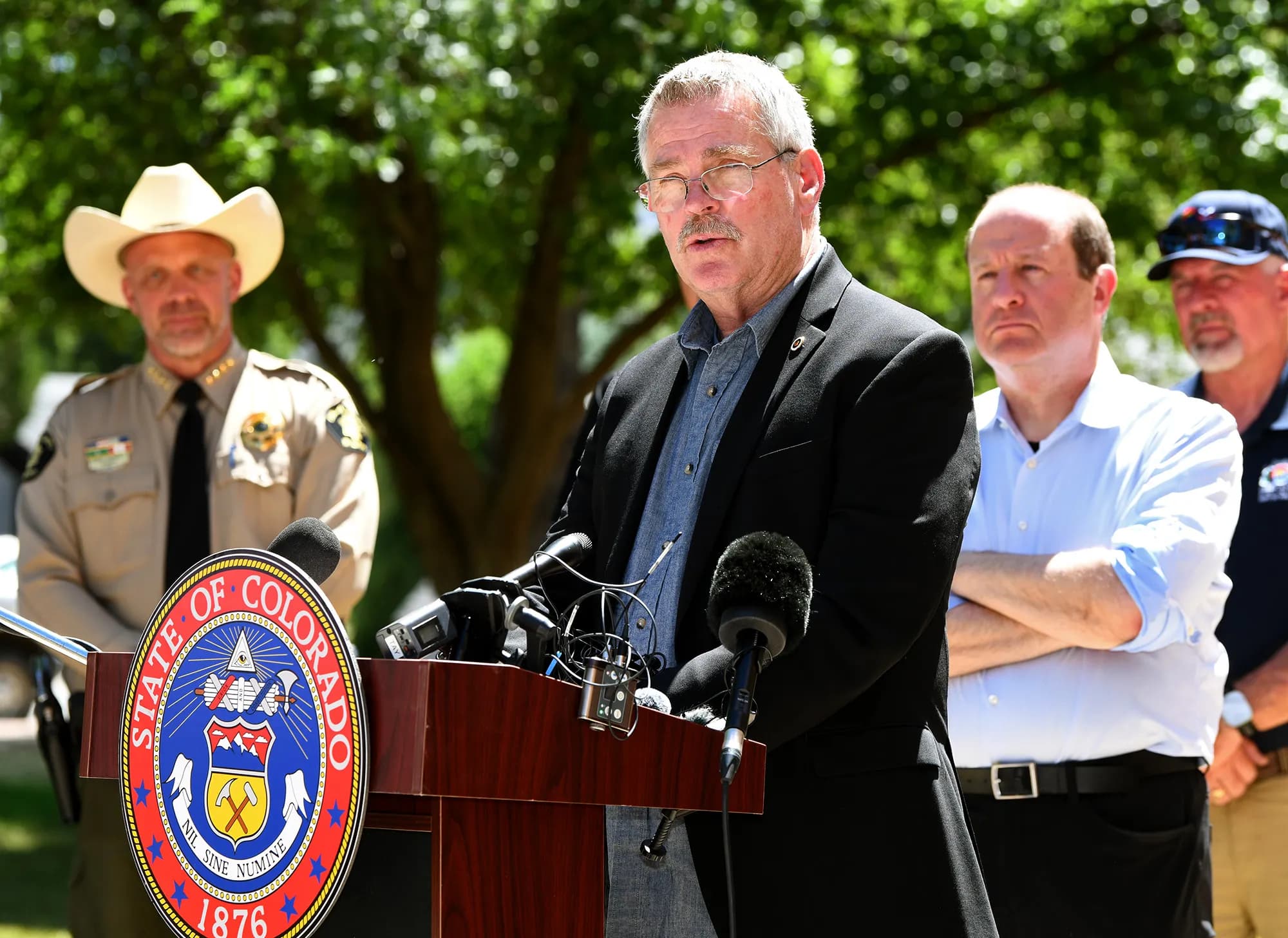
Gov. Jared Polis, federal fire directors, and local officials stood before the press to deliver the hard numbers: the Snyder Fire has swallowed more than 46 square miles of Western Slope land. Zero percent containment. No walls holding it back. And three wildland firefighters are dead.
Emilie Parker, Nick Hutcherson, and Sydney Watson died responding to the Knowles Fire, which has since merged with the Snyder. Two others are in Denver, stable but recovering from injuries sustained in the same blaze. This marks the first line-of-duty fatalities for the agency this year, a statistic that feels heavier than the smoke hanging over the valley.
"This is never the news that anyone wants to get," said USDA Forest Service Fire and Aviation Management Director Sarah Fisher. She wasn’t being dramatic. She was stating a fact that everyone in the room already knew but needed to hear from someone with the authority to make it official.
The grief is fresh. Director Brian Fennessy of the U.S. Wildland Fire Service didn’t mince words when describing the process of breaking the news to families. "I’ll share with you that it doesn’t get easier," Fennessy said. "All of them are different. All are special. I mean, it’s just heartbreaking. You know, we have to meet with the families and share with them to the degree we can what occurred. These are their loved ones."
It’s a simple phrase, but it carries the weight of the entire operation. You don’t just "manage" a death. You meet with the people who loved the person. You tell them what happened. You hope they can handle it.
Gov. Polis announced that Colorado flags will fly at half-mast on the days of the fallen firefighters' services, following the wishes of their families. It’s a gesture of respect, yes, but it’s also a signal to the community that this isn’t just a weather event. It’s a human tragedy.
The fires are growing because the conditions are worsening. Hot. Dry. Unforgiving. Officials emphasized that most of these blazes are human-caused, a reminder that the spark is often just a careless moment, not a geological inevitability. The Rocky Mountain Complex Incident Management Team is still on the ground, battling the flames despite the heat, trying to buy time for the homes and forests that haven’t burned yet.
U.S. Senator John Hickenlooper raised a different kind of worry: water. Specifically, the water needed to keep the air tankers flying. If the reservoirs drop too low, the planes can’t scoop. If they can’t scoop, they can’t drop.
"We’re doing an assessment now to look at all the reservoirs where these planes are and they’re fighting a wildfire," Hickenlooper said. "They’re coming into a reservoir, scooping up water and going over, dropping it out, droppinging it on the fire. If those reservoirs get too low, that’s not safe."
It’s a delicate balance. You need water to put out the fire, but you can’t drain the system dry while the fire is still burning. It’s a logistical tightrope walked by thousands of people across the state.
Sheriff Rowell took the podium to remind locals that the holiday weekend is approaching. Fire prevention isn’t just a slogan anymore; it’s a survival strategy. Every campfire, every discarded cigarette, every piece of equipment left running is a potential ignition point. The community is asked to celebrate, but to do so carefully. To watch the wind. To keep an eye on the dry grass. To mind the sky.
The Snyder Fire doesn’t care about your holiday plans. It doesn’t care about your property taxes or your commute. It just keeps growing. And right now, it’s growing fast.
Keep up with Fruita
The day's Western Slope news, one email each morning. Free.