Gabe Evans Announces 2028 Run for Colorado 4th District
Rep. Gabe Evans announced Monday he will seek the open Colorado 4th District seat in 2028, aiming to capitalize on a razor-thin loss by incumbent Lauren Boebert.
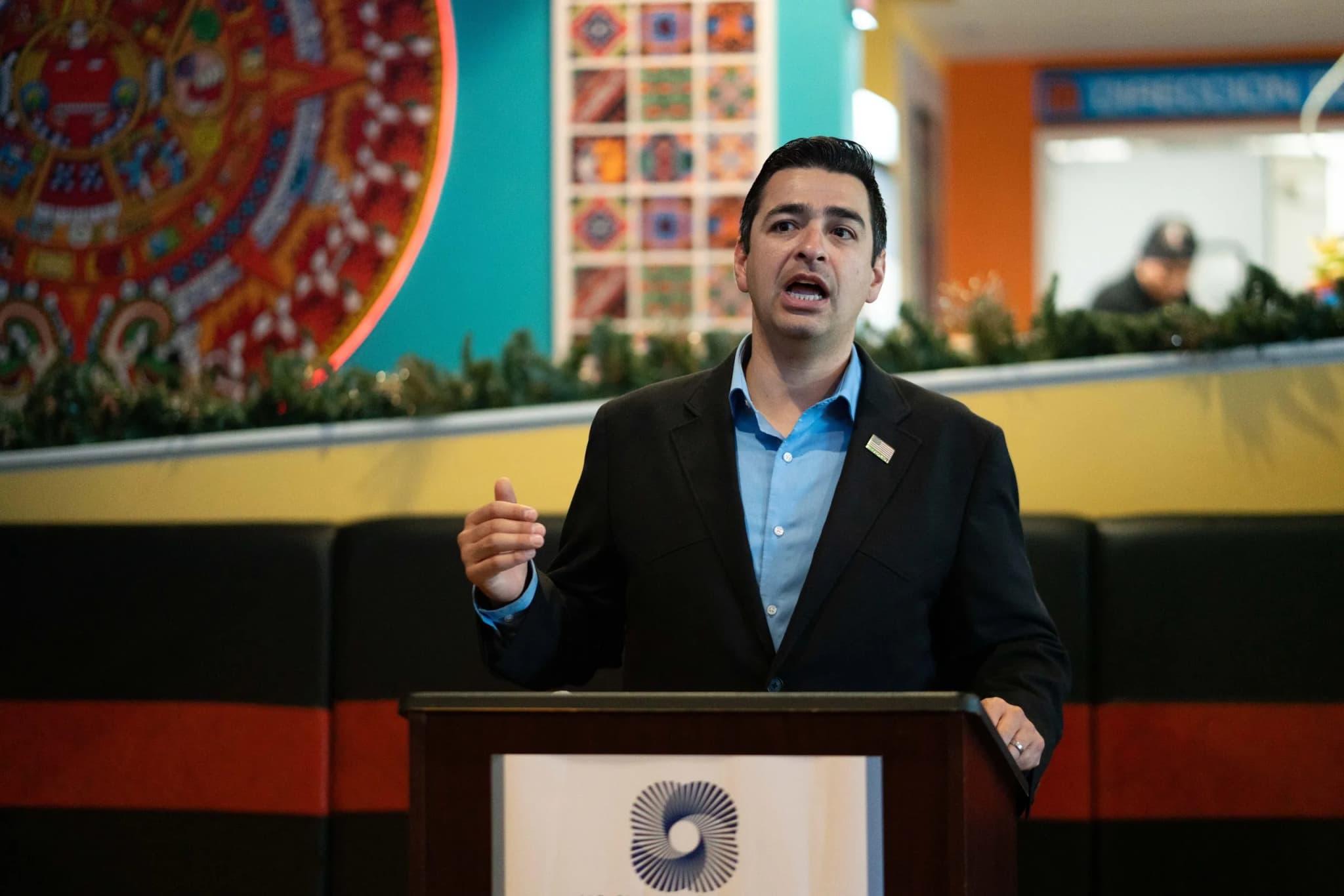
The morning light in Fort Lupton hits the glass of the local cafes with a particular clarity, a kind of crispness that feels distinct from the humid haze of the Front Range foothills. It’s a quiet corner of the state, tucked between the sprawling suburbs of Denver and the vast, open plains stretching east toward Wyoming. For Gabe Evans, this quiet is about to get very loud.
Why did a sitting congressman announce his next race before the current one was even fully settled? That is the question hanging over the 4th Congressional District right now. Evans, who represents the 8th District, lost his reelection bid this year to Democrat Manny Rutinel. Rutinel won by 15 percentage points in a district that was drawn in 2021 to be a tossup. But Evans didn’t wait for the dust to settle. He announced Monday that he will run in 2028 to represent Colorado’s 4th Congressional District, a move that gives him a significant head start over other potential Republican candidates.
There’s a warmth to the political strategy here, but it’s built on cold hard numbers. The 4th District is massive, stretching from Douglas County — its population center — across the Eastern Plains to Nebraska and Oklahoma, and even reaching into Loveland. Until recently, it was considered the most favorable district for Republicans in Colorado. In 2024, incumbent Republican Lauren Boebert won the district by 11 points. President Trump won it by more than 18 points two years prior. But this year, the tide turned. Boebert, who represents Windsor, narrowly lost her reelection bid to Democrat Eileen Laubacher, a retired Navy rear admiral from Highlands Ranch. Laubacher won by less than a percentage point, a razor-thin margin that signals a shifting landscape.
Evans sees an opportunity in this shift. In his written statement to The Colorado Sun, he framed his candidacy around the issues that resonated with voters in the 8th District. “Now more than ever, Colorado needs conservatives in Congress who will fight to keep our border secure, cut taxes for working families, keep boys from dominating girls’ sports and locker rooms, protect our water, and make energy affordable,” Evans said. He emphasized his personal connection to the area, noting that he is “ready to keep fighting in the 4th District where I grew up and where my family has lived since 1976.” This personal stake adds a layer of authenticity to his campaign, distinguishing him from candidates who might be seen as parachuting into a new district for political gain.
The timing of Evans’ announcement is strategic. Laubacher hasn’t even been sworn into office yet; that won’t happen until early next year. By jumping in now, Evans is positioning himself as the front-runner among Republicans. Boebert has already said she won’t seek reelection in 2028, leaving the seat open. With the state moving increasingly to the left, the pool of winnable races for Republicans is shrinking. The 4th District is likely to be viewed as the GOP’s best 2028 flip opportunity in Colorado, if not one of the best chances to knock out a congressional Democrat in the nation. Evans’ early entry may also be an attempt to intimidate other potential candidates into staying home, consolidating the Republican base behind a single, experienced leader.
If you look closely at the map, the 4th District is a patchwork of suburban sprawl and rural expanse. It’s a place where the politics of the border clash with the politics of the backyard. Evans knows this terrain. He has spent years navigating the complex dynamics of the 8th District, a place where the influence of Denver is palpable. Now, he is bringing that experience to the 4th, a district that has historically leaned Republican but is showing signs of change. The challenge for Evans will be to connect with voters in Douglas County, Castle Rock, and Parker, areas that are growing rapidly and are becoming increasingly politically diverse. He will need to articulate a vision that speaks to the concerns of working families while also appealing to the conservative base that has traditionally supported the GOP.
The race in 2028 will be a test of resilience for both parties. For Democrats, Laubacher’s victory shows the power of organized grassroots efforts. She will enter the House with a mandate to prove that she can deliver results in a district that has been skeptical of partisan politics. For Republicans, Evans’ candidacy is a bet on continuity. He is offering voters a familiar face, a candidate who has already proven his ability to win in a competitive environment. The question is whether that familiarity will be enough to overcome the growing sense of disillusionment with traditional party politics.
As the weeks pass, the noise of the campaign will grow. There will be debates, town halls, and a barrage of advertisements. The candidates will talk about their values, their experiences, and their plans for the future. But beneath the rhetoric, there is a deeper story unfolding. It is a story about identity, belonging, and the search for meaning in a changing world. It is a story about the people who live in these communities, the families who raise their children in these neighborhoods, and the workers who build the economy of this region. It is a story that belongs to everyone who calls this place home.
The air in the 4th District carries the scent of pine trees and dry grass. It is a landscape of contrasts, where the modern meets the traditional, and the urban blends with the rural. In this landscape, the political battle for 2028 is taking shape. It is a battle that will be fought in the streets, in the schools, and in the living rooms of thousands of households. It is a battle that will determine the direction of the district for the next decade. And it is a battle that has already begun, with the announcement that puts Gabe Evans at the center of the stage. The spotlight is on, and the performance is just getting started. The final image is of a ballot box, empty and waiting, standing in the corner of a community center, reflecting the quiet anticipation of a decision yet to be made.
Keep up with the Western Slope
The day's Western Slope news, one email each morning. Free.