New Castle's $10M Bridge Replacement Ends 90-Year Flood Risk
New Castle officials cut the ribbon on a $10 million bridge replacement designed to withstand major Elk Creek floods, replacing a corroded 1930s structure that caused frequent storm closures.
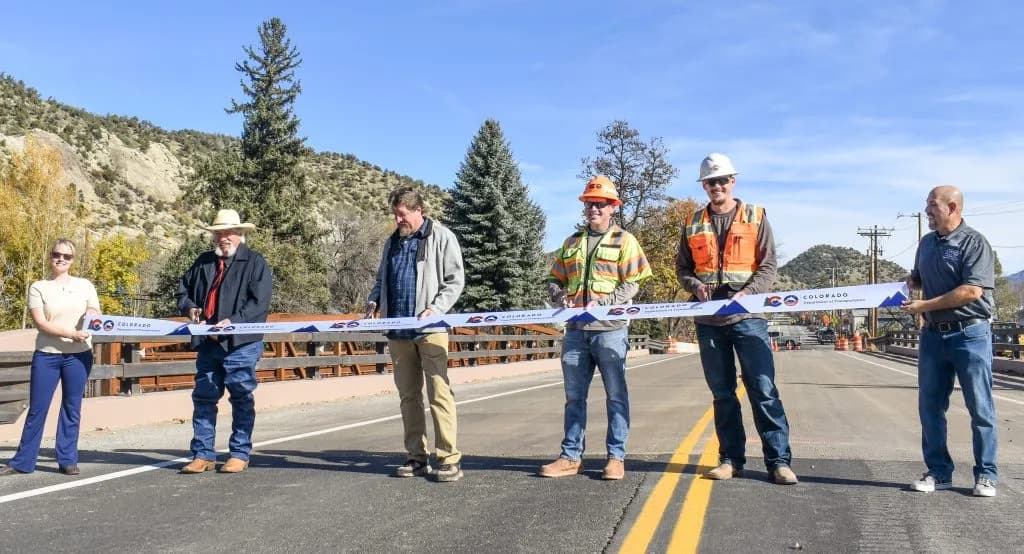
Rifle —Does a $10 million bridge replacement actually solve the flooding problems in New Castle?
That is the question locals have been asking since the ribbon-cutting ceremony on Nov. 10. The event brought together Town Council members, Garfield County commissioners, and CDOT officials to mark the completion of a yearlong project. It replaced a structure built during the depths of the Great Depression with a modern design intended to last decades.
Graham Riddile, who serves as New Castle Mayor Pro Tem and is a longtime CDOT engineer, called the process "really smooth." He emphasized the rarity of replacing a 90-plus-year-old bridge with such a clean execution. For context, the old structure was part of the initial highway network that connected towns before the interstate system existed. Personal vehicles were new, and the bridge served as a critical link in that early infrastructure boom.
However, the celebration masks some gritty details about why the old bridge had to go. CDOT’s Bridge and Tunnel Enterprise labeled the previous structure "functionally obsolete" and "structurally and hydraulically deficient." In plain English, the steel connections were corroding badly. Riddile noted that bridge inspectors "hated" checking the old span because of the sheer volume of failing joints.
The hydraulic issue is the big one. The project widened the creek’s girders and specifically prepared Elk Creek for potential floods. Riddile pointed south toward Pagosa Springs, citing recent events as proof that the old standards weren't enough. The new design aims to handle what he called "the century’s biggest flood."
The physical changes are substantial. The replacement structure rests on two reinforced concrete abutments. This reduces the number of steel connection points that can rust, making future inspections far simpler. The project also included constructing a new pedestrian bridge, adding a dedicated path for walkers separate from vehicle traffic.
New Castle Mayor Grady Hazelton framed the change in historical terms. He compared the old green bridge to the preserved buildings in the town’s historic district. For him, the loss was cultural as much as structural. He expressed gratitude for how the community rallied during the construction phase, viewing the new span as a symbol of that collective effort.
On paper, the math works out. You are trading a corroded, narrow, flood-prone relic for a wider, concrete-backed, modern structure. The $10 million buys you safety margins that didn’t exist in the 1930s. It buys you the ability to handle larger vehicles and heavier loads. And, crucially, it buys you better protection against the kind of heavy water events that have become more common in the region.
In practice, this means fewer emergency closures during storms. It means a safer commute for everyone using the route. It means a lower risk of catastrophic failure due to hidden corrosion. The old bridge was a piece of history, but it was also a liability. The completed project is an investment in longevity.
The practical bottom line for neighbors in New Castle is simple: the crossing is wider, stronger, and better equipped to handle bad weather. The $10 million cost bought you a structure that should serve the community reliably for decades, eliminating the daily worry about whether the span can hold up against the next major storm.
Keep up with Rifle
The day's Western Slope news, one email each morning. Free.