Gaza Hospital Strike Kills Six Amid Ceasefire Tensions
An Israeli airstrike hit Nasser Hospital in Gaza, killing six during a fragile ceasefire. Meanwhile, Iran considers exiting the nuclear treaty, and the UN condemns Houthi escalation.
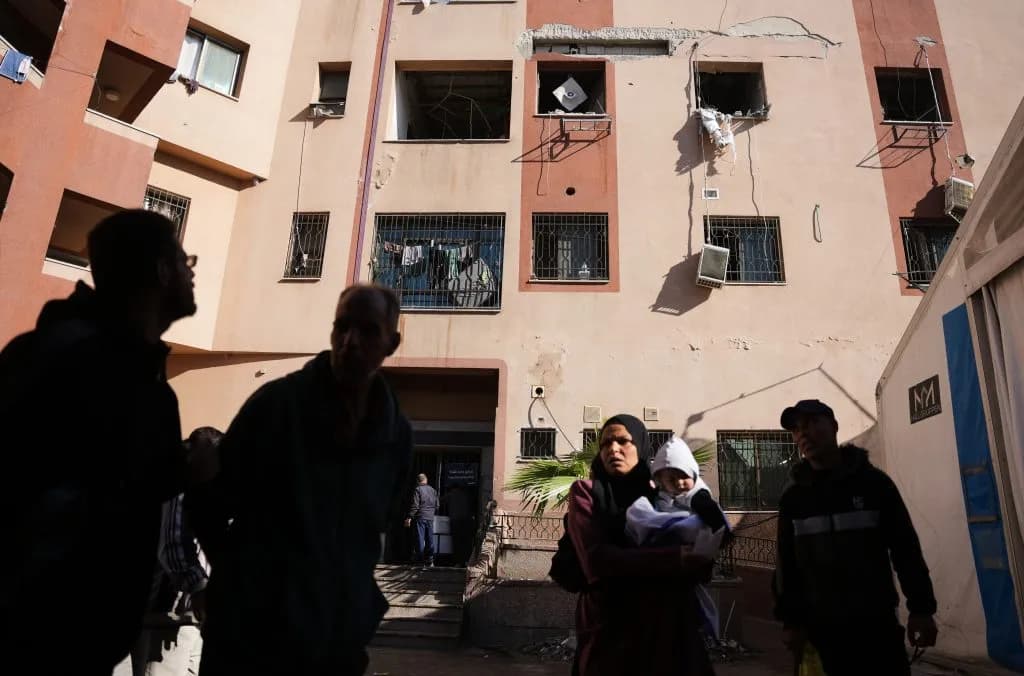
Aspen —An Israeli airstrike struck Nasser Hospital in southern Gaza on Thursday, killing six people and injuring at least 28 others. The attack landed while a ceasefire deal with Hamas technically held, a detail that complicates the narrative of a simple military engagement.
The Israeli military stated the strike targeted an unidentified Hamas commander and other militants. They offered no physical evidence to support the claim. To hear them tell it, the hospital was merely collateral damage in a precision hit. But the victims listed by Gaza’s Health Ministry tell a different story. Among the dead were a surgeon and a 13-year-old boy.
This was not an isolated incident. The hospital victims were part of a larger toll of 10 Palestinians killed across four separate strikes that day. Each strike was justified by the same logic: the target was a militant, even if the blast radius swallowed civilians. The math holds up for the military, but it feels less precise to the families left behind.
While Gaza absorbed the brunt of the violence, diplomatic friction simmered elsewhere. In Iran, the Assembly of Experts, a clerical body overseeing the supreme leader, declared that considering withdrawal from the Nuclear Nonproliferation Treaty is now an “unavoidable necessity.” State TV reported the stance, highlighting the tension between Iran’s near weapons-grade uranium enrichment and its civilian program claims.
President Donald Trump weighed in via social media, dismissing diplomacy with Tehran. He argued, “We don’t need a deal with Iran,” directing Vice President JD Vance to focus on rooting out fraud in federal programs instead. Vance had been the face of the earlier, collapsed Iran deal efforts. His office did not comment on the shift in strategy.
Meanwhile, Iran’s top negotiator claimed the U.S. had asked Russian President Vladimir Putin to facilitate talks between the two nations. The White House did not directly respond to the claim, leaving the door open for back-channel negotiations.
The situation in Yemen added another layer of complexity. A U.N. Security Council resolution, drafted by the UK and adopted unanimously, strongly condemned the Houthi military escalation. It emphasized that “there is no military solution to the current conflict, and that the only viable path forward is dialogue and reconciliation among the multiple and varied parties.”
The resolution extended sanctions, including travel bans and asset freezes, against Houthis on a U.N. blacklist until November 14, 2027. An arms embargo against the group remains in effect. The 15-member council expressed “grave concern” at the Houthi generation of funds from international sources and their control over key economic sectors, including energy and telecommunications, which finance their acquisition of weapons.
The question is whether these disparate threads — hospital strikes, nuclear treaties, and Houthi sanctions — will converge into a cohesive regional strategy or remain fragmented tensions. For now, the focus stays on the immediate human cost in Gaza and the diplomatic maneuvering in Tehran.
Keep up with Aspen
The day's Western Slope news, one email each morning. Free.