Glen Canyon Dam Faces Cavitation Threat as Lake Powell Hits Historic Lows
Federal officials warn that historic lows in Lake Powell expose Glen Canyon Dam to cavitation, a process where air bubbles implode and shatter concrete, potentially halting hydropower generation before 2026.
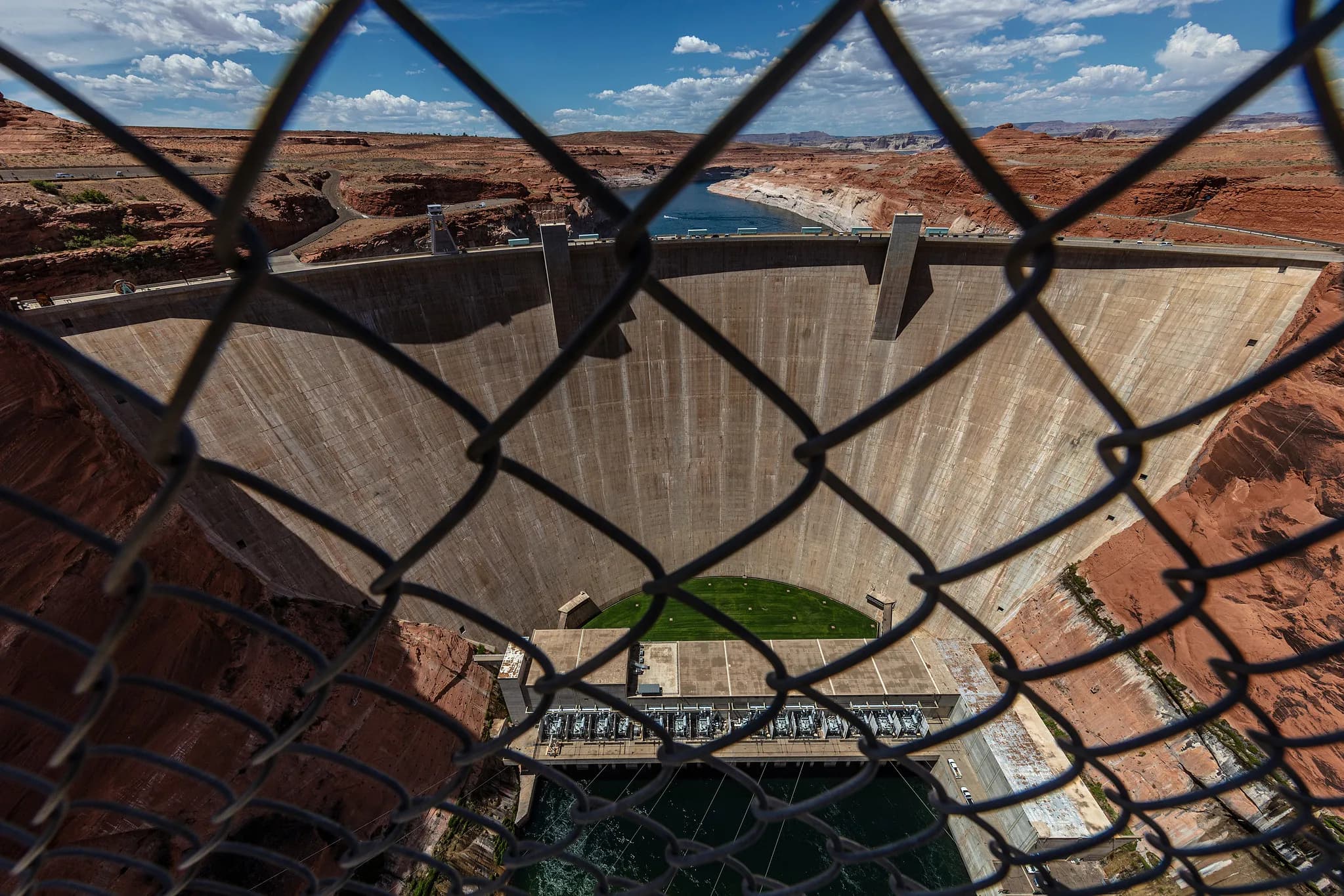
Colorado —What happens when a dam’s own water turns against it?
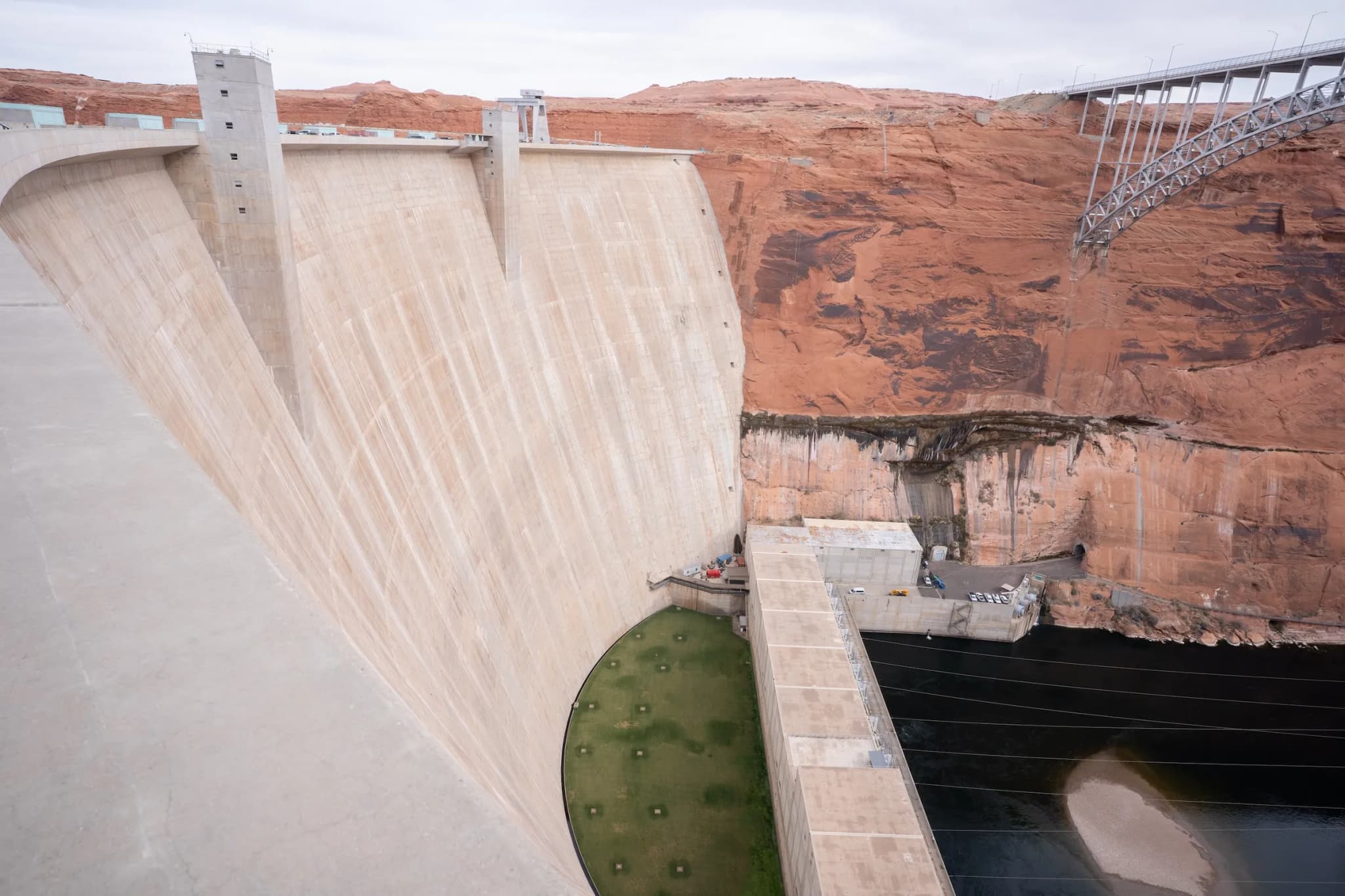
Federal officials are watching Lake Powell shrink to historic lows not just for the lack of water, but because that low level is actively chewing up Glen Canyon Dam. The threat isn't the volume of water anymore. It's the air mixed into it.
When Lake Powell drops, more surface area exposes water to air. That air gets sucked into the dam’s release valves and turbines. High-speed water drags it down. Pressure builds. The air compresses into tiny bubbles. Then they collapse.
This is cavitation. It’s violent. The implosion creates shockwaves strong enough to shatter concrete. Temperatures spike to thousands of degrees in microscopic bursts — hotter than the surface of the sun, briefly. It eats away at metal and stone alike.
David Wegner knows this power. He was a federal researcher in 1983 when Lake Powell nearly overtopped the dam. He rode a motorized boat half a mile downstream. The water shot out of the base like a freight train. White-capped waves tossed his engine around. He held on for dear life.
“You knew there was a great power upstream,” Wegner told The Colorado Sun. “I had been up many times from Lees Ferry upstream — you’d never felt that sort of power.”
Weeks later, he stood on top of the dam. Floodwater still rushed through the spillways. He felt vibrations under his feet. The water turned red with sandstone dust. Something was breaking inside the structure.
“We’re all scared,” he recalled. “and we don’t know what’s going to happen.”
Today, that same fear is back. But the conditions are inverted. In 1983, too much water threatened to rip the dam apart from above. Now, too little water threatens to destroy it from within.
Federal reports indicate Glen Canyon Dam might stop generating hydropower before the end of 2026. The goal is to avoid catastrophic damage from cavitation. The agency has already spent millions adding protective layers to some release valves. They are trying to buy time.
State and federal officials are currently debating how to manage around these limitations. This is part of high-stakes negotiations happening right now. The priority is keeping the lights on and the concrete intact, even as the reservoir continues to recede.
The Colorado Sun reported Tuesday that a record-poor winter snowpack has left the Bureau of Reclamation searching for answers. The bathtub ring on the canyon walls is stark white against red sandstone. It documents a reservoir that is emptying faster than anyone expected.
The short version: The dam is safe from flooding, but it is in danger of being hollowed out by its own mechanics. Every gallon released at low levels carries more air. More air means more bubbles. More bubbles mean more damage.
Wegner holds a footlong chunk of concrete on his desk. It’s proof of what happens when cavitation wins. He’s seen it before. Now, he’s watching it happen again.
The agency is looking for solutions. They are spending millions on repairs that might not last. The negotiations are tense because the margin for error is gone. There is no spare water to cushion the blow.
Read that again. The threat isn't drought. It's physics.
Keep up with Colorado
The day's Western Slope news, one email each morning. Free.


Federal Report Sets 200,000 Acre-Foot Water Conservation Target for Upper Basin
Colorado Parks and Wildlife Deploys Precision Drones for Weed Control