Glenwood Fire Tax Hike Costs $493 Annually for $1M Home
Garfield County voters face four major tax measures on Nov. 3, including a $493 annual hit for Glenwood fire services and new school funding.
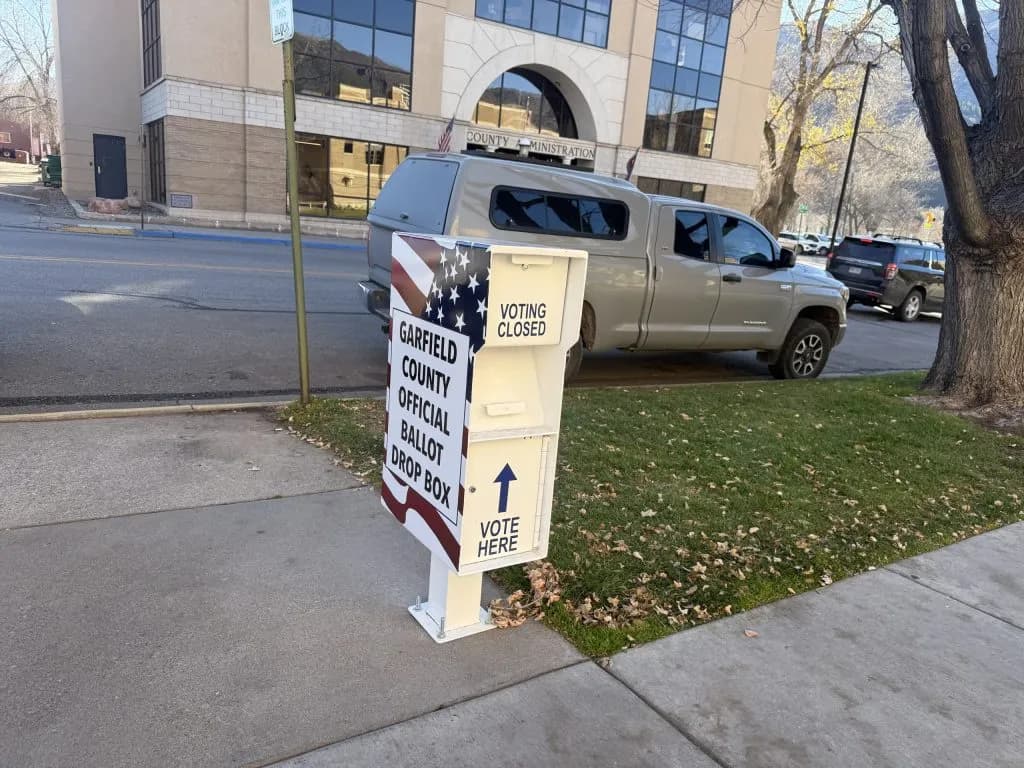
Aspen —The wind howls off the Roaring Fork, rattling the windows of a home in West Glenwood. Outside, the sky is a bruised purple against the jagged teeth of the White River Mountains. Inside, a voter holds a ballot that weighs more than paper. It carries the price of a fire station rebuild, a teacher’s salary, and the library books on the shelf.
Garfield County voters will decide on four major tax measures in the Nov. 3 election. The stakes are high, and the math is simple but painful.
The Glenwood Springs Rural Fire Protection District leads the pack with the steepest increase on the ballot. If voters approve measures 2B and 6A, the district gains approximately $3.6 million in additional annual revenue. Measure 2B hits City of Glenwood Springs residents hardest. It raises the property tax by 7.9 mills, bringing the total rate to 16.503 mills. For a home valued at $1 million, that is an estimated $493 per year. Measure 6A applies to the rural district, adding 5.9 mills for a total of 18.239 mills. That costs an estimated $369 annually for every $1 million of home value.
The city says the current budget doesn’t cover operational and equipment costs. Existing taxes generate about $4.7 million annually. The city has already dipped into its general fund for roughly $1 million a year, plus another $700,000 from marijuana and tobacco taxes. The new money goes to pay firefighters more, hire emergency medical personnel, and build a replacement for Station 71 in West Glenwood. That station is structurally deficient. It’s not a stretch to say it’s held together by duct tape and hope.
The district covers Four Mile, extending west to Canyon Creek, east to Bair Ranch, and south to Buffalo Valley. Both measures carry a 20-year sunset clause. Commercial property owners pay 3.7 times the residential rate.
Garfield Re-2 School District is also on the ballot with measures 4A and 4B. Measure 4A proposes a 5.4-mill property tax increase specifically to support teacher compensation. Measure 4B extends an existing bond measure for capital improvements. The district is asking voters to keep the lights on and the roofs intact while trying to recruit staff in a market that has moved far beyond what local budgets can offer.
Garfield County Libraries is seeking an extension of its property tax revenue. The measure would maintain the rate in place since 2006. No increase, just continuity. In a county where budgets are tightening, keeping the status quo is its own kind of victory.
The City of Rifle has an increased lodging tax on the ballot for the second consecutive election. This one targets visitors, not residents. It’s a way to fund city services without touching the property taxes of people who actually live in Rifle.
One mill equals $1 in property taxes for every $1,000 of a property’s assessed value. That definition matters. It turns abstract numbers into concrete costs on a monthly mortgage statement.
The Aspen Times reported that local budgets face increasing pressure as the county grows. Population growth brings demand for services, but it doesn’t automatically bring revenue. The gap between what local governments spend and what they collect is widening.
Voters in Garfield County have a choice on Nov. 3. They can approve the increases and fund the services, or they can reject them and wait for the cuts. The fire department needs money to fix a building that is falling apart. The schools need money to keep teachers from walking out the door. The library needs permission to stay open at its current level.
The short version: your property tax bill is going up if you vote yes. If you vote no, the services that depend on that money shrink or disappear. There is no free lunch in local government.
The city of Glenwood Springs has already bled its general fund dry to keep the fire department afloat. They are asking for more because they have no other option. The school district is asking for more because teacher pay has to compete with the rest of the state, not just the valley.
Read that again. The fire department is structurally deficient. That’s a phrase with weight in Colorado. It means the building might not stand if the ground shakes or the roof caves.
Voters will have to weigh the price of a $1 million home against the cost of a fire that wasn’t fought fast enough, or a school year without a lead teacher. The numbers on the ballot are clear. The consequences of inaction are not.
The election is Nov. 3. Ballots will be mailed to registered voters in the coming weeks. The decision falls on neighbors, not politicians. They don’t get to vote with their feet if the measures pass. They have to live with the result, one mortgage payment at a time.
Keep up with Aspen
The day's Western Slope news, one email each morning. Free.